
Square Online Store Review: Is Square Online Worth It?

Choosing the right website platform can have a major impact on how easily you can launch, manage, market, and grow your business online.
There are countless website builders and e-commerce platforms available today, but not every platform is designed for the same type of business.
Square Online has become a popular option for small businesses, entrepreneurs, retailers, restaurants, and other businesses that want to combine their website, online store, payments, and business operations within one ecosystem.
But is it actually a good choice?
In this Square Online store review, we're taking an in-depth look at Square Online to determine what it does well, where it falls short, and which types of businesses are most likely to benefit from using it.
We'll examine everything from website design and e-commerce functionality to SEO, pricing, integrations, scalability, and overall ease of use.
If you're new to e-commerce, our Ultimate Guide to E-Commerce provides a broader look at what you need to build and grow a successful online store.
And if you're still comparing platforms, our guide to the Best Website Builder Platform can help you evaluate Square Online alongside other popular website builders.

Our Overall Square Online Rating
After reviewing the platform across the areas that matter most to businesses, we've assigned the following ratings:
Category | Rating (From 1 to 10) |
Ease of Use | 9 |
Design Flexibility | 5 |
E-commerce Flexibility | 7 |
SEO | 6 |
Online Store Features | 7 |
Pricing | 8 |
Integrations | 8 |
Scalability | 7 |
Overall Rating | Rating: 7/10 |
Our overall Square Online review is positive, particularly for businesses that prioritize simplicity and an integrated business ecosystem.
Square Online makes it relatively easy to establish an online presence, sell products, accept payments, manage inventory, and connect your online store with Square's broader business tools.
Its biggest weakness is flexibility.
As your business becomes more sophisticated, you may eventually want greater control over website design, SEO, e-commerce functionality, integrations, and the overall customer experience.
That means an 7/10 rating doesn't mean Square Online is the perfect platform for everyone.
It means the platform provides a strong combination of usability, functionality, and value for the businesses it is designed to serve.

Who Should Use Square Online?
Square Online is best suited to businesses that want a relatively simple way to establish an online presence without having to manage a complicated technology stack.
This is particularly true for small businesses that already use Square for payments or point-of-sale operations.
Retailers can use Square Online to showcase products, accept online orders, manage inventory, and connect their online and physical sales operations.
Restaurants and food businesses can benefit from online ordering and the connection between their website and in-person operations.
Service-based businesses can also use the platform to establish a professional website, showcase their services, accept payments, and provide customers with an easy way to interact with the business.
It's also a strong option for entrepreneurs who are launching their first online store and don't want to spend significant time learning complicated website technology.
This is one of the biggest reasons square online reviews tend to emphasize the platform's simplicity and accessibility.
If your primary goal is to get online, start selling, and manage the core parts of your business from one place, Square Online can make a lot of sense.
The platform is particularly attractive when convenience and integration matter more than having complete control over every aspect of your website.
So, Is Square Online worth it?
For the right business, absolutely.
The key is understanding what "right" means for your particular business before committing to the platform.
Who Shouldn't Use Square Online?
Square Online isn't necessarily the best choice for businesses that require extensive customization or expect their website to become a highly sophisticated digital growth platform.
If you need complete control over your website's design, advanced SEO functionality, highly customized e-commerce workflows, complex integrations, or specialized functionality, you may eventually find the platform restrictive.
Larger e-commerce businesses with extensive product catalogs and complex operational requirements may also benefit from a platform designed specifically around advanced online selling.
Likewise, businesses that view their website as the central hub for a sophisticated digital marketing strategy may want a platform that provides greater control over content, landing pages, analytics, integrations, and customer journeys.
This doesn't make Square Online a bad platform.
It simply means that square online store reviews need to be considered in the context of your own business requirements.
A platform can be excellent for one business and completely unsuitable for another.
That's why the most important question isn't whether Square Online is universally good or bad.
It's whether Square Online provides the right combination of functionality, flexibility, cost, and scalability for your business.
And throughout the rest of this review, we'll break down exactly what you can expect from the platform.
What Is Square Online?
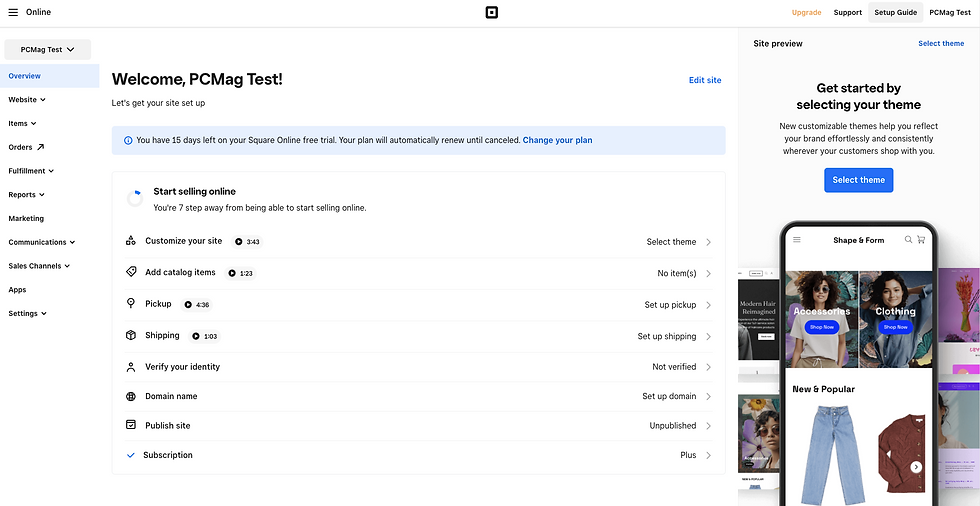
Square Online is an e-commerce and website-building platform from Square that allows businesses to create an online store, sell products or services, accept payments, and manage orders from one central system.
Unlike traditional website builders that primarily focus on creating a website, Square Online is closely connected to Square's broader payment and point-of-sale ecosystem. This makes it particularly appealing to businesses that already use Square to process payments in person.
At its core, Square Online is designed to make selling online relatively straightforward. A business can create an online storefront, add products, configure payment methods, set up shipping or pickup options, and begin accepting online orders without needing to build a custom e-commerce website from scratch.
That simplicity is one of Square Online's biggest advantages. However, simplicity can also come with trade-offs when a business needs more advanced design flexibility, SEO capabilities, integrations, or e-commerce functionality.
For businesses evaluating the platform, this distinction is important. A platform can be easy to use without necessarily being the best long-term solution for every business.
This Square Online e-commerce review looks beyond the basic features to examine how the platform works, where it performs well, and where businesses may eventually encounter limitations.
How Does Square Online Work?
Square Online works by combining a website builder, online store, payment processing system, and business management tools within the Square ecosystem.
Instead of purchasing separate software for your website, payment processing, inventory, and online orders, Square allows these functions to work together through the same platform.
The basic process is relatively simple.
You start by creating a Square account and selecting the tools you want to use. From there, you can create an online store, choose a website layout, add your products or services, configure your checkout experience, and connect your payment processing.
Once your store is ready, customers can visit your website and purchase directly online.
Orders and payments can then be managed through Square alongside other transactions your business receives through Square's ecosystem.
This creates an important advantage for businesses that sell through multiple channels.
Imagine you operate a local clothing boutique. A customer might purchase a shirt in your physical store on Monday, another customer might order from your website on Tuesday, and someone else might purchase through another Square-supported sales channel later in the week.
Rather than managing completely separate systems, Square is designed to bring much of this activity together.

Square Online for Small Businesses
One of the strongest use cases for Square Online for small businesses is connecting online and offline sales.
A local business that already uses Square for payments can potentially launch an online store without having to learn an entirely new payment and inventory ecosystem.
This can be especially useful for restaurants, retail stores, salons, service businesses, artists, and other businesses that need a relatively simple way to accept online payments.
Consider a small bakery.
The business could use Square in its physical location to process walk-in purchases while using Square Online to allow customers to order cakes, baked goods, or other products online.
The same ecosystem can help the business manage orders and payments without requiring a completely separate e-commerce infrastructure.
The platform can also be useful for businesses that are just beginning to sell online.
If your primary goal is to get a functional online store launched quickly, Square Online can reduce some of the technical complexity involved in setting up an e-commerce operation.
However, businesses should think beyond the initial launch.
A website that works well when you have 20 products and a few dozen online orders per month may not necessarily be the right platform when you have hundreds of products, multiple sales channels, advanced marketing campaigns, and a growing customer database.
This is where platform selection becomes a strategic decision rather than simply a technical one.
Before choosing Square Online, consider not only what your business needs today, but also what you expect it to need two or three years from now.

Square Online vs Square POS
Square Online and Square POS are closely connected, but they serve different purposes.
Square POS is primarily designed for processing transactions and managing sales in physical locations. It can be used with Square hardware and other point-of-sale tools to process customer purchases in person.
Square Online, on the other hand, is designed to give your business an online storefront where customers can browse products, place orders, and complete purchases through your website.
The two systems can work together, which is one of the major reasons businesses choose Square in the first place.
For example, a retail business could use Square POS to process purchases at its physical checkout while using Square Online to process website orders.
This creates a more connected approach to managing sales across physical and digital channels.
That connection is particularly valuable for businesses that want to operate an omnichannel sales strategy without managing completely separate systems.
However, it is worth understanding that Square's strength is not necessarily that it offers the most sophisticated website builder available.
Its strength is the connection between commerce, payments, point-of-sale tools, and online selling.
This distinction becomes important when comparing Square with dedicated e-commerce platforms such as Shopify or more design-focused website builders.

Square Online Website Builder Review
If you're considering Square Online for your business website, the website builder itself deserves to be evaluated separately from Square's ecommerce, payment processing, and point-of-sale features.
In this Square Online website builder review, we're focusing specifically on the website creation experience: the editor, templates, drag-and-drop functionality, page sections, customization options, mobile responsiveness, and overall ease of use.
Square Online takes a relatively simple approach to website design. Rather than giving users a completely open canvas, it provides structured sections and design controls that allow business owners to assemble a professional website without needing to know how to code.
That approach makes Square Online accessible, but it also creates some limitations for businesses looking for extensive design freedom.

Drag-and-Drop Editor
The Square Online editor is designed around simplicity.
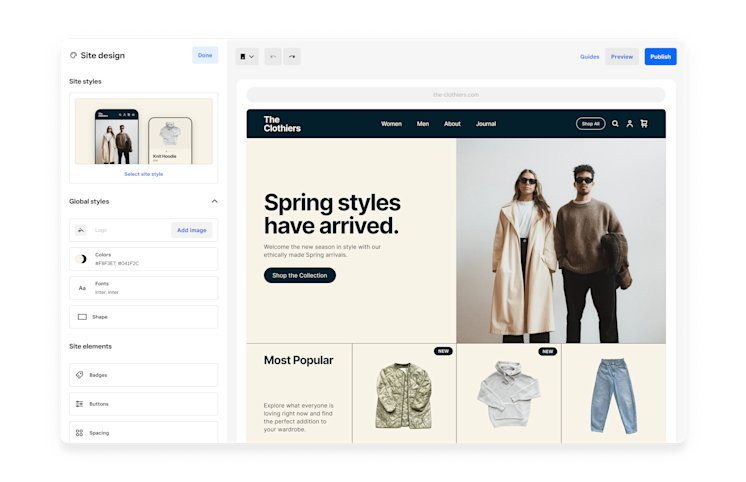
Rather than requiring users to work with HTML, CSS, or other technical code, the platform allows you to build pages visually by adding and editing sections.
You can add common website components such as text, images, buttons, galleries, product displays, banners, forms, and other content blocks, depending on the type of page you're building.
This makes the initial website-building process relatively approachable.
A business owner can start with a template, replace the existing content, upload their own images, adjust the layout, and publish a functioning website without needing to hire a developer for every change.
However, Square Online's drag-and-drop experience is more structured than completely freeform website builders.
You generally work within predefined sections and layouts rather than having unlimited control over the exact position of every element on the page.
For beginners, this can actually be an advantage because it prevents many common design mistakes.
Square Online Templates
Square Online provides templates and pre-designed layouts that give businesses a starting point for their websites.
Instead of beginning with a completely blank page, you can choose a design that is relatively close to what your business needs and then customize the content.
This is particularly useful for small businesses that don't have an existing website design or an in-house designer.
The templates generally prioritize usability and practical business applications rather than highly creative or experimental layouts.
That means you can create a clean and professional website without spending hours figuring out how every component should be structured.
The downside is that businesses looking for a highly distinctive website may find the available templates and customization options somewhat restrictive.

Mobile Responsive Design
Mobile responsiveness is another important part of the Square Online website-building experience.
The platform is designed to make websites accessible across desktop computers, tablets, and smartphones without requiring the business owner to create completely separate versions of each page.
Customers may discover your business through Google, social media, advertising, or another channel while using a smartphone. If the website is difficult to navigate or information is poorly presented on smaller screens, you can lose potential customers before they ever reach your checkout or contact form.
Square Online handles much of the technical side of responsive design automatically.
Overall, our Square Online website builder review is that the platform is a practical option for businesses that value simplicity, speed, and ease of management.
Its structured editor makes it possible for entrepreneurs and small business owners to build and maintain a professional website without dealing with the technical complexity associated with traditional web development.
The platform's biggest advantage is also its biggest limitation: simplicity.
For someone who wants to build a straightforward website quickly, the structured approach can make the process easier.
For a business that wants complete creative control and plans to use its website as a sophisticated marketing, SEO, lead-generation, and conversion platform, the limitations may become more significant over time.

Is Square Online Good for E-commerce?
Square Online becomes particularly interesting when you look beyond its website-building features and consider what the platform can do for ecommerce.
Because Square combines online selling with payments, inventory, orders, point-of-sale tools, and other business systems, it can provide a relatively connected experience for businesses that want to sell products or services online.
For Square Online for entrepreneurs, that combination can make launching an online business considerably simpler.
Instead of piecing together a website, payment processor, inventory system, and order management platform from different providers, entrepreneurs can build much of their operation around the Square ecosystem.
For Square Online for local business, the same advantage applies when a business operates both online and offline.
A local retailer, restaurant, bakery, service provider, or other business can use Square to connect its physical operations with its online presence, creating a more unified system for managing customers and transactions.
However, Square Online isn't automatically the best ecommerce platform for every business.
The right choice depends heavily on what you're selling, how complex your operation is, how much customization you need, and how important your website will become as a long-term marketing and sales channel.

Selling Physical Products
If you're asking is Square Online good for selling physical products, the answer is generally yes, particularly for small and straightforward ecommerce operations.
Square Online allows businesses to create product listings, organize products into categories, accept online payments, process orders, and manage inventory.
For businesses already using Square for in-person sales, this can be particularly convenient.
A physical store can expand online without necessarily having to introduce an entirely separate payment and inventory ecosystem.
This makes Square Online for ecommerce a practical option for boutiques, independent retailers, makers, specialty shops, and other small businesses selling physical products.
The platform is especially compelling when your product catalogue is relatively straightforward.
If you're selling dozens or a few hundred products with standard product options, Square Online can provide the core functionality you need without introducing unnecessary technical complexity.
Businesses with highly complex product configurations, advanced filtering requirements, extensive international ecommerce needs, sophisticated merchandising strategies, or highly customized shopping experiences should carefully evaluate whether Square Online provides enough flexibility.

Selling Services
Ecommerce doesn't always mean selling physical products.
Service businesses can also use Square Online to sell appointments, packages, classes, memberships, and other offerings depending on the tools and integrations they use.
This can be useful for businesses such as consultants, personal trainers, salons, photographers, educators, and other appointment-based or service-oriented businesses.
One consideration when evaluating Square's ecosystem is payment processing.
Businesses researching Square merchant services reviews will often be evaluating more than the website itself. They are also looking at payment processing, transaction management, customer payments, and how easily those transactions integrate with the rest of the business.
That's one of Square's major strengths.
Instead of treating online payments as a completely separate system, Square can connect payment activity with the broader Square ecosystem.
For a small service business, that operational simplicity can be more valuable than having access to every advanced ecommerce feature imaginable.
The important thing is to distinguish between Square being a strong payment and business-management ecosystem and Square Online being the ideal website platform for every service business.

Selling Food and Restaurant Products
Restaurants, cafes, bakeries, food trucks, and other food businesses have another reason to consider Square Online.
Their e-commerce requirements often overlap heavily with point-of-sale operations, making an integrated system particularly valuable.
Businesses researching Square restaurant pos reviews are typically looking at the entire restaurant technology ecosystem, not simply the website.
The ability to connect online ordering, payments, menus, orders, and in-person transactions can simplify operations and reduce the number of disconnected systems employees need to manage.
For a smaller restaurant, this can be a significant advantage.
Instead of having one system for the website, another for payments, another for point-of-sale, and another for order management, Square can bring many of these functions together.
However, restaurant owners should still evaluate the complete customer experience.
Your online presence needs to do more than process an order.
Customers should be able to quickly find your menu, understand your offerings, see your hours and location, access ordering options, and move from discovery to purchase without unnecessary friction.
Square Online for Retail Businesses
Square Online can be a particularly attractive option for retail businesses because of its ability to bridge physical and online commerce.
Imagine a local clothing store that already uses Square at its checkout.
Adding an online storefront through Square can allow the business to extend its existing operation onto the web rather than creating an entirely separate e-commerce infrastructure.
This can simplify product management, payments, inventory, and order fulfillment.
When evaluating Square Online reviews, retailers should therefore consider more than how attractive the website editor looks.
The more important question is whether the entire system fits the way the business operates.
A retailer should consider how products are managed, how inventory moves between online and physical sales, how orders are processed, how payments are handled, and how the website will support future growth.
For a small local retailer with a manageable product catalogue, this integration can be a major advantage.
For a retailer that intends to become a large e-commerce brand, however, the requirements may eventually become much more sophisticated.

Square Online for Small E-commerce Businesses
Small ecommerce businesses often have different priorities than large online retailers.
When you're just getting started, you may not need an extremely sophisticated ecommerce platform. You need something that lets you get products online, accept payments, manage orders, and start generating sales without creating unnecessary technical headaches.
This is where Square Online can make a lot of sense.
A Square Online e-commerce review should therefore consider the platform in the context of the business using it rather than comparing it exclusively against enterprise-level e-commerce platforms.
A small business may benefit more from simplicity and integration than from having hundreds of advanced features.
So, is Square Online worth it for small business?
For the right business, absolutely.
If you already use Square, sell relatively straightforward products or services, and want an e-commerce website that integrates closely with your existing operations, Square Online can be a practical and cost-effective choice.
The platform can also be attractive for businesses that don't have a dedicated technical team.
Being able to manage products, orders, payments, and website content within a relatively connected ecosystem can reduce the amount of technology a business owner has to learn and maintain.
That simplicity has real value.
Overall, Square Online is a compelling ecommerce option for small businesses that prioritize simplicity, integrated payments, and operational convenience.
Its greatest strength is the broader ecosystem surrounding the website.

Square Online Features
Square Online offers a collection of website and e-commerce tools designed to help businesses create an online storefront, sell products, process payments, manage orders, and track performance.
For a business evaluating the platform, the important question isn't simply how many features Square Online has. It's whether those Square Online features provide the functionality you need to operate and grow your business effectively.
In this Square Online store review, we're breaking down the most important features across e-commerce, inventory, payments, fulfillment, marketing, and analytics so you can understand what the platform actually offers beyond its website builder.
If you're comparing Square Online with other website platforms, it's also worth looking at the broader capabilities your website may need. Our guide to Top Essential Website Features provides a useful framework for evaluating what to look for in a modern business website.

E-commerce Store Features
The e-commerce functionality is at the heart of Square Online.
Businesses can create an online storefront, display products, organize their catalogue, accept payments, manage orders, and provide customers with different fulfillment options.
This makes Square Online more than simply a website builder.
It's designed to provide the infrastructure required to turn a website visitor into a customer and then manage the transaction after the sale.
In a Square Online store review, these e-commerce capabilities should be one of the primary areas you evaluate because they have a direct impact on how easily your business can sell online.
For smaller businesses, having these functions available within one ecosystem can eliminate the need to connect several different platforms just to operate an online store.
Product Listings & Categories
Square Online allows businesses to create product listings containing important information such as product names, descriptions, images, pricing, and other relevant details.
Products can also be organized into categories, making it easier for customers to navigate larger inventories.
This is particularly important as your product catalogue grows.
A store with ten products can potentially get away with a relatively simple structure. A store with hundreds of products needs clear categories and a logical organization system so customers can quickly find what they're looking for.
From a Square Online website review perspective, product presentation is also important because your product pages effectively function as individual sales pages.
High-quality photography, clear descriptions, accurate pricing, strong calls to action, and useful product information can all influence whether a visitor decides to purchase.
The platform provides the underlying structure, but businesses still need to optimize the content and presentation of each product.

Inventory Management
Inventory management becomes increasingly important when a business sells through multiple channels.
A retailer may sell products from a physical location, through its website, and potentially through other sales channels. Keeping inventory information accurate across those transactions can quickly become difficult when systems are disconnected.
Square's ecosystem is designed to help businesses manage inventory alongside their broader point-of-sale and e-commerce operations.
This can be particularly valuable for businesses already using Square at a physical location.
For example, a restaurant or food business evaluating Square after reading a square pos restaurant review may appreciate the ability to connect its physical point-of-sale operation with its online sales activity.
The real benefit isn't simply having an inventory feature.
It's reducing the amount of manual work required to keep different parts of your business synchronized.
For small businesses with relatively straightforward inventory requirements, that integration can be a significant advantage.
Online Payments
Online payments are another major component of the Square ecosystem.
Square Online allows businesses to accept payments through their online storefront, giving customers a way to complete purchases directly through the website.
This makes the platform particularly attractive to businesses that already use Square for in-person transactions.
For Square Online for small businesses, having website functionality and payment processing connected can simplify the technology stack considerably.
Instead of choosing a website builder, ecommerce system, and separate payment processor independently, a business can build much of its online selling infrastructure within Square.
Payment processing also plays an important role in the customer experience.
A customer may be interested in your product, but a confusing checkout process or lack of convenient payment options can create unnecessary friction.
For that reason, businesses should evaluate online payments as part of the entire customer journey rather than treating payment processing as a purely technical feature.
Shipping, Pickup and Delivery
Square Online also provides fulfillment functionality that allows businesses to offer customers different ways to receive their purchases.
Depending on the business and its configuration, this can include shipping, pickup, and delivery options.
Offering multiple fulfillment methods can be particularly useful for local businesses.
A retailer may allow customers to purchase online and pick up their order in-store. A restaurant can provide pickup or delivery options. An ecommerce business can ship products directly to customers.
This flexibility can remove friction from the buying process because customers can choose the option that best fits their needs.
For local businesses, pickup and delivery can also extend the geographic reach of an existing physical operation without requiring customers to visit the storefront.
The important consideration is how well these fulfillment options fit your actual business processes.
An online store is only as effective as its ability to fulfill the orders it generates.

Marketing Features
Building an online store is only half the equation.
Customers need to discover the store before they can purchase from it, which makes marketing functionality an important part of any ecommerce platform.
Square Online provides marketing-related tools that can help businesses promote their products, communicate with customers, and encourage repeat purchases.
Depending on the tools available to your specific Square setup, businesses can incorporate marketing activities such as promotional campaigns, customer communication, and other methods of encouraging sales.
However, businesses should not confuse built-in marketing tools with having a complete digital marketing strategy.
Your e-commerce website is one component of a much larger acquisition system.
Search engine optimization, Google Business Profile optimization, social media, paid advertising, email marketing, content marketing, and conversion optimization can all contribute to generating traffic and sales.
The advantage of Square Online is that it provides a foundation from which these activities can be managed and connected.
The effectiveness of the marketing strategy still depends on how strategically those tools are used.

Analytics & Reporting
You can't effectively improve an ecommerce operation if you don't understand what is happening.
Analytics and reporting allow businesses to evaluate activity such as website traffic, product performance, orders, sales, and customer behaviour.
This information can help answer important questions.
Which products are generating the most sales?
Which pages or products attract the most interest?
Where are customers coming from?
Are sales increasing over time?
Which marketing activities are producing results?
These insights turn your website from a digital storefront into a measurable business asset.
For businesses that want to learn more about using data to make better marketing decisions, our Beginner's Guide to Digital Marketing Analytics provides a deeper introduction to the metrics and reporting concepts businesses should understand.
Overall, Square Online offers a practical collection of features for businesses that want to establish and manage an online selling operation without assembling a complicated technology stack.
Its strongest advantage is the integration between ecommerce and Square's broader business ecosystem.
For smaller businesses, that simplicity can be extremely valuable.
You can manage products, accept payments, process orders, offer fulfillment options, and monitor performance without necessarily needing several separate platforms.
The biggest consideration is scalability.
Square Online provides the core features many small businesses need, but businesses with increasingly complex ecommerce, marketing, SEO, or technology requirements should evaluate whether the platform will continue to provide enough flexibility as they grow.
Ultimately, the best Square Online features are the ones that reduce complexity while helping your business sell more effectively.
Is Square Online Easy to Use?
One of the biggest reasons businesses consider Square Online is its simplicity. You don't necessarily need technical or web development experience to get a website and online store up and running.
In this Square Online honest review, the platform is relatively straightforward for beginners, particularly if you're already familiar with Square's payment processing or point-of-sale tools.
The platform guides you through many of the major setup decisions, and its interface is designed around completing practical tasks rather than requiring users to understand the technical details behind their website.
That said, "easy to use" doesn't necessarily mean "completely effortless."
You still need to make decisions about your products, payments, fulfillment, website content, branding, domain, and customer experience. Square Online simplifies the technology, but it doesn't eliminate the work required to build a good online store.
How Easy Is It to Set Up a Square Online Store?
Setting up a Square Online store is relatively straightforward, especially for a small business with a simple product catalogue.
The process can generally be broken down into several stages, from creating your account to testing your checkout experience before launching.

Create an Account
The first step is creating a Square account or signing into an existing Square account.
If you're already using Square for payments or point-of-sale operations, this can make the process even more convenient because your online store can be connected to the same broader Square ecosystem.
For a business starting from scratch, you'll need to provide the basic business information required to establish your Square account and configure your business settings.
Choose Your Store Type
Square Online allows you to build an online presence around the type of business you're operating.
Your setup may look different depending on whether you're selling physical products, offering services, operating a restaurant, or using the platform primarily as an online ordering channel.
Choosing the right store structure early helps ensure that the tools and settings you configure later match how your business actually operates.
Add Products
Once your basic account is established, you can begin adding your products or services.
This typically includes information such as product names, descriptions, pricing, images, categories, variations, and inventory information.
For a small catalog, this process can be relatively quick.
For businesses with hundreds or thousands of products, however, product setup can become considerably more time-consuming. The platform may be easy to operate, but entering and organizing a large amount of product information is still a significant project.
This is an important distinction when considering Square Online benefits. The software can simplify store management, but the quality of your store still depends on the information and content you put into it.
Configure Payments
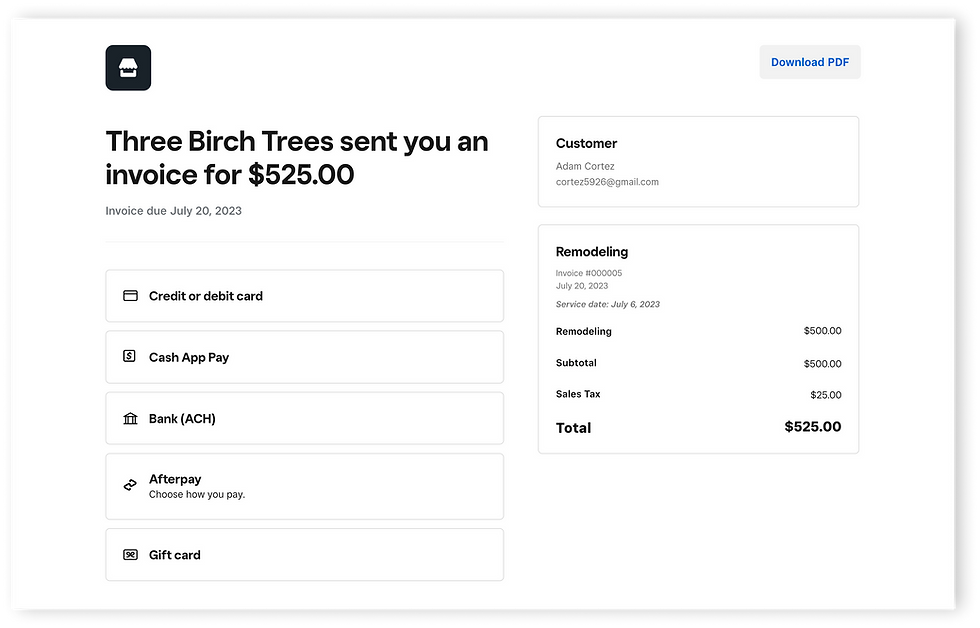
The next step is configuring how customers will pay for their purchases.
Because payments are a core part of Square's ecosystem, this is one of the areas where Square Online can be particularly convenient for businesses already using Square.
Your online payment setup needs to be tested carefully before launch to make sure customers can successfully complete transactions and that orders are being recorded correctly.
Configure Shipping and Pickup
You'll then need to determine how customers will receive their orders.
Depending on your business, this could involve shipping products directly to customers, offering local pickup, providing delivery, or using different fulfillment options for different products.
A local retailer, for example, might offer both shipping and in-store pickup, while a restaurant may focus primarily on pickup and delivery.
The important thing is to configure these options around how your business actually fulfills orders rather than simply enabling every available option.

Customize the Website
Once the operational side of your store is configured, you can begin customizing the website itself.
This is where you can adjust your branding, images, text, page sections, buttons, navigation, and other visual elements.
Square Online makes this process accessible to non-technical users, which is one of the platform's strongest advantages.
However, businesses should avoid confusing ease of editing with effective web design.
It is possible to build a website quickly without necessarily building a website that communicates your value proposition, establishes trust, ranks well in search engines, and converts visitors into customers.
Connect Your Domain
A professional domain name is an important part of establishing credibility online.
You can connect a custom domain to your Square Online website rather than relying solely on a platform-provided web address.
For businesses serious about building a long-term online presence, using a domain that matches your brand is generally preferable.
Your domain becomes part of your brand identity and can be used consistently across your website, email, social media, advertising, printed materials, and other marketing channels.
For a complete guide covering everything you need to know about domains, check out our Ultimate Guide to Domains.
Test Checkout
Before launching, you should test the entire customer journey.
Visit your website as if you're a customer.
Browse products, add something to your cart, proceed through checkout, test your payment process, and confirm that the order is being received correctly.
You should also test the experience on a smartphone.
A store can technically be ready to launch while still having confusing navigation, incorrect product information, poorly displayed images, or an inconvenient mobile checkout experience.
Testing before launch gives you an opportunity to identify these problems before real customers encounter them.

Launch
Once your website, products, payments, fulfillment settings, domain, and checkout experience have been tested, you're ready to launch.
At this point, your Square Online store can become another channel through which customers discover your business, learn about your products or services, and make purchases.
However, launching the website is only the beginning.
Getting customers to actually find and use your online store requires ongoing marketing, search engine optimization, content, advertising, social media, email marketing, and other growth activities.
Is Square Online Good for Beginners?
For beginners, one of the strongest arguments in favour of Square Online is that you don't have to become a web developer to operate it.
The platform handles much of the technical infrastructure behind the website and ecommerce experience, allowing business owners to focus more on their products, customers, and day-to-day operations.
This is particularly useful for entrepreneurs who want to get online without investing heavily in custom development.
That simplicity is one of the clearest Square Online benefits.
You can start with a relatively simple setup and gradually build out your online presence as you become more comfortable with the platform.
So, is Square Online good?
For the right business, yes.
Square Online provides an approachable combination of website building, ecommerce, payments, order management, and business tools that can make getting online significantly easier.
Its biggest strength is convenience.
Instead of piecing together multiple unrelated systems, businesses can use Square to manage several important parts of their online and in-person operations within the same ecosystem.
However, convenience shouldn't be confused with unlimited capability.
If your priority is getting a functional online store running quickly, managing products and payments easily, and connecting your online operations with Square's broader business ecosystem, the platform can offer significant value.
If your website is expected to become the central engine for your SEO strategy, lead generation, content marketing, branding, and long-term digital growth, you'll want to evaluate its limitations more carefully.
That's the key consideration behind any Square Online honest review.
The platform doesn't need to be the most powerful website builder available to be a good choice.

Square Online Website Design and Customization
Website design plays a major role in how customers perceive a business online.
A website isn't simply a place to display your products or contact information. It represents your brand, communicates your value, builds trust, and guides visitors toward taking action.
In this Square Online beginner review, we're looking specifically at how much control the platform gives you over the visual appearance and structure of your website.
Square Online provides enough design functionality for many small businesses to create a clean, professional-looking website without hiring a developer.
However, there is an important distinction between being able to create a professional website and having complete creative control over how that website looks and functions.
Square Online Templates
Square Online provides templates and pre-designed layouts that give businesses a starting point for building their website.
Instead of beginning with a completely blank canvas, you can select a design structure that fits your business and then customize the content, imagery, colours, typography, and other available elements.
This is particularly valuable for Square Online for beginners.
If you've never built a website before, starting with a professionally structured template can remove much of the uncertainty around deciding what should go where.
Rather than asking yourself how to design an entire homepage from scratch, you can work from an established structure and replace the placeholder content with information about your own business.
For example, a local service business could start with a homepage featuring a prominent introduction, service sections, customer testimonials, images, and a contact call-to-action.
A retailer could instead emphasize products, categories, promotions, and shopping functionality.
The templates provide the framework, while your content and branding determine much of the final appearance.
However, businesses should still choose their template carefully.
Your website's structure should reflect your customers' needs and the actions you want visitors to take. A visually appealing template isn't necessarily the right choice if it makes important information difficult to find.
For more guidance on evaluating website layouts and design decisions, see our guide on How to Choose the Best Website Design.
How Customizable Is Square Online?
Square Online offers customization options that allow you to personalize the website around your business.
You can modify important elements such as text, images, colours, fonts, buttons, sections, navigation, and other components depending on the template and page you're working with.
This gives business owners enough control to move beyond a generic website.
Your logo, brand colours, photography, messaging, services, products, and calls to action can all help make the website feel like it belongs to your business.
The section-based editor also makes it relatively easy to experiment with different layouts without needing to write code.
However, Square Online's customization is better described as structured flexibility rather than unlimited design freedom.
You are generally customizing the components and layouts provided by the platform rather than designing every aspect of the website completely from scratch.
For a small business, this may be more than enough.
If you simply need a clean homepage, service pages, product pages, contact information, and clear calls to action, the available customization tools can accomplish a lot.
The difference becomes more noticeable when you have a highly specific brand identity or want to create a website with a more unconventional design.

Can You Build a Professional Website With Square Online?
Yes, you can build a professional website with Square Online.
The platform provides the core design components necessary to create a website that looks credible, communicates information clearly, and provides customers with a straightforward experience.
Professionalism, however, isn't determined solely by the website builder.
A website can use an excellent template and still look unprofessional if it contains poor-quality images, unclear messaging, inconsistent branding, confusing navigation, or outdated information.
Likewise, a relatively simple website can look highly professional when its design, content, branding, and customer experience are carefully considered.
This is why the question of whether Square Online is a good website builder shouldn't be answered based solely on the number of design controls it provides.
The more important question is whether those controls are sufficient for the type of website your business needs.
For a restaurant, retailer, local service provider, consultant, or small ecommerce business, Square Online can provide a strong enough foundation for a professional online presence.
The platform's simplicity can even be beneficial because it encourages businesses to focus on the fundamentals: clear messaging, strong imagery, intuitive navigation, visible calls to action, and a straightforward customer journey.
Square Online Design Limitations
While Square Online makes website creation accessible, there are some Square Online drawbacks worth considering before committing to the platform.
The most significant is the level of design freedom.
Compared with highly flexible website builders, Square Online gives you fewer opportunities to control every detail of a page's layout and appearance.
You generally work within predefined sections and design structures.
That can make the platform easier to use, but it also means you're working within the boundaries of what Square Online allows.
Businesses with highly customized branding may eventually find these restrictions frustrating.
For example, you may want a very specific page layout, custom interactions, advanced animations, unusual navigation, or a completely unique visual experience.
If those requirements don't fit naturally within Square Online's available design system, creating them may be difficult or impossible without additional technical workarounds.
Another consideration is scalability.
A website that starts as a simple five-page business website may eventually need additional landing pages, content sections, SEO-focused pages, custom integrations, advanced conversion elements, or more sophisticated marketing functionality.
As those requirements grow, the limitations of a simpler website builder can become more apparent.
This doesn't necessarily make Square Online a bad platform.
It simply means that businesses should consider where they expect their website to be several years from now, rather than evaluating the platform solely based on what they need today.

Is Square Online Good for SEO?
Search engine optimization is one of the most important considerations when choosing a website platform.
A website can look great and function perfectly, but if search engines struggle to understand, crawl, or index the site, it can become much harder for potential customers to discover the business organically.
So, is Square Online good for SEO?
The short answer is that Square Online provides the foundational SEO features needed for many small businesses to establish a presence in Google search.
However, SEO is much bigger than simply adding keywords to a website.
Your platform is only one part of the equation. Your content, website structure, technical performance, backlinks, Google Business Profile, local relevance, competition, and ongoing optimization all influence how well your website can perform in search.
If you're new to SEO, our Beginner's Guide to SEO provides a broader introduction to how search engine optimization works and what businesses should focus on.

Square Online SEO Features
Square Online includes several foundational SEO features that allow businesses to optimize important elements of their website.
You can generally optimize things such as page title tags, meta descriptions, URLs, website content, images, and other on-page elements that help search engines understand what individual pages are about.
This gives businesses the ability to create pages targeting relevant products, services, locations, and customer searches.
For example, a local landscaping company could create a service page focused on lawn care, while a retailer could create optimized product and category pages targeting specific products customers are searching for.
The important thing is that these features need to be used strategically.
Simply inserting keywords into page titles or descriptions isn't enough to build a successful SEO strategy.
Your pages need to provide useful information, satisfy search intent, load properly, be easy to navigate, and give visitors a reason to stay on the website.
Square Online can provide the foundation, but the actual SEO strategy still depends heavily on how the website is planned and managed.
Can Square Online Websites Rank on Google?
Yes, Square Online websites can rank on Google.
Using Square Online doesn't automatically prevent a website from appearing in organic search results.
Google evaluates individual webpages based on a wide range of factors, and the website platform is only one part of that equation.
A well-structured Square Online website with useful content, relevant pages, strong local signals, quality backlinks, and a good user experience can compete for relevant searches.
For example, a small retailer might rank for searches related to its products, while a local service business could potentially rank for searches involving its services and geographic area.
However, ranking isn't guaranteed simply because a website has been published.
This is an important distinction when evaluating Square Online's SEO capabilities.
The platform can provide the tools needed to optimize a website, but it cannot create the content, authority, relevance, or reputation necessary to consistently outperform competitors.
SEO is an ongoing process rather than a setting you turn on when launching your website.

Square Online Local SEO
Local SEO can be particularly important for businesses that serve customers within a specific geographic area.
Restaurants, contractors, professional services, retailers, trades businesses, salons, and other local companies often depend on customers finding them when searching for products or services nearby.
Square Online can support the website side of a local SEO strategy by allowing businesses to create pages that clearly communicate what they offer and where they operate.
This can be particularly useful for Square Online for startups that are building their first online presence and need a relatively simple way to establish their business online.
However, your website is only one part of local search.
Your Google Business Profile, customer reviews, business information, local citations, location signals, backlinks, and overall online reputation can all contribute to local search visibility.
A business shouldn't expect a website platform alone to generate strong local rankings.
For a more detailed explanation of how local search works, see our Beginner's Guide to Local SEO.
Square Online SEO Limitations
While Square Online provides foundational SEO functionality, there are potential Square Online problems that businesses should consider if organic search becomes a major part of their growth strategy.
The biggest consideration is flexibility.
SEO professionals often need detailed control over a website's technical structure, content architecture, internal linking, structured data, redirects, indexing behaviour, page templates, performance, and other technical elements.
A simpler website builder may not provide the same level of control as platforms designed for more advanced website customization and SEO management.
This doesn't necessarily matter for a small business targeting a relatively limited number of local searches.
It can become more important as the website grows.
A business with dozens or hundreds of strategically optimized pages may need more control over how those pages are organized, linked, optimized, and managed.
Another consideration is content scalability.
A basic website may only require a handful of pages to establish its online presence.
A serious SEO strategy could eventually involve service pages, location pages, comparison pages, educational content, landing pages, product categories, and other resources designed around different search intents.
As the scope of the SEO strategy expands, the limitations of a simpler platform can become more noticeable.
For many small businesses, Square Online can be good enough to establish a solid SEO foundation.
If you're launching a new business, selling products locally, operating a restaurant, or providing services in a defined geographic area, the platform can give you the basic tools needed to create an indexable and search-friendly website.
The bigger question is how important SEO will become to your long-term growth strategy.
If organic search is simply one marketing channel among several, Square Online may provide everything you need.
If you plan to make SEO one of the primary engines for generating traffic, leads, and sales, you'll want to evaluate the platform's scalability and technical flexibility much more carefully.

Square Online Integrations and Ecosystem
One of Square Online's biggest advantages isn't necessarily the website builder itself. It's the ecosystem that sits behind it.
For businesses already using Square, the ability to connect an online store with payments, point-of-sale systems, inventory, customer information, and other business tools can make managing different parts of the business considerably simpler.
This is an important consideration when evaluating Square Online store features.
Rather than looking at the website as an isolated tool, it's useful to understand how Square Online fits into the broader Square ecosystem and how those connections can affect day-to-day operations.

Square POS Integration
Square Online can work alongside Square's point-of-sale system, creating a connection between a business's online and physical operations.
For a retailer, this can mean managing products, inventory, orders, and sales across both an online store and a physical location within the same broader ecosystem.
Instead of maintaining completely separate systems for online and in-person transactions, businesses can use Square to connect these sales channels.
This can be particularly useful for businesses that sell products through multiple channels.
A customer might discover a product online, purchase it through the website, and pick it up at the physical location.
Another customer might visit the store and purchase the same product in person.
Having these operations connected can help reduce the need to manually reconcile information between different platforms.
The integration can be especially valuable for businesses already invested in Square's POS infrastructure.
Rather than adopting an entirely separate e-commerce platform and figuring out how to connect it to their existing payment and point-of-sale systems, Square users can keep more of their operations within the same ecosystem.
Square Business Tools
Square offers more than just a website builder and payment processor.
Its broader ecosystem includes tools designed to support different aspects of running a business, depending on the business type and services being used.
These tools can cover areas such as payments, point of sale, inventory, customer management, appointments, invoicing, employee management, and other operational activities.
The benefit of this approach is consolidation.
Instead of purchasing one system for payments, another for inventory, another for customer management, and another for point-of-sale operations, a business can potentially manage several of these functions through Square.
This can simplify administration and reduce the number of separate platforms that employees need to learn.
For a small business owner, that simplicity can be particularly valuable.
Every additional software platform introduces another login, another subscription, another integration, and another system that needs to be maintained.
Keeping more of the business technology within one ecosystem can reduce some of that complexity.
The trade-off is that an all-in-one ecosystem may not provide the same depth of functionality as a specialized tool in every individual category.

Third-Party Integrations
Square Online also supports connections with third-party services, allowing businesses to extend the functionality of their online operations beyond Square's native tools.
Third-party integrations can be useful when a business already relies on another platform for marketing, accounting, customer management, communication, fulfillment, or another business process.
The ability to connect different systems can help prevent businesses from becoming completely dependent on one software ecosystem.
For example, a business may use Square for ecommerce and payments while relying on another platform for a specialized business function.
Integrations can then help transfer information between those systems and reduce repetitive manual work.
However, integration requirements should be considered before building your entire business around a platform.
A system might integrate with the tools you use today but not necessarily support every platform or workflow you may want to adopt in the future.
This is particularly important for growing businesses.
The biggest advantage of Square Online's ecosystem is convenience.
Your website, ecommerce operations, payments, point-of-sale system, and other business functions can potentially work together rather than operating as completely separate systems.
For a small business owner, this can make a meaningful difference.
Instead of spending time moving information between platforms, you can spend more time serving customers and growing the business.
This is one of the reasons Square Online can be appealing to entrepreneurs who want to establish an online presence without assembling a complicated technology stack from scratch.
At the same time, businesses shouldn't choose a platform simply because it offers a large ecosystem.
The important question is whether that ecosystem supports the way your business operates today and where you expect it to go in the future.

Square Online Pros and Cons (Recap of Our Review)
After looking at Square Online's website builder, e-commerce capabilities, SEO features, design flexibility, ease of use, and broader business ecosystem, it's clear that the platform has some meaningful advantages, but it isn't the right solution for every business.
In this square up review, the biggest theme we've found is that Square Online prioritizes simplicity and integration.
It gives small businesses a relatively accessible way to establish an online presence, sell products, accept payments, and connect their online and offline operations without having to manage a complicated technology stack.
At the same time, that simplicity creates limitations.
Businesses that need extensive customization, advanced ecommerce functionality, sophisticated SEO capabilities, or a highly scalable digital infrastructure may eventually outgrow the platform.
So, when considering the pros and cons of Square Online, it's important to evaluate Square Online based on what your business actually needs, not simply how many features the platform offers.
Square Online Pros
Square Online has several advantages that make it particularly appealing to entrepreneurs, retailers, restaurants, and small businesses.
Free Entry-Level Option
One of Square Online's most attractive advantages is the ability to get started without a significant upfront investment.
A free entry-level option can make it easier for a new business to establish an online presence, experiment with e-commerce, and begin accepting online orders without immediately committing to a large website development project.
For startups and businesses operating with limited budgets, reducing the initial barrier to entry can be valuable.
Easy Setup
Square Online is designed to be approachable for people without extensive technical experience.
The setup process guides users through important steps such as adding products, configuring payments, setting up fulfillment, customizing the website, and preparing the store for launch.
This makes it possible for a business owner to get a functional online store running without necessarily needing a developer.
Ease of use is one of the strongest Square Online pros, particularly for businesses that value getting online quickly.
Square Ecosystem
The broader Square ecosystem is arguably one of the platform's biggest advantages.
Businesses can connect their online operations with Square's payment processing, point-of-sale tools, inventory management, customer information, and other business services.
This can reduce the complexity of managing multiple disconnected systems.
Instead of having separate technology for online sales, in-person sales, payments, and inventory, businesses can potentially manage many of these functions through the same ecosystem.
POS Integration
Square Online's connection with Square POS can be particularly useful for businesses that operate both online and offline.
A retailer, for example, can sell products through its website while also selling those products at a physical location.
Having these sales channels connected can make inventory and order management easier while giving the business a more unified view of its operations.
This is one area where our broader square pos review is especially relevant: the value isn't just in the individual POS or e-commerce tools, but in how they can work together.
Ecommerce Functionality
Square Online provides the core functionality needed to operate an online store.
Businesses can create product listings, organize products into categories, accept payments, manage orders, and provide different fulfillment options.
For a small business with straightforward e-commerce requirements, this can provide a practical foundation without requiring a complex e-commerce platform.
Inventory Management
Inventory management is another important advantage, particularly for businesses that sell products both online and in person.
Keeping inventory connected across sales channels can help reduce the risk of selling products that are no longer available and can simplify day-to-day product management.
For businesses already using Square POS, having inventory and e-commerce operations within the same ecosystem can be particularly convenient.
Small-Business Friendly
Square Online is clearly designed with small businesses in mind.
The platform emphasizes accessibility, straightforward setup, integrated payments, and practical business functionality rather than requiring users to build a highly technical e-commerce infrastructure.
For an entrepreneur who wants to focus on running their business rather than managing website technology, that simplicity can be a major benefit.
Online and Offline Selling
Another significant advantage is the ability to support both online and offline selling.
A business doesn't necessarily have to choose between operating a physical location and selling online.
A retailer can sell through its storefront and website.
A restaurant can accept in-person and online orders.
A service-based business can use Square's broader tools while maintaining an online presence.
This ability to connect different customer touchpoints is one of the more compelling reasons to consider Square Online.
Square Online Cons
The same simplicity that makes Square Online attractive can also create limitations.
In evaluating the Square Online pros and cons, these disadvantages become more important as a business's website, e-commerce operation, and marketing strategy become more sophisticated.
Design Limitations
Square Online provides enough design functionality to create a professional website, but it doesn't offer unlimited creative control.
Businesses generally work within predefined sections, layouts, and design structures.
For a straightforward small business website, this may not be an issue.
For a brand that requires a highly customized visual experience, however, these restrictions can become frustrating.
Customization Limitations
Beyond visual design, businesses may eventually encounter limitations around how extensively they can customize the website and customer experience.
If you require unique page structures, advanced interactions, specialized functionality, or highly customized user journeys, Square Online may not provide the flexibility you need.
This is one of the more important Square Online cons for businesses that view their website as a major competitive advantage.
Advanced E-commerce Limitations
Square Online provides solid e-commerce functionality for many small businesses, but businesses with more complex e-commerce requirements should evaluate the platform carefully.
Large product catalogues, advanced product configurations, complex fulfillment requirements, sophisticated merchandising, or highly specialized e-commerce workflows may require functionality beyond what a simpler platform is designed to provide.
The platform can be a strong starting point, but that doesn't necessarily mean it will remain the ideal e-commerce solution as your operation becomes more complex.
SEO Limitations
Square Online provides foundational SEO tools, but businesses pursuing an advanced SEO strategy may want more control over their website's technical structure and content architecture.
For a local business targeting a manageable number of services and geographic areas, the available functionality may be sufficient.
For businesses planning extensive content strategies, large numbers of landing pages, sophisticated technical SEO, or highly competitive organic search campaigns, platform limitations can become more significant.
Transaction and Payment Costs
Payment processing is another factor businesses need to consider.
While getting started with Square Online can be relatively inexpensive, businesses still need to account for transaction and payment processing costs associated with accepting customer payments.
The actual cost will depend on the payment methods, plan, transaction volume, and other factors applicable to the business.
For a business processing a large number of transactions, even relatively small processing costs can become meaningful when accumulated over time.
This means businesses shouldn't evaluate Square Online solely based on its entry-level price.
The total cost of operating the platform should be considered alongside transaction fees, subscriptions, additional services, and any third-party tools the business may require.
Scalability Considerations
One of the biggest questions businesses should ask is whether Square Online can support where they want to go.
A platform that works extremely well for a small business today may become restrictive when the business expands its product catalog, marketing strategy, geographic reach, or technology requirements.
This doesn't mean every growing business will outgrow Square Online.
It simply means scalability should be considered before committing significant time and resources to a platform.
Migrating a website, e-commerce catalog, customer data, and business processes to another platform later can be considerably more complicated than choosing the right foundation from the beginning.
Dependence on the Square Ecosystem
Square's ecosystem is one of its biggest strengths, but it can also create a form of platform dependence.
The more of your business operations you build around Square, the more important Square becomes to your overall technology infrastructure.
For many small businesses, this isn't necessarily a problem.
However, businesses with specialized software requirements or a preference for highly flexible, modular technology stacks may want to consider how dependent they want their operations to become on a single ecosystem.
Square Online Advantages and Disadvantages at a Glance
When looking at the Square Online advantages and disadvantages, the trade-off is relatively straightforward.
Square Online is strongest when you value simplicity, integrated business tools, e-commerce functionality, payments, POS integration, and an accessible setup process.
It becomes less compelling when you require extensive customization, advanced SEO control, sophisticated e-commerce functionality, or a highly specialized digital infrastructure.
That distinction is important because there isn't necessarily a universally "best" website or e-commerce platform.
The right choice depends on your business model, technical requirements, budget, growth plans, and how important your website will become to your overall marketing strategy.
After reviewing the platform from multiple angles, our Square Online pros and cons assessment is fairly straightforward.
Square Online is a strong option for small businesses that want an accessible way to establish an online presence while connecting e-commerce, payments, POS, inventory, and other business operations.
Its biggest advantage is the ecosystem.
Its biggest weakness is flexibility.
For a small retailer, restaurant, entrepreneur, or local business with relatively straightforward requirements, those advantages can outweigh the limitations.
For a growing business that needs complete design control, advanced SEO, sophisticated e-commerce functionality, extensive integrations, or a highly customized customer experience, the limitations may become more important over time.
Ultimately, Square Online pros and cons come down to one central question: does the convenience of an integrated ecosystem outweigh the limitations of a more structured platform for your business?

Best Square Online Alternatives
Square Online can be a practical choice for many small businesses, but it isn't the only option available.
Depending on your business model, budget, technical experience, design requirements, and long-term growth plans, another website or ecommerce platform may provide a better fit.
If you've made it this far through our Square Online detailed review, you already know that the platform's biggest strengths are simplicity and ecosystem integration.
Its biggest trade-offs are design flexibility, customization, and scalability.
That makes comparing alternatives particularly important.
Before choosing a platform, consider not only what you need to build today but also what you'll need your website to accomplish as your business grows.
For a broader comparison of platforms and what to look for, see our guide to the Best Website Builder to Build a Business Website.

Shopify
Shopify is one of the most established e-commerce platforms available and is worth considering if selling online is the primary focus of your business.
Compared with Square Online, Shopify is built much more heavily around ecommerce.
Its ecosystem provides extensive tools for products, inventory, payments, orders, shipping, marketing, analytics, apps, and other ecommerce operations.
This can make Shopify a better fit for businesses with larger product catalogs or more sophisticated ecommerce requirements.
The trade-off is that Shopify can feel more complex than Square Online.
If your goal is simply to get a small online store running quickly, Square's straightforward Square Online setup may be easier to manage.
If ecommerce is going to be a major growth engine for your business, however, Shopify's deeper ecommerce capabilities may justify the additional complexity.
For a more detailed look at the platform, see our Shopify Review.

Wix Ecommerce
Wix is another strong alternative, particularly for businesses that place a greater emphasis on website design and customization.
Wix combines a visual website builder with ecommerce functionality, giving businesses more flexibility over the appearance and structure of their website.
This can make it appealing to businesses that want their website to function as more than simply an online store.
A service business, creative professional, local business, or brand-focused retailer may prefer the additional design flexibility offered by Wix.
The platform can also support ecommerce, allowing businesses to combine content, branding, marketing, and online selling within the same website.
Compared with Square Online, Wix can provide more creative freedom while still remaining accessible to users without extensive development experience.
The right choice ultimately depends on whether your priority is Square's integrated business ecosystem or Wix's greater emphasis on website design and customization.
You can learn more in our Wix Review.

WordPress & WooCommerce
WordPress combined with WooCommerce is another alternative worth considering, particularly for businesses that want maximum flexibility and control.
Unlike Square Online, WordPress gives you significantly more control over your website's structure, content, functionality, integrations, and overall technology stack.
WooCommerce then adds ecommerce functionality to the WordPress ecosystem.
This approach can be extremely powerful.
Businesses can build highly customized ecommerce websites, create extensive content strategies, implement advanced SEO structures, connect specialized software, and customize virtually every part of the customer experience.
However, that flexibility comes with additional responsibility.
WordPress and WooCommerce generally require more decisions around hosting, security, updates, plugins, maintenance, backups, and technical management.
For Square Online for small business, the appeal is often simplicity and having many business functions connected within one ecosystem.
WordPress and WooCommerce take almost the opposite approach: more flexibility, but more responsibility.
For businesses that have specific technical requirements or plan to build a highly customized website, that trade-off can be worthwhile.
For a detailed overview, see our WordPress Review.

Squarespace
Squarespace is another alternative for businesses that prioritize polished website design and branding.
Squarespace is particularly well known for its professionally designed templates and visually focused website-building experience.
This can make it attractive to photographers, creative professionals, consultants, restaurants, service businesses, and brands that want their website to make a strong visual impression.
Like Square Online, Squarespace aims to make website creation accessible without requiring advanced technical knowledge.
However, the platforms have different priorities.
Square Online places a significant emphasis on payments, POS, ecommerce, and connecting online operations with the broader Square ecosystem.
Squarespace puts more emphasis on the website itself, including design, content, branding, and the overall presentation of the business online.
For businesses where visual branding is a major priority, Squarespace may therefore be a compelling alternative.

How to Decide If Square Online Is Right for Your Business
After looking at Square Online's website builder, ecommerce functionality, SEO capabilities, integrations, pricing considerations, and limitations, the next question is simple: is it actually the right platform for your business?
There isn't a universal answer.
The best website platform depends on what you're selling, what your website needs to accomplish, how much you're prepared to invest, and where you expect your business to be in the future.
If you're still learning the fundamentals of building an effective business website, our Ultimate Guide to Building a Business Website can help you understand the different components that go into creating a successful online presence.
Before choosing Square Online, work through the following considerations.

Determine What You're Selling
The first step is understanding exactly what you need your website to sell.
A business selling physical products will have different requirements from a consultant selling services, a restaurant accepting online orders, or a local business using its website primarily to generate leads.
If you sell physical products, you'll need to consider product listings, categories, inventory, payments, shipping, pickup, delivery, and order management.
If you sell services, your priorities may be completely different. You may need service pages, contact forms, appointment scheduling, quote requests, customer reviews, and strong calls to action.
Restaurants and food businesses may place greater importance on menus, online ordering, pickup, delivery, and POS integration.
Understanding your business model first makes it much easier to determine whether Square Online's functionality actually matches your needs.

Determine Your Website Requirements
Once you know what you're selling, consider what your website needs to accomplish.
A simple website may only require a homepage, about page, services or products, contact information, and a few calls to action.
A more advanced website may require extensive landing pages, SEO-focused content, marketing integrations, lead generation systems, advanced analytics, custom functionality, or a sophisticated ecommerce experience.
This is where Square Online website features need to be evaluated in context.
Don't simply ask whether Square Online has a particular feature.
Ask whether the feature works the way your business needs it to work.
A platform can technically offer a feature while still being a poor fit for a particular business because of limitations in customization, scalability, integrations, or workflow.
For a broader overview of the features that make a strong business website, see our guide to Top Website Features.
Evaluate Your Budget
Budget is another important consideration when selecting a website platform.
It's easy to focus exclusively on the initial cost of getting a website online, but your actual website investment can include much more than the platform subscription.
You may need to account for domain registration, payment processing, premium features, third-party applications, professional design, copywriting, photography, SEO, marketing, maintenance, and ongoing management.
Square Online can be attractive to businesses that want to keep their initial technology costs relatively low.
However, the cheapest way to launch a website isn't necessarily the cheapest way to grow a business.
If a platform saves you money initially but requires you to rebuild your website a few years later because you've outgrown it, the overall cost may be considerably higher.
For a broader look at website costs and what influences them, see our guide on What is the Average Cost of a Website.

Consider Your Growth Plans
One of the most important questions to ask is where you expect your business to be in three to five years.
A platform that works perfectly for your business today may not necessarily be the right platform for your future plans.
This is particularly important when considering how easy Square Online is to manage.
The platform's simplicity can be a major advantage when you're getting started.
You can launch relatively quickly, make changes without extensive technical knowledge, and manage important business functions within the Square ecosystem.
But as your business grows, your requirements may grow as well.
You may eventually want more sophisticated SEO, additional landing pages, advanced ecommerce functionality, custom integrations, marketing automation, more detailed analytics, or greater control over the customer experience.
If you already know that your business will require these capabilities, it's worth evaluating whether Square Online can support that growth before building your entire digital presence around it.
Compare Alternatives
Before committing to Square Online, compare it against at least a few alternative platforms.
Think about the trade-offs rather than simply comparing feature counts.
Shopify may provide a stronger ecommerce foundation for a business focused heavily on online sales.
Wix may provide greater website design flexibility.
WordPress and WooCommerce may offer significantly more control for businesses willing to manage a more complex technology stack.
Squarespace may be attractive for businesses that place a particularly strong emphasis on visual branding and content.
Square Online's advantage is its combination of accessibility, ecommerce, payments, POS, inventory, and broader business tools.
This is where Square Online ease of use becomes particularly relevant.
If simplicity and an integrated ecosystem are your highest priorities, Square Online may stand out.
If customization and long-term flexibility are more important, another platform may be a better fit.
Make the Decision
At this point, you should have a much clearer picture of whether Square Online fits your business.
If you're looking for a straightforward way to establish an online presence, sell products, accept payments, and connect online and offline operations, Square Online can be a strong option.
If you need extensive customization, advanced SEO control, sophisticated ecommerce functionality, or a highly specialized website experience, you may want to consider one of the alternatives discussed in this review.
The most important thing is to avoid choosing a platform based solely on price or ease of setup.
Your website is an important business asset.
It can become a source of organic traffic, leads, sales, customer relationships, brand awareness, and long-term growth.
The platform you choose should therefore support not only what you need today but also what you realistically expect to need tomorrow.
Our Square Online platform review ultimately comes down to fit.
Square Online makes the most sense when your priorities are simplicity, ecommerce, integrated payments, POS functionality, inventory management, and an easy-to-manage business ecosystem.
It becomes less attractive when your priorities shift toward complete design freedom, advanced SEO, complex ecommerce operations, extensive customization, or highly sophisticated digital marketing systems.
There is nothing inherently wrong with choosing a simple platform.
Conclusion
So, after everything we've covered, would we recommend Square Online?
Yes, for the right business.
Square Online is particularly compelling for small businesses, entrepreneurs, retailers, restaurants, and service-based businesses that value simplicity, integrated payments, ecommerce functionality, and the ability to manage multiple aspects of their business through one platform.
Its biggest strength is also its biggest limitation: simplicity.
For businesses that want to launch quickly and avoid managing a complicated technology stack, Square Online can be an excellent starting point.
For businesses that need extensive customization, advanced SEO, complex ecommerce functionality, or a website designed to become a highly sophisticated marketing and growth platform, another solution may provide a better long-term foundation.
Ultimately, there is no universally best website builder.
The right platform is the one that aligns with your business model, budget, technical requirements, marketing strategy, and growth plans.
Square Online can absolutely help a business establish a professional online presence.
Whether Square Online is worth it ultimately depends on what you're trying to accomplish.
For a small business that wants to get online quickly, sell products or services, accept payments, and manage everything through one ecosystem, Square Online can be a practical and cost-effective option.
For entrepreneurs who are just starting out, the platform's ease of use can remove many of the technical barriers associated with launching an online business.
If you're building an e-commerce business from the ground up, our guide on How to Start a Successful E-commerce Business can help you understand the broader strategy behind launching, marketing, and growing an online store.
One of the biggest takeaways from this square online store review is that your website should be viewed as part of a larger digital ecosystem rather than as a standalone asset.
Your website can be connected to your Google presence, SEO strategy, social media, advertising, email marketing, analytics, customer relationship management, and other systems that help move potential customers through the buying journey.
For example, someone might discover your business through Google, visit your website, browse your products, leave without purchasing, and later return after seeing an advertisement or receiving an email.
That entire journey is part of your digital marketing strategy.
Our guide on How to Build a Digital Marketing Funnel explores how businesses can structure this journey to turn awareness into leads, customers, and repeat business.
Square Online can provide some of the infrastructure needed to support that journey, but the platform itself isn't responsible for creating demand.
Frequently Asked Questions (FAQ)
Is Square Online a good website builder?
Yes, Square Online is a good website builder for small businesses, entrepreneurs, retailers, restaurants, and service-based businesses that prioritize ease of use and an integrated business ecosystem.
It provides the essential tools needed to create a professional website, sell products or services, accept online payments, manage inventory, and connect your website with Square's point-of-sale and business tools.
However, Square Online has some limitations when it comes to advanced design customization, SEO flexibility, and complex website functionality.
Overall, Square Online is a strong choice for businesses that want a simple and practical website solution, but businesses requiring extensive customization may be better served by platforms such as Shopify, Wix, or WordPress.
What is the downside of using Square?
The biggest downside of using Square Online is that you trade some flexibility for simplicity.
Square Online provides fewer customization options than some competing website platforms, which can make it difficult to create highly customized website designs or complex online experiences.
There are also considerations around payment processing fees, advanced SEO capabilities, e-commerce flexibility, third-party integrations, and long-term scalability.
For a small business with straightforward requirements, these limitations may not be significant.
However, businesses with more complex websites, larger e-commerce operations, or advanced digital marketing requirements may eventually outgrow the platform.
Which one is better, Shopify or Square?
Shopify is generally better for businesses that are primarily focused on e-commerce and expect their online store to become a significant part of their business.
Square is generally better for small businesses that want simplicity and strong integration between their online store, payments, point-of-sale system, inventory, and physical operations.
Shopify offers greater e-commerce flexibility, customization, and scalability, while Square provides a more straightforward experience for businesses that want their online and offline operations connected.
Ultimately, the better platform depends on your business model.
If you're building a serious e-commerce operation with plans for significant growth, Shopify may be the stronger long-term choice.
If you operate a local business, retail store, restaurant, or service business and want an easy-to-manage ecosystem, Square may be the better fit.
Is Square cheaper than Shopify?
Square can be cheaper than Shopify to get started, particularly for businesses that want a basic online presence without committing to a higher monthly platform cost.
However, the total cost depends on how you use each platform.
You need to consider monthly subscription fees, payment processing fees, transaction costs, premium features, apps, integrations, shipping, and other services when comparing Square and Shopify.
Square's lower barrier to entry can make it attractive to new businesses, but a lower starting price doesn't necessarily mean it will always be the less expensive option as your business grows.
For this reason, businesses should compare the total cost of running their specific website and e-commerce operation rather than looking only at the advertised monthly price.
What is the downside of using Square?
Another important downside of using Square is the potential for platform limitations as your business grows.
Square's integrated ecosystem is one of its greatest strengths, but businesses can become increasingly dependent on the tools, functionality, and workflows available within that ecosystem.
If your business eventually requires advanced website customization, sophisticated e-commerce functionality, extensive SEO control, complex integrations, or specialized marketing technology, you may find Square less flexible than alternatives.
For a new or small business, these limitations may not matter at all.
But if you expect your website to become a major marketing, sales, and growth platform, it's important to consider whether Square can support your long-term requirements before you build your entire online presence around it.
Is Square Online worth it for small businesses?
For many small businesses, Square Online is worth considering because it combines website creation, e-commerce, payments, inventory, and point-of-sale functionality within one ecosystem.
Its ease of use can be particularly valuable for business owners who don't have extensive technical experience or don't want to spend significant time managing multiple digital platforms.
However, the value depends on your business requirements.
If simplicity and integrated business tools are your priorities, Square Online can provide excellent value.
If customization, advanced SEO, sophisticated e-commerce, and long-term scalability are more important, another platform may provide a better return on your investment


%20-%20Text%20%26%20Icon%20-%20White%20(PNG)_edited.png)
Comments