
SEO vs AEO vs GEO (The Ultimate Complete Guide to AI Search)

Search is changing.
For years, getting found online largely meant one thing: ranking on Google. Businesses invested in SEO to improve their visibility, earn organic traffic, and reach people searching for their products and services.
But search is no longer limited to a list of blue links.
People are increasingly using AI-powered tools and answer-focused search experiences to ask questions, research businesses, compare options, and find information. Instead of simply receiving a page of results, they may receive a direct answer, a summarized explanation, or an AI-generated response that pulls information from multiple sources.
That shift has introduced three important approaches to search optimization: SEO, AEO, and GEO.
If you've been researching SEO vs AEO vs GEO, you've probably noticed that the terminology can get confusing quickly. What does each one actually mean? How are they different? Do businesses need all three? And does optimizing for AI search mean traditional SEO is becoming less important?
The short answer is that SEO, AEO, and GEO serve different purposes, but they increasingly work together.
SEO, or Search Engine Optimization, focuses on improving how easily your website and content can be discovered through traditional search engines.
AEO, or Answer Engine Optimization, focuses on making information clear and useful enough to be surfaced as direct answers to questions.
GEO, or Generative Engine Optimization, focuses on helping your business, content, and expertise become understandable and potentially represented within AI-generated search experiences.

Understanding the difference between SEO, GEO, and AEO is important because each approach addresses a different part of how people discover and interact with information online.
It's to make your business easy to find, easy to understand, and easy to trust, whether someone discovers you through Google, an answer engine, or an AI-powered search experience.
If you're new to search optimization, start with our Beginner's Guide to SEO to understand the fundamentals before diving deeper into AEO and GEO.
And if you're looking at the bigger picture of building a strong digital presence, our Ultimate Guide to Build Your Business's Online Presence in 90 Days (Free E-Book) walks through the foundation, marketing, and systems your business needs to grow online.
In this guide, we'll break down SEO vs AEO vs GEO, explain what each approach actually does, explore where they overlap, and show how businesses can build a digital strategy that is prepared for both traditional and AI-powered search.

SEO vs AEO vs GEO: What's the Difference?
For years, businesses primarily focused on getting their websites to appear in traditional search engine results. Today, people are increasingly asking questions directly to AI tools, conversational search platforms, and answer-focused search experiences.
That shift has introduced new terms into the digital marketing world: SEO, AEO, and GEO.
If you've been researching SEO vs AEO vs GEO, it can be difficult to understand where one strategy ends and another begins. The terminology is relatively new, and different marketers sometimes use these terms in slightly different ways.
At a high level, however, the distinction comes down to where you're trying to become visible and how information is presented to the user.
SEO (Search Engine Optimization) focuses primarily on improving a website's visibility in traditional search engine results.
AEO (Answer Engine Optimization) focuses on structuring information so it can be surfaced as a direct answer to a user's question.
GEO (Generative Engine Optimization) focuses on improving the likelihood that a business, website, product, or piece of content is represented accurately and prominently within AI-generated responses.
These approaches overlap significantly.
In fact, modern search visibility often requires all three.
SEO vs AEO vs GEO Comparison
The easiest way to understand the differences is to compare what each approach is designed to accomplish.
Approach | Primary Focus | Where Visibility Happens | Core Goal |
SEO | Search engines | Google and traditional search engines | Improve organic search visibility |
AEO | Answer engines | Featured answers, voice search, answer-focused results | Provide information that can be directly surfaced as an answer |
GEO | Generative engines | AI-generated search and responses | Increase the likelihood of a brand, website, or content being represented in AI-generated answers |
This SEO vs AEO vs GEO comparison is useful, but there's an important detail to understand: these aren't three completely independent marketing channels.
A well-structured website can support SEO, AEO, and GEO simultaneously.
For example, creating a comprehensive service page with clear headings, concise answers, original information, supporting evidence, strong internal linking, and clear business information can help search engines understand the page while also making its information easier for answer engines and AI systems to interpret.
What Is the Difference Between SEO, AEO and GEO?
If you're asking what the difference between SEO, AEO and GEO is, the simplest way to think about it is this:
SEO helps your website become visible in search results.
AEO helps your information become useful and extractable as direct answers.
GEO helps your business and content become understandable and representable within AI-generated responses.
A single piece of content can be optimized for all three.
Imagine you own a Calgary accounting firm and publish a detailed article answering:
“How much does an accountant cost in Calgary?”
For SEO, you might optimize the page around relevant search intent, technical performance, internal links, and authority.
For AEO, you might provide a clear answer near the beginning of the article, followed by detailed explanations addressing related questions.
For GEO, you might make sure the content demonstrates genuine expertise, includes specific and verifiable information, clearly identifies the business and its services, and connects to a broader trustworthy digital presence.

What Is SEO?
SEO stands for Search Engine Optimization.
At its core, SEO is the process of improving your website, content, and broader online presence so that search engines can better understand your business and connect your pages with relevant searches.
For decades, SEO has been one of the most important ways businesses attract people who are actively searching for information, products, services, and solutions online.
If someone searches for “digital marketing agency Calgary,” “best accounting software for small business,” or “how to improve website SEO,” SEO helps determine which webpages are eligible to appear and where they may be displayed within the search experience.
But SEO isn't simply about getting your website to rank for a handful of keywords.
Modern SEO involves content quality, search intent, technical performance, website structure, authority, relevance, user experience, local visibility, and much more.
And while search is becoming increasingly influenced by AI, SEO hasn't suddenly become irrelevant.
In many ways, the fundamentals of SEO are becoming even more important because search engines and AI systems need reliable, well-structured information to understand what businesses and websites are about.
For a deeper introduction to the fundamentals, check out our Beginner's Guide to SEO.

How Does SEO Work?
Search engines need to perform several steps before they can display a webpage for a user's search.
They need to discover the page, crawl its content, understand what it means, determine how relevant and useful it is, and decide where it belongs within the search experience.
Your website therefore isn't optimized for a human audience alone.
It also needs to be technically accessible and clearly structured so search engines can interpret the information you're providing.
This is where traditional search optimization comes into play.
Traditional search optimization focuses on improving the signals that help search engines understand the relationship between a webpage and a particular search query.
For example, if you operate a Calgary web design agency, a well-optimized service page might clearly explain your web design services, who they are for, the problems they solve, your process, relevant examples, and the locations you serve.
The page's title, headings, content, internal links, images, technical structure, and other signals can then reinforce what the page is about.
However, there's an important evolution happening.
For a deeper look at the factors that influence search visibility, explore our guide to Google's Top Ranking Factors.
SEO and AI Search
The rise of AI-powered search doesn't mean that businesses should abandon SEO and start from scratch.
Instead, SEO and AI search are becoming increasingly interconnected.
AI-powered search experiences still need to discover and interpret information. Websites still need to be accessible. Content still needs to demonstrate relevance and provide useful information.
The difference is that AI systems can potentially use information in different ways.
Rather than simply returning a ranked list of webpages, an AI-powered search experience may synthesize information from multiple sources and produce a conversational response.
That means your goal isn't only to ask:
“How do I rank this page?”
You should also be asking:
“How clearly does this page communicate what we know, what we do, and why our information is useful?”
This is one reason the transition from traditional SEO toward SEO for AI search isn't necessarily a complete replacement of one discipline with another.
Strong SEO fundamentals can provide the underlying structure that makes your content easier for modern search systems to discover and understand.

The Main Parts of SEO
SEO isn't one single tactic.
It's an ecosystem of activities that work together to improve how your website can be discovered, understood, and trusted.
While the exact terminology and categorization can vary between SEO professionals, four major areas provide a useful framework:
On-Page SEO, Off-Page SEO, Technical SEO, and Local SEO.
Together, these areas form the foundation of traditional SEO while also supporting a modern approach to SEO for AI search.

On-Page SEO
On-Page SEO focuses on the content and elements that exist directly on your webpages.
This includes things such as page titles, headings, body content, keywords, search intent, internal links, images, URLs, metadata, content structure, and overall topical relevance.
The objective is to make each page clearly communicate what it is about, who it is for, and what information or solution it provides.
For example, a page targeting “website design for small businesses” should actually provide meaningful information about website design for small businesses.
Simply repeating the phrase throughout the page isn't enough.
Good on-page SEO connects the search query with useful, comprehensive content that satisfies the reason someone searched in the first place.
For a more detailed walkthrough, see our Ultimate Guide to On-Page SEO Optimization.

Off-Page SEO
Off-Page SEO focuses on signals and activities that happen outside your own website.
One of the best-known examples is link building.
When reputable websites link to your content, those links can help search engines discover your website and provide signals about its authority and relevance.
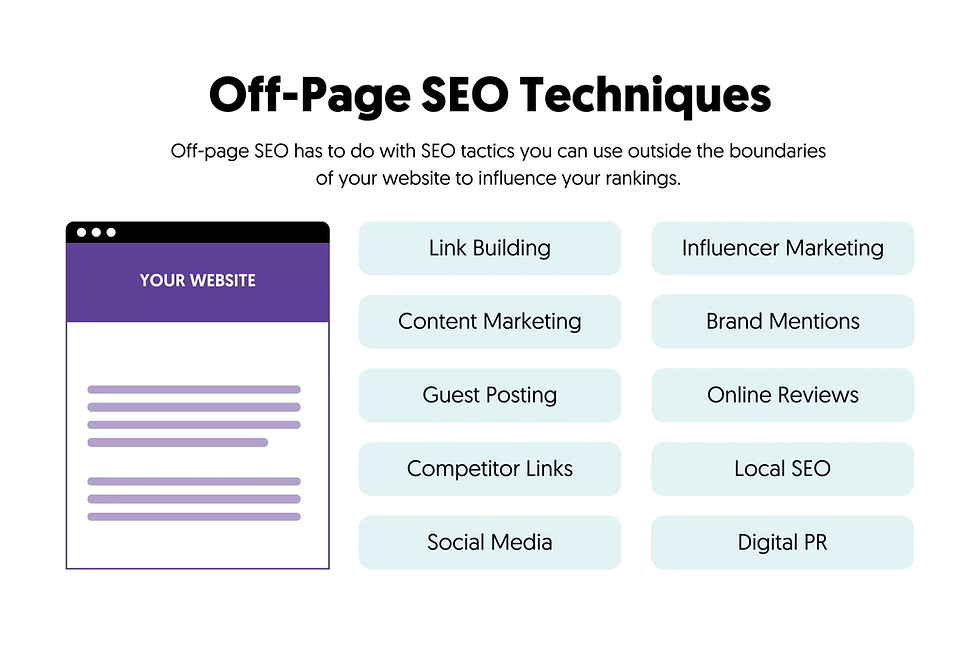
Off-page SEO can also involve brand mentions, digital PR, citations, partnerships, reviews, and other activities that contribute to your business's reputation and visibility across the web.
This is particularly important because search engines don't evaluate every website in isolation.
The broader web can provide context about who your business is, what you are known for, and how other sources reference your expertise.
For businesses competing in crowded markets, building authority beyond your own website can become an important part of long-term SEO.

Technical SEO
Technical SEO focuses on the infrastructure that allows search engines to access, crawl, understand, and index your website effectively.
This can include website speed, mobile usability, crawlability, indexation, site architecture, URLs, redirects, canonicalization, structured data, XML sitemaps, HTTPS, and other technical elements.
Technical SEO is often invisible to customers when everything is working correctly.
That's actually the point.
A customer shouldn't need to understand your site's technical architecture to use it. They should simply be able to load a page quickly, navigate easily, find the information they're looking for, and access your website from the device they're using.
Technical problems can create the opposite experience.
A slow website, broken page, confusing navigation structure, or improperly indexed page can make it harder for both users and search engines to access your content.

Local SEO
Local SEO focuses on improving visibility for searches connected to a specific geographic location.
This is particularly important for businesses that serve customers in specific cities, regions, or service areas.
For example, a Calgary dentist, Saskatoon restaurant, or Edmonton home renovation company may want to appear when people search for relevant services in those locations.
Local SEO can involve your Google Business Profile, local landing pages, business information, reviews, citations, locally relevant content, on-page optimization, and other location-based signals.
A strong local presence also gives search systems more context about where your business operates and what services it provides.
That makes local SEO particularly relevant as search becomes more conversational.
Someone might not simply search:
“Calgary marketing agency.”
They might ask:
“Who can help my small business with SEO and Google Ads in Calgary?”
The underlying intent is still local, but the query is more conversational and specific.
For a deeper look at building local search visibility, read our Ultimate Guide to Local SEO Optimization.
SEO Is the Foundation, Not the Finish Line
SEO remains a fundamental part of digital visibility.
But businesses shouldn't think about SEO as simply “ranking on Google.”
Your website needs to communicate clearly with people and the increasingly sophisticated systems that help people discover information.
That means creating useful content, building topical authority, maintaining a technically sound website, establishing a trustworthy digital presence, and making your business information clear and consistent.
These fundamentals can support visibility across traditional search while also creating a stronger foundation for AEO and GEO.
The search landscape may be changing, but the underlying principle hasn't:
Give people useful information, make it easy to understand, and build a digital presence that search systems can confidently interpret.

What Is AEO?
AEO stands for Answer Engine Optimization, a search optimization approach focused on helping your content provide clear, useful answers that search engines and AI-powered platforms can understand and surface directly.
If SEO is largely about helping your website appear in search results, AEO is about making your information useful enough to become the answer.
This distinction becomes especially important as search continues to move beyond traditional lists of blue links.
People are increasingly asking complete questions through Google, voice assistants, AI search tools, and conversational platforms. Instead of searching for something like “Calgary web design,” someone might ask, “What should a small business look for when hiring a web design agency in Calgary?”
That changes what it means to create content that gets discovered.
The goal of AEO is to structure and develop content so that it can effectively answer specific questions, satisfy search intent, and provide information that answer-focused search experiences can understand and use.
This can include optimizing website pages, blog posts, FAQs, service pages, Google Business Profile information, and other digital content around the questions your audience is actually asking.
AEO isn't about writing a page that answers one question and stopping there.
A strong AEO approach considers the broader topic surrounding a question and provides enough context for the reader, and the search system, to understand the subject.

How Does AEO Work?
You may also come across the question: What is AEO in SEO?
The simplest way to think about it is that AEO is closely related to SEO, but puts greater emphasis on answer-focused search experiences.
Traditional SEO often focuses on ranking a webpage for a particular search query.
AEO focuses more heavily on whether the information on that page can clearly and directly satisfy the question behind the query.
For example, an SEO-focused approach might target the keyword “what is local SEO.”
An AEO-focused approach would consider the actual questions a person might ask around that topic:
“What is local SEO?”
“Why is local SEO important for small businesses?”
“How does local SEO work?”
“How long does local SEO take?”
“What does a local SEO strategy include?”
By answering these questions clearly and comprehensively, your content can serve both traditional searchers and answer-oriented search experiences.
This is why the conversation around what AEO vs SEO vs GEO is becoming increasingly important. SEO, AEO, and GEO aren't necessarily competing strategies. They address different parts of the modern search ecosystem and can work together as part of one broader content and visibility strategy.
Where Does AEO Matter?
AEO matters anywhere people are looking for direct answers rather than simply browsing search results.
This includes traditional search engines, featured snippets, voice search, question-based searches, AI-powered search experiences, and conversational interfaces.
For businesses, this means AEO can influence how information about your company is presented when potential customers ask questions related to your products, services, industry, location, or expertise.
If your website contains clear, authoritative answers to these questions, you're creating content that can potentially serve these answer-driven searches.
This is where answer engine optimization SEO becomes particularly relevant.
AEO doesn't replace SEO. Instead, it expands the purpose of SEO beyond simply trying to rank a page for a keyword.
The focus shifts toward creating information that is discoverable, understandable, useful, and directly relevant to the questions people ask.

The Main Parts of AEO
A successful AEO strategy isn't simply a matter of adding an FAQ section to your website.
It requires a broader approach to how information is researched, structured, written, and connected across your digital presence.
The goal is to build a website and content ecosystem that consistently answers the questions your audience has before, during, and after they begin researching a purchase.

Question-Based Content
The first major component of AEO is understanding the questions your audience actually asks.
Instead of only researching keywords, look at the complete questions and problems behind those keywords.
For example, someone searching for “SEO agency Calgary” may eventually ask:
“What does an SEO agency do?”
“How much does SEO cost?”
“How long does SEO take?”
“Is SEO worth it for a small business?”
“How do I choose an SEO agency?”
These questions reveal the customer's research journey.
Creating content around them allows your website to address more than one isolated search term.
Clear, Direct Answers
AEO-friendly content should make important answers easy to find.
If someone asks a straightforward question, don't make them read 1,500 words before discovering the answer.
Give the direct answer early, then provide additional explanation for people who want to understand the topic in greater depth.
This creates a better experience for both users and search systems.

Semantic and Topical Context
Answer engines need context.
If a page talks about SEO without explaining related concepts such as keywords, search intent, content, backlinks, technical SEO, local search, and website optimization, it may provide less context than a comprehensive resource covering the topic naturally.
This doesn't mean stuffing every related keyword onto a page.
It means demonstrating genuine knowledge of the subject.
A strong page should explain the topic thoroughly enough that both readers and search systems can understand how the different concepts connect.
Structured Content
The way information is organized matters.
Use descriptive headings, short paragraphs, clear definitions, logical sections, tables where appropriate, and structured information to make your content easier to navigate.
Your headings should communicate what each section actually answers.
Instead of a vague heading like “Things to Know,” use something more descriptive such as “How Much Does SEO Cost for a Small Business?”
The second heading gives the reader, and the search system, much more context.

FAQs and Related Questions
Frequently asked questions can be an important part of an AEO strategy because they allow you to address specific questions surrounding your primary topic.
However, FAQs should be genuinely useful.
Adding dozens of artificial questions simply to target long-tail keywords can make a page feel repetitive and unnatural.
The better approach is to identify real questions customers ask and answer them thoroughly.
This can also reveal opportunities for additional content.
A question that deserves a 2,000-word explanation may become a dedicated blog post, while a simple question may only require a short section on an existing service page.

Internal Linking
Internal links help connect related information across your website.
For example, a page explaining SEO could link to your Beginner's Guide to SEO, while a page discussing content strategy could link to related guides about blogging, digital marketing, or building an online presence.
This creates a connected knowledge base instead of a collection of isolated pages.
It also helps users move naturally from a basic question to a more detailed resource.

AEO vs SEO
One of the most common questions surrounding modern search is how is SEO different from AEO?
The biggest difference is the primary optimization objective.
SEO traditionally focuses on improving visibility within search engine results.
AEO focuses more specifically on helping content provide direct, understandable answers to questions.
That doesn't mean SEO is about keywords while AEO is about questions.
Modern SEO already considers search intent, helpful content, semantic relevance, entities, structured information, and user experience.
The difference is largely one of emphasis.
Think of SEO as helping your content get discovered, while AEO helps your content answer the question once it is discovered.
For example, a company might create a page targeting “Calgary digital marketing agency.”
SEO would consider whether the page is technically sound, relevant to the search, authoritative, locally relevant, and competitive enough to appear in organic results.
AEO would also consider whether that page clearly answers questions such as what digital marketing services the agency provides, who those services are for, what they include, how the process works, and what customers should expect.
The two approaches can, and should, work together.
SEO gets the content into the search ecosystem.
AEO makes the information easier to understand and use within answer-focused search experiences.
That is why the goal shouldn't be to choose between SEO and AEO.
Instead, businesses should build content that is search-friendly, answer-friendly, and genuinely useful to the people they're trying to reach.
And as AI-generated search experiences continue to grow, that foundation becomes increasingly important for the next layer of optimization: GEO.

What Is GEO?
GEO stands for Generative Engine Optimization, an emerging approach to optimizing your online presence for generative AI platforms and AI-powered search experiences.
Traditional search engines typically return a list of webpages for a user to explore.
Generative engines can take information from multiple sources, interpret the user's question, and generate a response in a conversational format.
That creates a different visibility opportunity for businesses.
Instead of only asking, “How do I get my website to rank?”
Businesses increasingly need to ask:
“How do I make sure AI systems can understand my business, recognize what we do, and potentially include us when answering relevant questions?”
This is the core idea behind GEO.
When comparing GEO vs SEO vs AEO, the simplest distinction is that SEO focuses heavily on visibility in traditional search results, AEO focuses on providing direct answers to questions, and GEO focuses on visibility and representation within generative AI experiences.
These strategies overlap considerably.
A strong GEO foundation still benefits from many of the same things that make a website effective for SEO and AEO: useful content, clear information, strong technical foundations, relevant entities, authoritative sources, and a trustworthy digital presence.
You may also see people asking what is GEO in SEO?
GEO can be thought of as an extension of search optimization into an environment where AI systems are interpreting information and generating responses.
Instead of optimizing exclusively for a traditional ranking position, GEO considers how your brand and information can be understood within AI-generated search experiences.
A traditional search engine might return a page of agency websites.
A generative search engine may instead provide a written response that mentions several businesses, explains what they do, and potentially provides links or supporting sources.
For a business, that changes the visibility question.
It's no longer only about whether your webpage appears.
It's also about whether the information surrounding your business is clear, credible, relevant, and consistently represented across the web.
If you want to explore this concept further, our guide on How to Get Your Business Found on ChatGPT goes deeper into the practical steps businesses can take to improve their visibility within AI-powered search.

How Does GEO Work?
GEO works by improving the information and signals that generative AI systems can use to understand a business, topic, product, service, or organization.
Unlike a traditional search result, a generated answer may be assembled from information found across multiple sources.
That means your website is important, but it isn't necessarily the entire picture.
A generative system may encounter information about a business through its website, business directories, reviews, news coverage, industry publications, social profiles, third-party websites, and other online sources.
The more consistent and understandable that information is, the easier it can be for systems to build a reliable understanding of the entity.
This is where SEO, GEO, and AEO becomes useful as a framework.
SEO helps make your digital content discoverable.
AEO helps make your content answer-focused and easy to extract.
GEO considers how that information can be interpreted and represented by generative systems.

GEO Explained
A simple way to understand GEO explained is to think about the difference between retrieving information and generating an answer.
Traditional search can retrieve a webpage that contains the answer.
An answer engine can identify and present a direct answer from available information.
A generative engine can synthesize information from different sources and produce a new response based on its understanding of the question and available evidence.
That means GEO isn't simply about adding more keywords to a website.
It is about building a strong, understandable, and trustworthy information footprint around your business.
Where Does GEO Matter?
GEO matters anywhere generative AI is being used to discover information, research options, answer questions, compare businesses, or assist with purchasing decisions.
This includes AI-powered search engines, conversational AI platforms, AI assistants, and other generative search experiences.
Consider the difference between these two searches:
“Digital marketing agency Calgary”
and:
“What digital marketing agency should a small Calgary business consider if it needs a website, SEO, Google Ads, and marketing automation?”
The first looks more like a traditional keyword-driven search.
The second requires the system to understand multiple concepts, evaluate available information, and potentially generate a more nuanced response.
This is where generative engine optimization SEO becomes relevant.
GEO builds on SEO rather than existing separately from it.
Your website still needs to be technically accessible, relevant, useful, and understandable.
But your strategy also needs to consider how your business is represented across the broader web and how AI systems may interpret that information.
GEO for businesses is particularly relevant when customers use AI to research products, services, companies, locations, or solutions.
Imagine a potential customer asking:
“Who offers website design for small businesses in Alberta?”
“What are some Canadian SEO agencies?”
“Which Calgary marketing agencies work with local businesses?”
A business that has built a strong, consistent, information-rich online presence gives AI systems more useful information to work with when responding to questions like these.
This doesn't mean a company can guarantee that an AI platform will mention it.
Generative systems can change their responses based on the wording of the question, available sources, location, user context, model, and many other factors.
The objective of GEO is therefore not to “force” an AI answer.
It is to improve the quality, consistency, relevance, and accessibility of the information available about your business.
The Main Parts of GEO
A comprehensive GEO strategy starts with the same foundation as good SEO and AEO, then expands the focus to your broader digital footprint.
The goal is to make your business easy to understand from multiple sources and across multiple contexts.
Entity Optimization
One of the most important concepts in GEO is establishing a clear understanding of your business as an entity.
Your website should clearly communicate your business name, services, location, industry, audience, team, expertise, and other important attributes.
Your information should also be consistent across relevant external platforms.
If your website says one thing about your business while your directory listings and other trusted sources say something completely different, the overall picture becomes less clear.
Entity consistency helps create a stronger digital identity.

Comprehensive Website Content
Your website needs more than a homepage and a contact page.
A strong GEO-focused website should explain your services, industries, expertise, locations, processes, frequently asked questions, and the problems you solve.
This creates a deeper information base that can address different types of questions.
A website that says “We provide marketing services” gives an AI system relatively little context.
A website that explains its specific services, target customers, locations, processes, expertise, case studies, and results provides substantially more information to understand.
This is one reason comprehensive content matters.

Topical Authority
GEO also benefits from demonstrating genuine knowledge around the topics your business specializes in.
For an SEO agency, that could mean publishing useful resources about SEO, local search, content marketing, Google Business Profiles, technical SEO, AI search, and related subjects.
For a financial services company, it could involve educational content explaining relevant financial concepts, services, processes, and customer questions.
The objective isn't to publish content simply because an AI system might find it.
The objective is to build a useful body of knowledge that demonstrates what your business understands.

Brand Mentions and Digital Footprint
Your website is only one source of information about your business.
Relevant mentions across reputable websites, industry publications, directories, associations, review platforms, partnerships, interviews, and other third-party sources can contribute to the broader picture surrounding your brand.
This is why GEO increasingly requires businesses to think beyond their own website.
Your digital presence is bigger than your domain.

Reviews and Reputation Signals
Customer reviews can provide another layer of information about a business.
Reviews may describe what customers purchased, the services they received, the locations they visited, and the experiences they had.
For local businesses especially, maintaining accurate business information and building a legitimate review presence can support the broader digital footprint used by search and discovery systems.
Reviews shouldn't be manufactured or manipulated.
The focus should be on delivering a good customer experience and making it easy for genuine customers to provide honest feedback.

Structured Data and Technical Foundations
Technical SEO still matters within GEO.
Structured data can help communicate information about pages, organizations, products, services, locations, and other entities in machine-readable formats.
Clear website architecture, crawlability, indexation, descriptive headings, internal linking, accessible content, and strong technical foundations all make information easier for systems to process.
This is another reason GEO shouldn't be treated as a replacement for SEO.
It builds on it.
GEO vs SEO
You may also encounter the term GEO SEO strategy.
The terminology varies because GEO is still an evolving field, and there isn't one universally agreed-upon playbook for optimizing generative search.
In practical terms, a GEO SEO strategy can combine traditional SEO fundamentals with strategies designed to strengthen how a business is understood across AI and generative search environments.
That can include technical SEO, topical content, entity optimization, local SEO, structured data, digital PR, backlinks, reviews, brand mentions, first-party expertise, and consistent business information.
The key is integration.
Rather than creating one “GEO page,” businesses should think about GEO as part of their overall digital presence.
Effective GEO best practices generally come back to the same principle: make your information genuinely useful and easy to understand.
Create content that answers real questions.
Keep business information consistent.
Build topical depth around your expertise.
Publish original insights and first-hand experience.
Maintain accurate local and business listings.
Earn legitimate mentions and links from relevant sources.
Use structured data where appropriate.
And most importantly, write for people first.
Trying to manufacture AI visibility with repetitive keywords, artificial mentions, or low-quality content is unlikely to create the kind of trustworthy digital presence a business actually needs.
The relationship between SEO vs GEO is often misunderstood.
SEO and GEO overlap heavily, but they focus on different search environments and visibility outcomes.
SEO traditionally focuses on helping webpages appear prominently in organic search results.
GEO focuses on helping businesses and their information become understandable and potentially represented within generative AI responses.
Think about a traditional Google search.
A user searches for “Calgary branding agency” and receives a collection of webpages.
SEO helps a business compete for visibility within those results.
Now imagine someone asks an AI-powered search platform:
“What are some branding agencies in Calgary that work with small businesses?”
The system may generate a response based on information it has gathered and interpreted from multiple sources.
GEO considers how your business and its information can contribute to that broader understanding.
GEO vs AEO
The difference between GEO vs AEO comes down primarily to the type of search experience you're optimizing for.
AEO focuses on answering questions clearly.
GEO focuses on how information about your business, brand, content, or expertise can be understood and represented within generative AI responses.
For example, imagine someone asks:
“What is SEO?”
AEO focuses on creating a clear, concise, accurate explanation of SEO.
Now imagine they ask:
“What SEO agency could help a small business in Calgary improve its online presence?”
A generative AI system may need to understand the user's location, business type, service requirements, and available companies before generating its response.
GEO considers the broader information needed for your business to be accurately understood within that kind of generative experience.
This means AEO and GEO can work together.
A business can create content that directly answers customer questions while also developing a broader digital presence that helps AI systems understand the business itself.
SEO helps people discover your content.
AEO helps your content answer their questions.
GEO helps AI systems understand and potentially represent your business and information within generative responses.
None of the three exists in a vacuum.

How SEO, AEO and GEO Work Together
SEO, AEO, and GEO are often discussed as if businesses need to choose one.
They don't.
In reality, the three work best when they are treated as connected parts of the same digital strategy.
SEO helps your website get discovered.
AEO helps your content answer questions.
GEO helps AI systems understand and potentially represent your business and information.
The foundation underneath all three is the same: a useful website, valuable content, accurate information, strong technical foundations, and a trustworthy digital presence.
This is where AI search optimization comes into play.
Instead of creating one strategy for Google, another for answer engines, and another for AI platforms, businesses can build a connected search strategy that considers how people discover information across all of these environments.
The following steps provide a practical starting point.

Step 1: Build a Search-Friendly Website
Everything starts with your website.
If search engines and AI systems can't properly access, understand, or navigate your website, creating more content won't solve the underlying problem.
Your website needs to provide a strong technical and content foundation that supports traditional SEO while also making your information easier for answer engines and generative systems to understand.
If you're starting from scratch, our guide on How to Build a Business Website walks through the fundamentals of creating a website that supports your broader online presence.

On-Page Optimization
On-page optimization involves improving the content and elements found directly on your webpages.
This includes page titles, headings, URLs, body content, images, internal links, metadata, keywords, search intent, and other elements that help communicate what a page is about.
For example, a page titled “Services” doesn't provide much context.
A page titled “Digital Marketing Services for Canadian Small Businesses” immediately communicates more about the subject, audience, and purpose of the page.
Good on-page optimization isn't about inserting keywords everywhere.
It's about making the page's topic and purpose obvious to both humans and search systems.

Technical Optimization
Your website also needs a strong technical foundation.
Technical optimization includes factors such as page speed, mobile performance, HTTPS, website architecture, redirects, canonicalization, structured data, XML sitemaps, and other technical elements that affect how search engines access and interpret your website.
Technical issues can create unnecessary barriers between your content and the people, or systems, trying to find it.
A beautiful website that can't be efficiently crawled or indexed isn't doing much for your search visibility.

Mobile Experience
Your website should work properly across phones, tablets, laptops, and desktop computers.
The mobile experience is especially important because many searches and AI interactions happen through mobile devices.
That means text needs to be readable, navigation needs to be simple, buttons need to be usable, pages need to load efficiently, and important information shouldn't be buried behind frustrating interactions.
A website shouldn't simply “shrink” from desktop to mobile.
It should provide a genuinely useful experience on both.

Site Structure
A logical site structure helps organize your website into understandable relationships.
Your homepage should connect to major service or product categories.
Those pages can connect to more specific services, locations, industries, guides, case studies, and supporting content.
This creates a logical information hierarchy.
It also helps users discover related information without having to start a completely new search.
Crawlability and Indexability
Search engines need to be able to access your pages before they can properly evaluate them.
Crawlability and indexability refer to whether search systems can discover, access, process, and potentially include your webpages in their indexes.
Broken links, incorrect robots directives, accidental noindex tags, poor internal linking, inaccessible content, and other technical problems can interfere with this process.
Before worrying about advanced AI search tactics, make sure search systems can actually access the foundation you've built.

Clear Navigation
Your navigation should make it obvious where people can find important information.
A visitor shouldn't have to hunt through five menus to find your services, contact information, locations, pricing, or resources.
Clear navigation also helps establish relationships between different sections of your website.
When pages are logically connected, users can move through your content naturally.
Search systems can also gain a better understanding of how those pages relate to one another.
The result is a website that is easier to navigate, easier to understand, and easier to optimize for AI search.

Step 2: Build Content Around Search Intent
Once your website has a strong foundation, the next step is creating content around what your audience is actually trying to accomplish.
This is where search intent becomes critical.
A keyword tells you what someone typed.
Search intent tells you why they searched it.
Two people can use similar words while looking for completely different things.
Someone searching “SEO” might want a definition.
Someone searching “SEO agency Calgary” might be researching providers.
Someone searching “hire SEO agency Calgary” may be ready to contact someone.
Your content should reflect those differences.
A strong AI search optimization strategy doesn't just target keywords.
It maps content to the questions, problems, comparisons, and actions that exist throughout the customer's research journey.
Our Beginner's Guide to Keyword Research can help with identifying the search terms and topics your audience is using.

Informational Intent
Informational intent means the person is looking for information.
They may want to understand a concept, learn how something works, solve a problem, or research a topic.
Examples include:
“What is SEO?”
“How does Google Ads work?”
“What is AEO?”
“How do marketing automations work?”
This type of intent is often best served by educational blog posts, guides, resources, tutorials, and explanatory content.

Commercial Intent
Commercial intent happens when someone is researching options before making a purchase or contacting a provider.
Examples include:
“SEO vs Google Ads”
“Best website platforms for small businesses”
“Digital marketing agency vs freelancer”
“How much does a business website cost?”
This type of search requires content that helps people evaluate their options.
Comparison guides, service pages, case studies, reviews, pricing explanations, and detailed resources can all play a role.

Transactional Intent
Transactional intent indicates that someone is closer to taking an action.
They may be looking to buy, book, hire, subscribe, request a quote, or contact a business.
Examples include:
“Hire a Calgary SEO agency”
“Website design packages Canada”
“Book a digital marketing consultation”
Content targeting transactional intent should make the next step clear.
The visitor shouldn't have to read an entire article just to figure out how to contact you.

Navigational Intent
Navigational intent occurs when someone is trying to reach a specific business, website, page, or brand.
Examples include:
“Avansta website”
“Avansta digital marketing”
“Pumpjacks Cathedral menu”
“Google Business Profile login”
For businesses, strong brand recognition and consistent online information can help people find the correct destination more easily.
Navigational searches also demonstrate why your online presence needs to be consistent beyond your own website.
Your business name, services, locations, contact information, and other core details should be accurately represented across relevant platforms.

Step 3: Answer Important Questions Clearly
Once you've identified what your audience is searching for, create content that actually answers those questions.
This sounds obvious.
Yet many websites make users work surprisingly hard to find basic information.
A business might have a 2,000-word service page that never directly explains what the service includes.
A blog might discuss a topic for ten paragraphs before answering the question in the final sentence.
A location page might mention the city repeatedly without actually explaining who the business serves there.
This isn't helpful for the reader.
And it doesn't create the clearest possible information for search systems to interpret.
A strong AI search strategy puts important answers where people can easily find them.

FAQ Sections
FAQ sections can help address common questions that don't necessarily deserve their own dedicated page.
For example, an SEO service page could answer:
“How long does SEO take?”
“How much does SEO cost?”
“What does an SEO campaign include?”
“Do I need SEO if I already run Google Ads?”
The goal isn't to create an enormous FAQ filled with variations of the same keyword.
It's to address genuine questions that help potential customers understand the service.
Direct Answers
When a question has a straightforward answer, give it directly.
Don't make readers dig for it.
For example:
What is AEO?
AEO stands for Answer Engine Optimization. It focuses on creating content that clearly answers questions and can be understood and surfaced within answer-focused search experiences.
Then expand on the explanation.
This structure gives readers the information they're looking for immediately while providing additional context for those who want to learn more.
Supporting Explanations
Direct answers shouldn't mean shallow content.
After answering the question, explain why the answer matters.
Add examples.
Explain relevant exceptions.
Connect the concept to related topics.
Provide practical context.
This combination of direct answers and supporting depth creates content that works for both quick-answer searches and people conducting deeper research.
The goal of these steps isn't simply to produce more content.
It's to create better information.
AI search visibility is influenced by the quality and accessibility of the information surrounding your business, so the foundation matters.
A search-friendly website gives systems access to your information.
Intent-focused content gives them more context about the questions your audience is asking.
Clear answers make that information easier to understand.
Together, these create a stronger foundation for SEO, AEO, and GEO.
And that foundation can continue expanding as your business publishes more useful content, earns legitimate mentions, builds authority, improves its technical performance, and develops a stronger digital presence.
The future of search isn't necessarily about choosing between Google and AI.

Step 4: Build Topical Authority
If you want search engines and AI systems to understand what your business knows, you can't rely on a handful of isolated pages.
You need to build topical authority.
Topical authority means demonstrating meaningful depth and expertise around the subjects your business is actually qualified to discuss.
Think of your website as a library.
One article about SEO might tell visitors that you know what SEO is.
Twenty interconnected resources covering keyword research, on-page optimization, technical SEO, local SEO, link building, content strategy, search intent, AI search, and SEO measurement create a much broader picture of your expertise.
That depth can benefit SEO, AEO, and GEO simultaneously.
It also gives potential customers more reasons to discover and interact with your business.
If you're looking for a more complete walkthrough, our guide on How to Get Your Business Found on ChatGPT explores the broader process of improving your business's visibility across AI-powered search and discovery.
Topic Clusters
A topic cluster organizes related content around a central subject.
Instead of publishing random blog posts based on whatever keyword happens to look interesting that week, you build a connected collection of resources around a core topic.
For example, an agency targeting SEO could create a central SEO guide supported by articles covering:
Keyword research.
On-page SEO.
Technical SEO.
Local SEO.
Link building.
Search intent.
SEO analytics.
AI search.
Each supporting resource can then connect back to the broader topic and to other relevant resources.
This creates a logical content ecosystem rather than a collection of disconnected articles.

Supporting Articles
Supporting articles allow you to answer increasingly specific questions within a broader subject.
Someone might begin by asking:
“What is SEO?”
Then:
“How does keyword research work?”
Then:
“How do I optimize a service page?”
And eventually:
“Should I hire an SEO agency?”
Each question represents a different stage of the research process.
Creating supporting content allows your website to address those different needs while building greater subject depth over time.
This is particularly valuable for businesses trying to understand how to get your business recommended by ChatGPT.
There is no guaranteed formula that makes ChatGPT recommend a particular company.
However, creating a comprehensive, accurate, and trustworthy body of information about your business and areas of expertise gives AI systems more useful information to work with when they encounter relevant questions.
The goal isn't to create content for AI at the expense of humans.
The goal is to become genuinely useful to both.

Internal Linking
Once you've created related content, connect it.
Internal linking helps users move from one relevant resource to another while also establishing relationships between pages.
For example, an article about local SEO could naturally link to your guide about Google Business Profiles.
A page about keyword research could link to your guide about on-page optimization.
An article about AI search could link back to your broader SEO guide.
These connections create pathways through your website.
They also help communicate which topics are related and which pages provide deeper information.
A strong internal linking strategy should feel natural.
Don't add links simply because you can.
Link when the additional resource genuinely helps the reader understand the subject.
Subject Depth
Publishing one article about a topic doesn't automatically establish expertise.
Subject depth comes from consistently covering the important concepts, questions, use cases, challenges, and related topics surrounding your area of expertise.
For a Canadian digital marketing agency, that could mean creating content around SEO, websites, Google Ads, branding, content marketing, automation, AI search, local marketing, and other areas directly connected to the services and expertise of the business.
The deeper the useful information becomes, the easier it is for people to understand what the business actually specializes in.
This is also where quality matters.
Publishing 100 thin articles isn't necessarily more valuable than publishing 20 genuinely useful resources.
The objective is to build a knowledge base, not simply increase your page count.
A strong topical strategy should answer the questions your customers actually have and demonstrate knowledge through useful explanations, examples, original insights, and first-hand experience.
Step 5: Strengthen Brand and Entity Signals
Content tells search systems what your business knows.
Your broader digital presence helps establish who your business is.
This distinction is especially important for GEO.
Generative AI systems aren't only trying to understand individual webpages.
They may also need to understand businesses, people, organizations, products, services, locations, and the relationships between them.
That means your brand needs a clear and consistent digital identity.
If your website describes your business one way, your business profiles describe it another way, and third-party sources provide conflicting information, you've created unnecessary ambiguity.
A stronger approach is to make your core business information consistent wherever it legitimately appears online.
If you're also working on the broader identity of your company, our Beginner's Guide to Business Branding can help you build a clearer and more consistent brand foundation.
Consistent Business Information
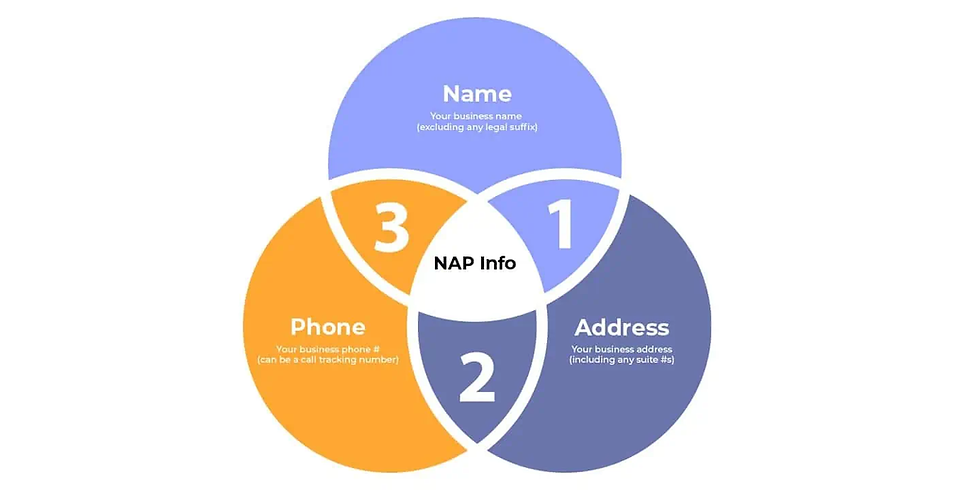
Your business name, address, phone number, website, services, locations, and other core information should be accurate and consistent across relevant platforms.
This is particularly important for local businesses.
For example, if your website says your company serves Calgary and Edmonton but your business profiles list completely different service areas, potential customers may become confused.
Consistency doesn't mean copying the exact same paragraph everywhere.
It means maintaining the same underlying facts.
Your digital presence should tell the same basic story regardless of where someone encounters your business.

About Pages
Your About page is more important than simply introducing your team.
It's an opportunity to explain who your business is, what you do, who you serve, where you operate, and what makes your expertise relevant.
A useful About page can provide context that isn't always appropriate for a service page.
It can explain your company's history, approach, team, experience, values, areas of expertise, and the people behind the brand.
This gives both customers and search systems additional information for understanding the organization.

Brand Mentions
Your website isn't the only place your brand can be discussed.
Brand mentions across relevant websites, publications, directories, interviews, podcasts, associations, industry resources, and other legitimate sources can contribute to your broader online presence.
These mentions can help create connections between your brand and the topics, industries, services, and locations associated with your business.
For example, if a Calgary web design company is consistently mentioned by relevant Canadian business organizations, local publications, industry websites, and business directories, those sources can contribute additional context about the company.
This is one reason GEO extends beyond on-site optimization.
Your reputation and digital footprint exist outside your domain.

Relevant Third-Party Sources
Not every mention is equally useful.
A random website mentioning your business doesn't automatically establish expertise or authority.
Focus on being present in relevant third-party sources that make sense for your industry, location, audience, or area of expertise.
This could include industry publications, professional associations, local organizations, business directories, media outlets, partner websites, podcasts, interviews, events, and other legitimate sources.
The emphasis should be on relevance and credibility rather than simply accumulating as many mentions as possible.
Online Reviews
Reviews provide another source of information about your business.
They can describe the services customers purchased, the problems they needed solved, the locations they visited, and the experiences they had.
For local businesses, maintaining accurate business profiles and encouraging genuine customers to leave honest reviews can strengthen the overall information surrounding the brand.
Reviews should never be fabricated, purchased, or manipulated.
The most sustainable approach is straightforward: deliver a good experience and make it easy for genuine customers to share their feedback.

Digital Profiles
Your business likely exists across more platforms than you realize.
Your website may be accompanied by a Google Business Profile, social media accounts, industry directories, review platforms, business associations, software marketplaces, professional profiles, and other digital properties.
These digital profiles form part of your broader online identity.
Make sure the important information is accurate wherever your business has a legitimate presence.
That includes your business name, description, website, services, location, contact information, branding, and other relevant details.
This is particularly important when thinking about how to get your business recommended by ChatGPT.
There is no setting you can turn on that guarantees an AI platform will recommend your business.
But you can make your business easier to understand by consistently communicating what you do, who you serve, where you operate, and what expertise you have across a trustworthy network of digital sources.
All of these pieces contribute to a clearer digital picture.
That's the real goal of a modern search strategy.
You're not simply trying to rank one page or get one AI answer.
You're building an online presence that makes your business easy to discover, easy to understand, and easy to trust across multiple search environments.
And that's where SEO, AEO, and GEO begin to operate less like three separate strategies, and more like three layers of the same digital ecosystem.

SEO vs AEO vs GEO: Do They Replace Each Other?
As search continues to evolve, it's easy to assume that every new optimization strategy replaces the one that came before it.
SEO came first.
Then AEO became increasingly relevant as search engines began providing more direct answers.
Now GEO is gaining attention as generative AI changes how people discover information, businesses, products, and services.
So where does that leave SEO?
The short answer is: SEO, AEO, and GEO are not replacements for one another.
They address different parts of the search experience and often rely on many of the same underlying foundations.
A useful way to think about seo vs geo vs aeo is this:
SEO helps people discover your content.
AEO helps your content provide direct answers.
GEO helps AI systems understand and potentially represent your business, expertise, and information within generative experiences.
The strategies overlap, but their objectives aren't identical.
How SEO, AEO, and GEO Work Together
Imagine a potential customer researching a service.
They might begin with a traditional Google search.
That's where SEO can help your website become visible.
They might then ask a question such as, “What should I look for when hiring a digital marketing agency?”
That's where answer-focused content and AEO become relevant.
They may eventually ask an AI platform, “Which digital marketing agencies in Calgary work with small businesses?”
Now the system may need to understand businesses, services, locations, expertise, reputation, and information from multiple sources.
That's where GEO becomes increasingly relevant.
The customer didn't necessarily switch from one strategy to another.
They moved through different search experiences.
Your digital presence needs to be capable of supporting each one.
This is why AEO and GEO in digital marketing should generally be viewed as extensions of a broader search and content strategy rather than isolated tactics.
Does AEO Replace SEO?
The question does AEO replace SEO comes up frequently as answer-focused search becomes more prominent.
It doesn't.
AEO builds on many of the same foundations as SEO.
A page still needs to be accessible.
The content still needs to be relevant.
The information still needs to satisfy the user's intent.
The website still benefits from strong technical foundations, useful content, internal links, and a clear information architecture.
The difference is primarily in the type of visibility you're trying to support.
SEO traditionally focuses on visibility within search results.
AEO focuses more specifically on making information useful and extractable as a direct answer.
Consider a page about “What Is Local SEO?”
An SEO strategy might focus on helping that page rank for relevant searches.
An AEO strategy might additionally structure the page so the definition, explanation, and supporting information are easy to understand and potentially surface in an answer-focused search experience.
These objectives can exist on the same page.
The relationship between AEO vs GEO vs SEO becomes clearer when you stop thinking about these strategies as three competing systems.
SEO provides much of the foundation.
AEO adds an answer-focused layer.
GEO adds a generative-search and entity-focused layer.
A website can therefore be optimized to perform across multiple environments without creating completely separate content for each one.
Does GEO Replace SEO?
The question does GEO replace SEO is even more important as generative AI becomes part of the search landscape.
Again, GEO doesn't eliminate SEO.
In many cases, GEO depends on the same foundational work that SEO has encouraged businesses to do for years.
A business still needs a website.
That website still needs useful content.
Pages still need to be accessible to search systems.
Information still needs to be relevant.
Business details still need to be accurate.
Content still benefits from clear structure and strong internal linking.
The difference is that GEO expands the scope of the optimization problem.
Instead of thinking exclusively about how one webpage performs in a search result, you're also thinking about how your business and information are understood across an interconnected digital ecosystem.
The relationship between GEO vs AEO vs SEO can be understood through the type of information each strategy emphasizes.
SEO asks: Can people discover this content through search?
AEO asks: Can this content clearly answer the question being asked?
GEO asks: Can AI systems understand this business, information, expertise, and context well enough to potentially represent it in a generative response?
These questions can all apply to the same business.
Consider a Calgary accounting firm.
Its SEO strategy may target searches related to accounting services in Calgary.
Its AEO strategy may create detailed answers to questions about bookkeeping, taxes, payroll, and accounting services.
Its GEO strategy may strengthen the broader information ecosystem around the firm through comprehensive website content, clear business information, author expertise, reviews, relevant third-party sources, digital profiles, and consistent entity signals.
None of these efforts makes the others obsolete.
They reinforce one another.
Conclusion
Search is changing.
People aren't only typing keywords into Google and clicking through a list of websites anymore.
They're asking questions, looking for direct answers, comparing options, researching businesses, and increasingly using AI-powered tools to help them make decisions.
That doesn't mean traditional SEO is disappearing.
It means the way businesses need to think about online visibility is becoming broader.
The SEO, AEO, and GEO differences can be simplified into three core ideas:
SEO helps people discover your content.
AEO helps your content answer their questions.
GEO helps AI systems understand and potentially represent your business, expertise, and information within generative search experiences.
You don't need to create three completely separate marketing strategies.
Instead, start by building a strong digital foundation.
Make sure your website is technically sound.
Create useful service pages and educational content.
Answer the questions your customers actually ask.
Build topical authority around the subjects your business specializes in.
Strengthen your brand and entity signals.
Keep your business information accurate and consistent.
Build legitimate relationships, mentions, reviews, and digital profiles.
Then connect everything through a thoughtful internal linking and content strategy.
This creates an online presence that can support traditional search while also making your information more useful for answer engines and generative AI experiences.
That's ultimately what the SEO vs AEO vs GEO conversation is really about.
It's not about choosing one acronym and abandoning the others.
It's about understanding how search is evolving and making sure your business is prepared for the different ways customers discover information.
If you're still building the fundamentals, start with our Beginner's Guide to SEO to establish a strong search foundation.
And if you want a practical roadmap for building your entire online presence, from your website and Google presence to digital marketing, SEO, automation, and growth, download our Ultimate Guide to Build Your Business's Online Presence in 90 Days (Free E-Book).
Frequently Asked Questions (FAQ)
What is the difference between SEO, AEO, and GEO?
SEO (Search Engine Optimization) focuses on improving a website's visibility in traditional search engines such as Google. AEO (Answer Engine Optimization) focuses on structuring information so it can be used as a direct answer to a user's question. GEO (Generative Engine Optimization) focuses on making a business, website, content, and expertise easier for generative AI systems to understand and potentially represent in AI-generated responses.
In simple terms, SEO helps people discover you, AEO helps answer their questions, and GEO helps AI systems understand and represent your information.
Is SEO still important with AI search?
Yes. SEO is still an important part of visibility in AI search. AI-powered search systems can use information from websites, search indexes, authoritative sources, business profiles, and other online content when generating responses.
Traditional SEO also provides many of the technical and content fundamentals that support AEO and GEO, including crawlability, useful content, internal linking, clear website structure, and relevant topical information.
Is AEO replacing SEO?
No. AEO does not replace SEO. AEO and SEO address different aspects of search visibility and can be used together.
SEO focuses primarily on helping content become discoverable through search engines, while AEO focuses on making information clear and useful for direct answers. AEO is best understood as an extension of search optimization rather than a complete replacement for SEO.
Is GEO replacing SEO?
No. GEO does not replace SEO. Generative Engine Optimization is an emerging approach focused on improving how businesses and their information may be understood and represented by generative AI systems.
Many GEO practices build on established SEO fundamentals, including high-quality content, technical accessibility, topical authority, internal linking, and trustworthy business information.
Is GEO the same thing as AEO?
No. GEO and AEO are related but not identical. AEO focuses primarily on optimizing information for answer-oriented search experiences, while GEO focuses on how businesses, content, and information are understood and represented in generative AI responses.
There is significant overlap between the two, which is why businesses can often use the same strong content and information architecture to support both.
Is AEO part of SEO?
AEO can be considered part of a broader search optimization strategy, but it is not simply another traditional SEO tactic. AEO expands the focus from ranking webpages to providing information that can directly answer user questions.
SEO and AEO share many fundamentals, including useful content, clear structure, relevant keywords, internal linking, and strong technical foundations.
Is GEO part of SEO?
GEO can be considered part of a broader search optimization strategy, but it has a specific focus on generative AI search experiences. It builds on many SEO principles while placing greater emphasis on entity understanding, contextual relevance, brand signals, topical authority, and information that AI systems can interpret.
Because AI search continues to evolve, GEO is still an emerging area rather than a completely standardized replacement for SEO.
What are the four types of SEO?
The four commonly discussed types of SEO are on-page SEO, off-page SEO, technical SEO, and local SEO.
On-page SEO focuses on content and elements on your website. Off-page SEO focuses on external signals such as links and mentions. Technical SEO focuses on the technical accessibility and structure of a website. Local SEO focuses on improving visibility for searches connected to a specific location.
These areas can work together to create a strong SEO foundation.
Does GEO replace SEO?
No, GEO does not replace SEO. GEO and SEO have different but overlapping purposes.
SEO helps search engines discover, crawl, understand, and rank webpages, while GEO focuses on improving the information and signals that can help generative AI systems understand a business and its content.
A practical digital strategy can incorporate both rather than treating them as competing approaches.
Is SEO replaced by AEO?
No. SEO has not been replaced by AEO. AEO addresses the growing importance of direct answers and answer-focused search experiences, while SEO continues to support traditional search visibility.
As search evolves, businesses can optimize for both traditional search results and answer-oriented experiences.
Is AI SEO called AEO?
Not exactly. AEO stands for Answer Engine Optimization, while “AI SEO” is a broader informal term that can refer to optimizing content and websites for AI-powered search.
AEO specifically focuses on providing information that can be surfaced as answers. GEO, or Generative Engine Optimization, is another term used for optimization focused specifically on generative AI search experiences.
Is SEO dead now with AI?
No, SEO is not dead because of AI. Search behaviour is evolving, but people still use traditional search engines to discover websites, businesses, products, services, and information.
What is changing is the search environment around SEO. Businesses increasingly need to consider traditional search rankings alongside direct answers and AI-generated search experiences.
What is SEO and GEO difference?
The primary SEO and GEO difference is the type of search experience each approach focuses on.
SEO focuses on improving visibility in traditional search engines, while GEO focuses on improving how a business and its information may be understood and represented by generative AI systems.
The two overlap because strong GEO strategies often rely on SEO fundamentals such as useful content, technical accessibility, topical authority, and trustworthy information.
Will AEO take over SEO?
There is no established basis for saying that AEO will completely take over SEO. AEO and SEO serve different purposes and can operate together.
As search becomes more answer-oriented, AEO can become an increasingly important part of a broader search strategy without eliminating the need for traditional SEO.
Can ChatGPT help with SEO?
Yes. ChatGPT can help with many SEO tasks, including keyword research and clustering, content outlines, title and meta description ideas, FAQ development, content optimization, internal-linking ideas, schema planning, and analyzing search intent.
However, AI-generated recommendations should be reviewed by a person and validated against the actual website, audience, search results, and available performance data. ChatGPT can support an SEO workflow, but it does not replace SEO strategy, technical expertise, or first-hand knowledge of a business.
What is the new SEO for AI called?
There is no single universally accepted name for “SEO for AI.” Two commonly used terms are AEO (Answer Engine Optimization) and GEO (Generative Engine Optimization).
AEO generally focuses on optimizing information for answer engines and direct-answer experiences, while GEO focuses specifically on generative AI systems and AI-generated responses. Terminology and definitions can vary because these fields are still developing.
How is AI search changing SEO?
AI search is expanding what businesses need to consider when optimizing their online presence. Instead of focusing exclusively on ranking individual webpages, businesses increasingly need to provide information that is clear, comprehensive, structured, trustworthy, and easy for both people and machines to understand.
This places greater emphasis on areas such as topical authority, entity signals, structured information, conversational search intent, brand mentions, and high-quality content, while traditional technical and on-page SEO fundamentals remain important.
How do I optimize my website for AI search?
To optimize your website for AI search, start by building a strong SEO foundation and then make your business information as clear, comprehensive, and trustworthy as possible.
This can include creating detailed service and product pages, answering common customer questions, building topical authority through related content, maintaining consistent business information, strengthening internal linking, providing clear information about your business and authors, earning legitimate mentions and reviews, and ensuring your website can be properly accessed and understood by search systems.
There is no guaranteed formula for appearing in AI-generated answers, so the goal should be to build a website and digital presence that provides genuinely useful and reliable information.
What is answer engine optimization?
Answer Engine Optimization (AEO) is the practice of optimizing content so that it can provide clear, direct, and useful answers to questions asked through search engines, voice assistants, and other answer-focused search experiences.
AEO commonly involves understanding question-based search intent, creating concise answers, organizing content with clear headings, using structured information where appropriate, and providing deeper supporting context.
What is generative engine optimization?
Generative Engine Optimization (GEO) is an emerging approach to optimizing a business's online presence and content for generative AI search experiences.
GEO focuses on helping AI systems understand relevant information about a business, topic, product, service, or area of expertise. Common considerations include content quality, topical authority, entity signals, brand information, relevant third-party mentions, reviews, digital profiles, and the overall consistency of information across the web.
GEO does not guarantee that an AI system will mention or recommend a particular business. Instead, it focuses on building the information and signals that can make an organization easier for generative systems to understand.


%20-%20Text%20%26%20Icon%20-%20White%20(PNG)_edited.png)
Comments