
How to Get Found on ChatGPT: The Complete Guide to ChatGPT SEO

The way customers discover businesses online is changing faster than ever.
For years, businesses focused on one primary goal: improving their visibility on Google.
Search engine optimization (SEO) became one of the most important digital marketing strategies for attracting customers, increasing website traffic, and generating leads.
However, the rise of artificial intelligence is creating a new evolution in how people search for information, compare businesses, and make purchasing decisions.
Today, customers are not only searching through traditional search engines.

This shift has created a new opportunity for businesses to understand how to get found on ChatGPT and become part of AI-generated recommendations.
This is where ChatGPT SEO and AI search optimization are becoming increasingly important.
Similar to traditional SEO, AI SEO focuses on improving how your business information is discovered, interpreted, and presented by artificial intelligence platforms.
Many businesses are already investing in SEO strategies to improve their visibility online.
However, the future of search will require companies to think beyond traditional rankings. A website that ranks well on Google may still miss opportunities if AI platforms do not clearly understand the business, its services, or its expertise.
This is why more businesses are exploring SEO for ChatGPT.
If you are new to search optimization, our Ultimate Guide to SEO provides a complete foundation for understanding how search engines evaluate websites and how businesses can improve online visibility.
To help businesses create a strong foundation, download our free resource: Free E-Book: Build Your Business's Online Presence in 90 Days.
The future of search belongs to businesses that make their expertise easy to discover, understand, and trust.
Whether you are a local business, service provider, or growing company, preparing for AI search can help you stay ahead as customer behaviour continues evolving.

Why Your Business Might Be Invisible on ChatGPT (Even If You Rank on Google)?
For years, businesses have focused on one primary question: “How do I rank higher on Google?”
While search engine optimization (SEO) remains essential, the way people discover businesses online is changing. Millions of users are now turning to AI platforms like ChatGPT to research products, compare services, find recommendations, and make purchasing decisions.
A business can appear on the first page of Google and still struggle to get mentioned in AI-generated recommendations.
Why?
Because traditional SEO and AI search visibility are not exactly the same.
Google primarily evaluates websites based on search intent, backlinks, technical performance, content quality, and hundreds of ranking signals. ChatGPT and other AI platforms rely on a broader understanding of information, including website content, authority signals, publicly available data, structured information, and patterns learned from trusted sources.
This means businesses need to think beyond traditional rankings.
The question is no longer only:
“Can customers find my website on Google?”
It is also:
“Can AI tools understand my business well enough to recommend it?”
For businesses looking to understand how to get found on ChatGPT, the first step is recognizing that AI visibility requires a different approach to online presence management.

What Does It Mean to "Get Found on ChatGPT"?
Getting found on ChatGPT means that your business, services, products, or expertise appear in AI-generated responses when users ask questions related to your industry.
Instead of searching through dozens of Google results, the user receives a curated answer generated by AI.
If your business information is clear, authoritative, and accessible across the web, AI systems have a better chance of recognizing your company as a relevant recommendation.
This is where ChatGPT optimization becomes increasingly important.
Similar to traditional SEO, ChatGPT optimization focuses on improving how artificial intelligence platforms understand, interpret, and reference your business online.
However, the goal is not simply ranking for a keyword.
The goal is to become a trusted source of information.
A common question businesses ask is: How does ChatGPT find websites?
The answer is more complex than traditional search engines.
AI platforms do not work exactly like Google’s search results page. Instead, AI models generate responses based on a combination of information sources, training data, available web access features, third-party integrations, and trusted online references.
The more clearly your website communicates who you help, what problems you solve, and what expertise you provide, the easier it becomes for AI platforms to identify when your business is relevant.

Why Traditional SEO Alone Is No Longer Enough
Many businesses assume that ranking on Google automatically means they will appear in AI recommendations.
However, AI search introduces a new layer of visibility.
A website can rank well for competitive keywords but still lack the authority signals needed for AI platforms to confidently recommend it.
For example, imagine two accounting firms competing in the same city.
The first firm has a five-page website with basic service descriptions.
The second firm publishes detailed educational content about tax planning, bookkeeping, business accounting, and financial strategy. They have strong customer reviews, consistent business listings, and industry mentions.
Even if both companies rank similarly on Google, the second business provides significantly more information for AI systems to understand its expertise.
This is why modern businesses need to consider AI-generated SEO content as part of their long-term content strategy.
The focus is not on creating content specifically for robots.
The focus is on creating comprehensive resources that demonstrate expertise, answer customer questions, and provide valuable information that AI systems can understand and reference.

Understanding AI-Powered Search
Search is undergoing one of the biggest transformations since the introduction of search engines.
Traditional search required users to enter keywords, review results, and visit multiple websites.
AI-powered search changes this experience by allowing users to ask conversational questions and receive summarized answers.
The rise of AI search does not replace SEO. Instead, it expands what effective SEO looks like. Traditional SEO focused heavily on ranking pages for specific keywords.
This approach is often referred to as AI Generated content SEO or AI search optimization.
However, successful AI SEO is not about producing hundreds of automatically generated articles.
Low-quality content created only to target keywords often lacks the expertise and originality required to build authority.
Instead, businesses should create content that demonstrates real experience, provides detailed answers, and addresses customer challenges.
Businesses looking at how to rank higher in ChatGPT need to think about digital authority rather than traditional rankings alone.
While there is no guaranteed formula for appearing in ChatGPT responses, businesses can improve their chances by strengthening several important areas (we outline the top reasons in this blog).
Many businesses search for how to rank one on ChatGPT, but AI search does not work exactly like traditional search rankings.
There is not always a single position or guaranteed top result.

How People Use ChatGPT to Find Businesses?
The way customers discover businesses is changing.
Instead of searching through dozens of websites, comparing multiple companies, and manually researching options, many people are now using AI tools like ChatGPT to quickly find recommendations, understand their options, and make informed decisions.
Understanding how to get found on ChatGPT means understanding the questions your customers are asking and creating digital content that helps answer those questions.
Search behaviour has shifted from simple keyword searches toward problem-solving conversations.
A customer might not know exactly what service they need. Instead, they may describe their situation and ask AI for guidance.
A business owner may ask: “My website gets traffic, but I’m not generating leads. What should I improve?”
A homeowner may ask: “What should I look for when hiring a roofing company?”
A startup founder may ask: “How can I build an online presence with a limited budget?”
These searches provide businesses with an opportunity to educate potential customers before they are ready to buy.
Companies that create valuable resources around customer questions can increase their visibility and establish credibility.
This is where AI content for SEO becomes increasingly important.
Why AI Search Is Becoming an Important Marketing Channel
The way customers find businesses has always evolved alongside technology.
First, businesses relied on phone books and traditional advertising.
Then, search engines transformed how customers discovered products and services.
Now, AI-powered search is creating another major shift.
Customers are increasingly using tools like ChatGPT to research solutions, compare options, and make decisions faster.
For businesses, this means AI visibility is becoming an important part of a modern digital marketing strategy.
Traditionally, the customer journey looked like this: A customer searches on Google → visits websites → compares options → contacts a business.
AI search introduces a new step: A customer asks AI → receives recommendations and information → chooses which businesses to explore.
This means businesses need to consider how they appear during the research phase.
A strong ChatGPT SEO strategy helps businesses prepare for this shift by improving how their expertise is represented online.
Combining Traditional SEO and AI Optimization
The rise of AI does not mean businesses should abandon traditional SEO.
In fact, strong SEO remains one of the foundations of AI visibility.
Search engines and AI platforms both rely on quality information, authority, and trust.
Businesses that invest in SEO with ChatGPT in mind can create a stronger overall digital presence.
For businesses looking to improve their search visibility, understanding foundational SEO principles is still essential. Factors such as content quality, website experience, backlinks, and technical optimization continue to influence how online platforms evaluate authority.
Learn more about the fundamentals in our guide on Top Google Ranking Factors.

How ChatGPT Finds Information
As artificial intelligence continues changing how people search online, businesses are asking a new question:
“How can customers discover my business through AI?”
Understanding how ChatGPT finds information is an important part of modern digital marketing.
Unlike traditional search engines that display a list of webpages based on a search query, AI platforms are designed to understand questions, analyze context, and provide direct answers.
This shift creates new opportunities for businesses that invest in using AI in SEO and improving how their online presence is understood by artificial intelligence systems.

Understanding AI Knowledge Sources
To understand ChatGPT and SEO, businesses first need to understand where AI systems get information.
AI platforms do not rely on one single source when generating responses.
Instead, they use a combination of information sources, including publicly available web content, trusted references, structured business information, and other available data sources.
When someone asks ChatGPT a question about a business, product, or service, the platform evaluates information patterns to generate the most relevant response.
AI systems may consider businesses that have:
A clear description of their services.
Educational content demonstrating expertise.
Strong online reputation signals.
Consistent information across multiple platforms.
Relevant industry mentions.
This is why artificial intelligence and SEO are becoming increasingly connected.
Businesses need to think beyond individual rankings and focus on creating a complete online presence that communicates authority.
What ChatGPT Looks For
When businesses think about SEO and ChatGPT, they often assume the goal is finding a specific ranking formula.
However, AI visibility is built through multiple trust and relevance signals working together.
ChatGPT looks for information that helps it provide accurate, useful answers.
This means businesses should focus on building a strong digital foundation rather than chasing shortcuts.
Content remains one of the strongest ways businesses can improve ChatGPT visibility. AI systems are designed to answer questions.
Businesses that consistently create helpful educational content increase their chances of being recognized as knowledgeable sources.
For example, a local contractor with hundreds of positive reviews, detailed service pages, and mentions from reputable sources creates stronger credibility signals than a competitor with limited online information.

How Does ChatGPT Rank Businesses?
A common question businesses ask is: How does ChatGPT rank businesses?
The answer is different from traditional Google rankings.
Google uses a ranking system designed to organize search results, while AI platforms focus on generating useful responses based on relevance, context, and available information.
When AI systems determine which businesses may be relevant to a recommendation, they may consider factors such as:
The clarity of your website information.
The depth and quality of your content.
Your online reputation.
Public mentions of your business.
Customer reviews.
Consistency across online platforms.
Many businesses are beginning to research AI SEO keywords because they want to understand what people are searching for through AI platforms.
However, AI search requires a different mindset than traditional keyword targeting.
Instead of focusing only on exact-match keywords, businesses should focus on topics, questions, and customer intent.
AI Doesn't Rank Websites Like Google
One of the biggest misconceptions about AI search is assuming it works exactly like traditional search engines.
Businesses often compare ChatGPT Google SEO and expect the same strategies to produce identical results.
However, AI platforms and Google serve different purposes.
Google helps users discover webpages.
AI platforms help users receive answers.
This difference changes how businesses should approach AI and SEO strategies.
Traditional SEO focuses heavily on improving rankings within search results.
AI optimization focuses on improving how systems understand your expertise and determine when your business is relevant.
Effective website optimization for ChatGPT requires creating a website that is valuable for both people and AI systems.
The businesses that succeed in AI search will be those that treat their website as a knowledge resource.
As AI continues becoming part of the customer journey, companies that invest in strong content, technical optimization, and digital authority will be better positioned to earn visibility in the next generation of search.
How to Get Found on ChatGPT: Step-by-Step Guide
Getting discovered through AI search requires a different approach than traditional search engine optimization.
While businesses have spent years learning how to improve their Google rankings, AI platforms introduce a new opportunity: becoming a trusted recommendation when customers ask questions.
Whether someone is looking for a service provider, researching solutions, or comparing businesses, ChatGPT can influence their decision before they ever visit a website.
For businesses wondering how to get found on ChatGPT, the process starts with building a strong digital foundation.
AI platforms need reliable information to understand your business, your expertise, and the customers you serve.
This is where ChatGPT in SEO becomes increasingly important.
Rather than treating AI search as a separate marketing channel, businesses should view it as an extension of their overall SEO strategy.
A website optimized for users, search engines, and AI platforms creates more opportunities to be discovered across the digital landscape.
The following steps will help improve your chances of appearing in AI-generated recommendations and building stronger ChatGPT optimization strategies.

Tip #1: Build a Website That AI and Customers Can Understand
Your website is the foundation of your online presence.
Before focusing on advanced AI strategies, businesses need to ensure their website clearly communicates their expertise, services, and value.
An outdated, unclear, or incomplete website makes it difficult for both customers and AI systems to understand what your business offers.
A strong website should not only look professional.
It should provide meaningful information that answers customer questions and demonstrates why your business is the right choice.
This is one of the biggest differences between traditional websites and an AI-friendly website.
An AI-friendly website is structured in a way that makes information easy to understand.
It clearly explains:
Who do you serve?
What services do you provide?
Where do you operate?
What makes your business different?
Why customers should trust you?
Businesses that want to learn the fundamentals of creating an effective website can explore our guide on the Beginner's Guide to Building a Business Website.

Create Clear and Detailed Service Pages
One of the most important steps in how to optimize your website for ChatGPT is creating detailed service pages.
Many businesses make the mistake of creating short pages that only describe what they do.
AI systems need more information to understand relevance.
For example, instead of: “We offer website design services.”
A stronger message would be: “We design conversion-focused websites for Canadian small businesses that help generate leads, improve online credibility, and create a stronger customer experience across desktop and mobile devices.”
The second example gives AI systems significantly more context.
It connects the business to specific services, audiences, locations, and outcomes.
Optimize Content for AI Search Intent
Traditional SEO often focuses on ranking for specific keywords.
However, AI search is more focused on understanding questions and intent.
To optimize content for AI search, businesses should create content that answers the questions customers are already asking.
For example, a roofing company should not only create a page about roofing services.
It should also answer questions like:
“How much does a new roof cost?”
“How long does a roof replacement take?”
“What are the signs you need a new roof?”
“What roofing materials work best in Canada?”
This type of content creates more opportunities for AI systems to associate your business with relevant customer conversations.
The goal is not simply to add more keywords. The goal is to create useful information that demonstrates expertise.

Strengthen Your Website's Trust Signals
Trust plays an important role in how to rank higher in ChatGPT answers.
AI platforms are more likely to recommend businesses that demonstrate credibility.
Your website should include trust-building elements such as customer testimonials, case studies, industry experience, company information, and awards or certifications.
For example, a web design agency that showcases completed projects, client results, and detailed case studies provides stronger evidence of expertise than a website that only lists services.
AI systems are becoming increasingly focused on understanding credibility.
Businesses often separate ChatGPT SEO and Google strategies as two different approaches.
In reality, many of the same principles support both. The difference is that AI search places even more emphasis on context and understanding.
By creating a website that serves both purposes, businesses can improve visibility across multiple search experiences.
Businesses looking at how to rank high in ChatGPT should focus on long-term authority rather than quick tactics.
There is no shortcut that guarantees AI recommendations. Instead, businesses need to consistently build a strong online presence.
This means creating an AI-friendly website, publishing valuable content, maintaining accurate information, and demonstrating real expertise.

Tip #2: Publish Helpful, Comprehensive Content
Content remains one of the most powerful ways businesses can improve their visibility online.
As AI platforms become a larger part of the customer journey, businesses need to create content that does more than target keywords.
They need to create resources that educate customers, answer important questions, and demonstrate expertise.
This is where ChatGPT for content and SEO becomes increasingly valuable.
AI search platforms are designed to understand information and provide helpful answers.
Businesses that consistently publish detailed, useful content create more opportunities to become recognized as trusted sources within their industry.
The goal is not to create content simply because AI exists.
The goal is to create better content because customers need better answers.

Create Content Around Customer Questions
One of the most effective ways to improve AI visibility is to understand what your customers are asking.
Many businesses focus their content around their products and services.
However, customers often search for solutions before they are ready to make a purchase.
A business owner looking for a website redesign may not immediately search: “Website design company.”
Instead, they may ask:
“How much does a business website cost?”
“What pages should my website include?”
“How long does it take to build a website?”
“How can I get more customers online?”
Creating content that answers these questions helps position your business as a knowledgeable resource.
This approach supports both traditional SEO and AI discovery.
Go Beyond Basic Blog Posts
Many businesses create short blog posts that provide general information but fail to deliver meaningful value.
AI platforms are becoming better at identifying content depth, relevance, and usefulness.
A strong AI-focused content strategy should prioritize comprehensive resources, such as templates, checklists, webinars, videos, e-books, and anything that can provide value to your customers.
AI tools can help businesses improve their content creation process, but they should support expertise rather than replace it.
Using ChatGPT in SEO can help businesses generate content ideas, identify customer questions, create content outlines, improve readability, and develop topic clusters.
However, businesses should avoid publishing generic AI-generated content without human review.
Content created only to produce volume often lacks originality, experience, and industry-specific insights.
The strongest content combines AI efficiency with human expertise.

Create Content That Supports the Entire Customer Journey
Great content does not only attract visitors.
It helps move potential customers from awareness to decision-making.
A strong content strategy should include resources for every stage of the buying journey.
A customer researching a problem may read an educational guide.
A customer comparing options may view a service comparison article.
A customer ready to buy may review case studies or testimonials.
By creating content across the entire customer journey, businesses create more opportunities to be discovered through search engines and AI platforms.
Content is not just marketing material.
It is a digital asset that continues building authority over time.

Tip #3: Build Topical Authority
One of the most important factors in improving AI visibility is becoming recognized as an expert in a specific subject area.
AI platforms need to understand which businesses are knowledgeable about certain topics.
A website with scattered content across unrelated subjects creates less clarity.
A website that consistently covers a specific area builds stronger authority.
This is known as topical authority.
For businesses focused on how to get found on ChatGPT, building topical authority is one of the most effective long-term strategies.
What Is Topical Authority?
Topical authority means demonstrating deep knowledge about a specific industry, service, or subject.
Instead of creating one page about a topic, businesses create a network of connected content that covers different aspects of that subject.
For example, a digital marketing agency could build topical authority around SEO by creating content around the topics of SEO.
Each piece of content strengthens the others.
Together, they create a clearer picture of the company’s expertise.
Build Authority Through Strategic Keyword Research
Creating topical authority starts with understanding what your audience is searching for.
Keyword research helps businesses identify customer questions, search trends, and content opportunities.
Before creating content, businesses should understand:
What questions are customers asking?
Which topics are important within their industry?
What information are competitors missing?
Which searches indicate buying intent?
Our Complete Guide to Keyword Research explains how businesses can identify valuable search opportunities, understand customer intent, and create content strategies that attract the right audience.
By combining keyword research with AI-focused content strategies, businesses can create resources that are more likely to appear when customers search for solutions.
How to Optimize for ChatGPT Through Topic Depth
Many businesses ask how to optimize for ChatGPT, but improving AI visibility is not about optimizing a single webpage.
It is about building a complete ecosystem of expertise.
A business with one article about a topic provides limited information.
A business with dozens of connected, high-quality resources creates a much stronger understanding of its knowledge.
AI platforms have more context to understand the company’s expertise and when it may be relevant to users.
Topical authority is not built overnight.
It requires consistent investment in educational content and expertise-driven marketing.
A strong ChatGPT SEO strategy focuses on becoming a trusted resource over time.

Tip #4: Optimize Your Website Structure
A strong website is not only designed for customers and search engines.
It should also be structured in a way that helps AI platforms understand your business, services, and expertise.
As AI-powered search continues growing, businesses need to think beyond traditional SEO and consider AI search optimization as part of their overall digital strategy.
A well-structured website creates clearer connections between your pages, topics, and services.
This makes it easier for users to navigate your website while helping AI systems better understand when your business may be relevant to a specific question or recommendation.
For businesses learning how to rank in ChatGPT, website structure is one of the most important foundations to improve.
Create a Clear Website Architecture
Website architecture refers to the way your pages are organized and connected together.
Many businesses build websites by adding pages over time without considering how those pages relate to each other.
This can create a confusing experience for both users and AI systems.
A strong website structure should create clear relationships between your main services, supporting pages, and educational content.
A website should not feel like a collection of separate pages.
It should function as a connected resource that guides visitors through your knowledge and services.

Connect Related Content Through Internal Linking
Internal linking helps create relationships between different pages on your website.
When related pages connect together, it creates a clearer understanding of your expertise.
For example, a blog post about improving Google rankings should naturally connect to pages about SEO services, keyword research, technical SEO, or SEO audits.
These connections show that your website covers a topic in depth rather than only mentioning it once.
From an SEO perspective, internal links help users discover more relevant content.
From an AI perspective, they help provide additional context about how different topics connect.
A strong website guides visitors from learning about a problem to discovering the solution your business provides.
Organize Content for Better AI Understanding
AI platforms need clear and structured information.
A website filled with large blocks of text, unclear headings, and inconsistent messaging makes it harder for systems to understand your content.
Businesses should focus on creating pages that are easy to interpret.
This means using descriptive headings, clear sections, detailed explanations, and content that directly answers customer questions.
Instead of creating a generic page about marketing services, businesses can create dedicated sections explaining SEO, paid advertising, content marketing, automation, and analytics.
This level of detail creates stronger signals around your expertise.
A strong website structure supports more than just rankings.
It supports your overall AI marketing strategy by making your business easier to understand across digital platforms.
AI search is becoming increasingly focused on relevance and context.
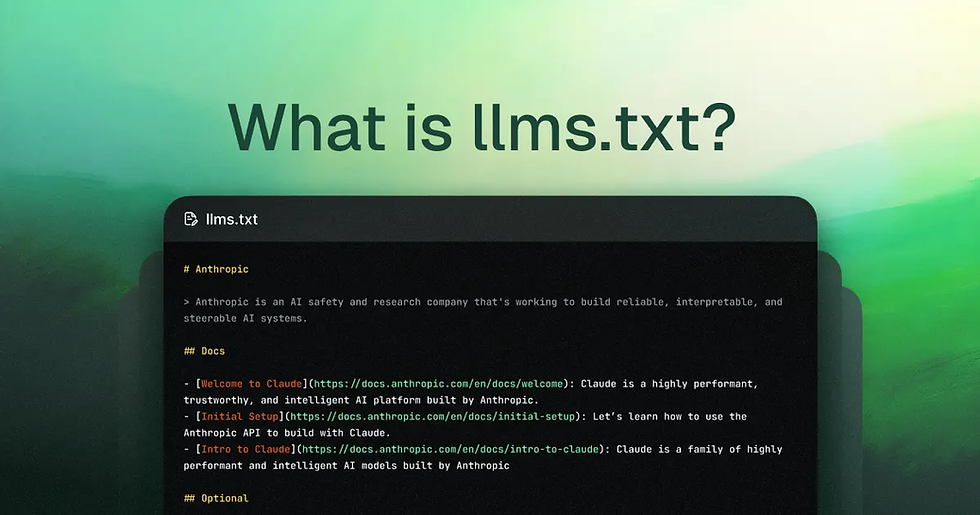
Tip #5: Upload an LLMs.txt File
As AI continues changing how people discover information online, businesses are beginning to explore new ways to make their websites easier for artificial intelligence systems to understand.
One emerging development is the use of an LLMs.txt file.
Similar to how robots.txt provides instructions for search engine crawlers, LLMs.txt is designed to provide AI systems with additional information about a website’s content and structure.
While this technology is still developing, it represents an important shift toward preparing websites for the future of AI-powered search.
For businesses investing in AI SEO, understanding tools like LLMs.txt can become part of a broader strategy for improving online visibility.
What Is an LLMs.txt File?
An LLMs.txt file is a text file added to a website that provides AI models with information about important website resources.
The purpose is to help AI systems better understand the content, purpose, and most valuable pages on a website.
For example, an LLMs.txt file could highlight important resources such as:
A company’s main service pages.
Industry guides.
Educational content.
Case studies.
Important product or solution pages.
Rather than forcing AI systems to discover every page individually, the file provides additional guidance about the information a business considers most valuable.
How LLMs.txt Supports Website Optimization for ChatGPT
As businesses focus more on ChatGPT optimization, the ability for AI systems to understand website content becomes increasingly important.
AI platforms need accurate information to generate useful recommendations.
A website may contain valuable content, but if that information is poorly organized or difficult to interpret, AI systems may not fully understand its relevance.
An LLMs.txt file can support the broader goal of making important website information more accessible.
However, it should be viewed as one part of a larger AI optimization strategy. A file alone will not create visibility.
Businesses looking to optimize website for ChatGPT should focus on creating a complete digital ecosystem.
An LLMs.txt file can help highlight important information, but it works best when combined with other optimization efforts.
A website with detailed service pages, educational content, strong internal linking, and clear business information provides AI systems with much more context.

Tip #6: Use Structured Data (Schema Markup)
As AI-powered search continues evolving, businesses need to provide more context about their website and online presence.
One of the most effective ways to help search engines and AI platforms better understand your business information is through structured data, also known as schema markup.
Structured data is a type of code added to your website that helps communicate important details in a format that machines can easily interpret.
While website visitors may see your company name, services, reviews, and location naturally displayed on your website, structured data helps search engines and AI systems understand the meaning behind that information.
For businesses looking to optimize their websites for AI, structured data creates another layer of clarity that can support better visibility across modern search experiences.

What Is Structured Data?
Structured data is a standardized format that provides additional information about your website content.
Instead of AI systems and search engines having to interpret information manually, schema markup provides clear signals about what different elements represent.
Traditional SEO focused heavily on helping websites rank within search engine results.
However, AI-powered search requires a deeper understanding of information.
When users ask questions through AI platforms, systems need to identify which businesses, services, and resources best match the request.
Structured data helps provide additional context about your website. Schema markup can support this understanding by clearly defining important business information.
While there is no guaranteed formula for improving ChatGPT ranking, businesses can strengthen their AI search foundation by making their information easier to understand.
AI platforms are increasingly focused on relevance, accuracy, and trust.
These signals can contribute to stronger visibility across AI-powered search experiences, including potential appearances within ChatGPT search results.
Make Your Website Easier for AI Systems to Understand
The future of search is moving toward better understanding.
AI platforms are not only looking for keywords.
They are analyzing meaning, relationships, and context.
Structured data helps bridge the gap between your website content and how AI systems interpret that information.
By combining schema markup with strong website structure, helpful content, and clear messaging, businesses create a stronger foundation for AI visibility.

Tip #7: Strengthen Your Brand Across the Web
AI platforms do not evaluate businesses based only on their websites.
A company’s overall online presence plays an important role in determining credibility, authority, and trust.
As businesses focus on improving AI visibility, they need to think beyond website optimization and build a recognizable brand across the entire digital ecosystem.
A strong brand creates more signals that help AI systems understand who your business is, what you specialize in, and why customers should trust you.
For businesses learning how to optimize for AI search, strengthening your brand reputation is one of the most valuable long-term strategies.
AI Search Looks Beyond Your Website
Many businesses assume their website is the only source of information that matters.
However, AI systems consider a much broader digital footprint.
Your online presence may include:
Your website.
Google Business Profile.
Social media profiles.
Customer reviews.
Industry directories.
When these sources consistently communicate the same information, they create stronger signals about your business.
Consistency builds confidence.

Build a Recognizable and Consistent Brand Identity
A strong brand makes it easier for customers and AI systems to understand your business.
Your brand should clearly communicate:
Who you help?
What you offer?
What makes you different?
Why customers should choose you?
This includes your messaging, visual identity, tone of voice, and customer experience.
Businesses looking to strengthen their brand foundation can explore our guide on How to Create a Brand for Your Business.
A well-developed brand creates consistency across every platform where customers discover your business.
Maintain Consistent Business Information Everywhere
One of the most important parts of website optimization for AI is ensuring your business information is accurate and consistent.
Important details such as your business name, location, services, and contact information should match across online platforms.
This helps search engines and AI systems confidently associate information with your company.
Consistency reduces confusion and strengthens your online presence.
AI search is moving toward recommending businesses based on relevance, trust, and authority.
Companies that invest in branding, content, reviews, and online reputation will have a stronger opportunity to be recognized.
The future of AI search will not only reward businesses with optimized websites.
It will reward businesses that have built recognizable, trusted brands.
A strong digital brand creates the foundation for long-term AI visibility by making your expertise clear across every place customers and AI systems discover information.

Tip #8: Earn High-Quality Mentions and Backlinks
Building authority online has always been an important part of SEO.
As AI-powered search continues changing how customers discover businesses, earning trusted mentions across the web is becoming even more valuable.
AI systems need reliable signals to understand which businesses, websites, and experts should be considered trustworthy.
One of the strongest ways to build this authority is through high-quality backlinks and brand mentions from reputable sources.
A backlink occurs when another website links to your website.
However, not all backlinks provide the same value.
A link from a respected industry publication, trusted directory, or relevant business partner can provide much stronger authority signals than dozens of low-quality links from unrelated websites.
Focus on Relevant and Authoritative Backlinks
A successful backlink strategy is not about collecting as many links as possible.
Quality matters more than quantity.
A single backlink from a highly relevant website can provide more value than many unrelated links.
For example, a construction company receiving a mention from a local home improvement publication is more valuable than receiving a link from a generic website unrelated to construction.
Businesses should focus on earning links naturally by creating valuable resources, building partnerships, contributing expertise, and becoming a trusted source within their industry.

Create Content Worth Referencing
One of the best ways to earn backlinks is by creating content that other businesses and publications want to reference.
This includes:
Industry research.
Detailed guides.
Original insights.
Educational resources.
Case studies.
Helpful tools.
For example, a digital marketing agency publishing a comprehensive guide about online growth strategies may become a resource that other businesses reference when discussing digital marketing.
High-quality content creates opportunities for organic mentions while strengthening your overall authority.

Tip #9: Enable NLWeb for AI-Powered Agent Crawling
As AI search continues evolving, businesses are preparing for a future where AI agents interact with websites more directly.
One emerging technology designed to support this shift is NLWeb.
NLWeb is an initiative focused on making websites easier for AI systems and agents to understand, interact with, and retrieve information from.
While AI search is still developing, businesses that prepare early may have an advantage as digital discovery continues to change.
For companies wondering how to get their business on ChatGPT, the future may involve more than simply appearing in search results.
It may involve making your website accessible and understandable to AI-powered assistants.
What Is NLWeb?
NLWeb is designed to help websites communicate more effectively with AI systems.
Traditional websites are primarily built for human visitors.
Users navigate menus, click links, and search through pages to find information.
AI agents operate differently.
They need structured access to information so they can understand website content and provide accurate responses.
NLWeb aims to create a more AI-friendly way for websites to share information.
This could allow AI assistants to better understand services, products, availability, and business information.

Preparing Your Website for AI Agents
Businesses do not need to completely rebuild their websites to prepare for AI-powered search.
The same foundations that support SEO also support AI accessibility.
As AI agents become more common, businesses may need to consider how their websites interact with these systems.
Future AI search rankings may depend not only on traditional SEO signals but also on how effectively AI systems can understand and use website information.
A website that clearly communicates its services, content, and expertise will be better positioned as AI-powered experiences continue expanding.

Tip #10: Optimize Your Google Business Profile
For local businesses, Google Business Profile remains one of the most important tools for improving online visibility.
While AI search is creating new opportunities, many customers still rely on local search when looking for nearby businesses.
Your Google Business Profile provides important information about your company, including your location, services, reviews, photos, and customer experience.
A well-optimized profile can strengthen your local presence while providing additional information that may support AI-powered recommendations.
Businesses looking to improve their local search foundation can explore our Google Business Profile Optimization Guide.
Keep Your Business Information Accurate
The first step in optimizing your Google Business Profile is ensuring your information is complete and accurate.
Your profile should clearly communicate:
Your business name.
Your service areas.
Your contact information.
Your hours of operation.
Your website.
Your services.
Incorrect or outdated information can create confusion for both customers and search platforms.
Consistency across your website, Google Business Profile, and other online listings helps establish trust.
Collect and Respond to Customer Reviews
Reviews are one of the strongest trust signals for local businesses.
Customers use reviews to decide which companies they want to contact.
Search engines use reviews as an indicator of reputation.
AI platforms can also use public reputation signals when understanding businesses.
Businesses should create a consistent process for requesting reviews from satisfied customers.
Responding to reviews also demonstrates that your company values customer relationships.

Tip #11: Keep Your Content Fresh
Creating high-quality content is important, but maintaining that content over time is equally valuable.
Industries change. Customer questions evolve. Technology advances.
Information that was accurate two years ago may no longer provide the same value today.
Keeping your content updated helps maintain trust with customers, search engines, and AI platforms.
For businesses investing in SEO and AI generated content, content freshness is becoming an important part of maintaining long-term visibility.
Update Existing Content Instead of Always Creating New Content
Many businesses focus entirely on publishing new articles.
While creating new resources is important, updating existing content can often create significant value.
An article about digital marketing trends from several years ago may need updated statistics, examples, and strategies.
Refreshing existing content helps ensure your website continues providing accurate information.
It also signals that your business actively maintains its knowledge and expertise.
Use ChatGPT for SEO Improvements, Not Content Replacement
AI tools can be valuable for maintaining and improving content.
Businesses can use ChatGPT for SEO by using AI to support tasks such as identifying outdated sections, finding content improvement opportunities, improving readability, and creating updated outlines.
However, AI should support your expertise rather than replace it.
The strongest content combines AI efficiency with human experience.
A business should always review, personalize, and improve AI-assisted content to ensure it reflects real expertise.
Content should be treated as an ongoing investment.
Keeping your website updated helps customers receive better information while improving your ability to remain visible in evolving search environments.
As AI continues transforming how people discover businesses, companies that consistently maintain accurate, valuable content will be better positioned to earn trust from both customers and AI platforms.
Common Mistakes That Prevent Businesses From Being Found on ChatGPT
As AI-powered search continues changing how customers discover businesses, many companies are beginning to invest in ChatGPT SEO Optimization.
However, improving AI visibility is not simply about adding more content, using AI tools, or inserting keywords throughout a website.
Many businesses unintentionally create barriers that make it harder for AI platforms to understand their expertise and recommend their services.
A successful SEO for ChatGPT search strategy requires the same foundation as traditional SEO: valuable content, a trustworthy website, clear information, and a strong digital reputation.
Understanding the most common mistakes can help businesses avoid missed opportunities and create a stronger foundation for AI search visibility.

Mistake #1: Thin Content
One of the biggest challenges preventing businesses from appearing in AI-generated recommendations is creating content that lacks depth.
Many websites contain short service pages or basic blog posts that provide very little information beyond a simple description.
For example, a page that says, “We provide SEO services to businesses,” does not provide enough context for customers or AI systems.
A stronger page explains:
Who is the service designed for?
What problems does it solve?
How does the process work?
What strategies are included?
What results can customers expect?
AI platforms need detailed information to understand relevance.
When content lacks depth, there are fewer signals available to determine when a business should be recommended.
AI platforms are designed to provide helpful answers.
If a website provides limited information, AI systems have less confidence when connecting that business to customer questions.
Avoid Creating Content Only for Algorithms
Some businesses create content with the goal of targeting keywords without considering whether the information is actually useful.
This often results in content that feels repetitive, generic, or disconnected from customer needs.
Using ChatGPT SEO prompts can help businesses brainstorm ideas, organize content, and identify questions customers may ask.
However, AI-generated suggestions should always be improved with real expertise, examples, and industry-specific insights.
The best content strategy combines AI assistance with human knowledge.

Mistake #2: Keyword Stuffing
Another common mistake businesses make is overusing keywords in an attempt to improve AI visibility.
While keywords remain important, repeating the same phrase excessively does not improve rankings or increase the chances of being recommended.
AI platforms are designed to understand meaning, context, and user intent.
They do not simply look for repeated words.
For businesses wondering how to rank in ChatGPT, the focus should be on creating natural, helpful content that clearly answers customer questions.
Write for Customers First
The best-performing content sounds natural.
Customers do not want to read pages filled with repeated phrases.
They want answers, explanations, and solutions.
A website that communicates clearly will naturally include relevant keywords without forcing them into every paragraph.
Businesses should focus on creating content that builds trust.
Visibility comes from being useful, not from repeating the same phrase multiple times.
Mistake #3: Weak Website Structure & No Internal Linking
A website can contain excellent content but still struggle with AI visibility if the information is poorly organized.
Website structure helps customers, search engines, and AI platforms understand how different topics connect.
Without a clear structure, important pages may become difficult to discover.
For businesses asking how to appear in ChatGPT results, website organization is a critical factor to consider.
Create Clear Connections Between Related Topics
Internal linking helps establish relationships between pages.
For example, a digital marketing agency may connect SEO Services, Keyword Research, SEO Audits, Content Marketing, and Local SEO.
These connections create a stronger understanding of the company’s expertise.
Instead of having isolated pages, the website becomes a connected knowledge resource.
This helps customers find more information while providing AI systems with additional context.
A website with detailed pages, organized content, and strong internal connections provides more information for AI systems to understand.
Mistake #4: Inconsistent Business Information
One of the most overlooked issues affecting AI visibility is inconsistent information across the web.
Businesses often update their website but forget about older information on directories, social media profiles, and third-party platforms.
This creates confusion.
For businesses focused on how to improve AI visibility, maintaining consistent information across every online channel is essential.
AI visibility is built through your entire digital ecosystem.
Your website is important, but it is only one piece of the puzzle.
Customer reviews, business listings, social profiles, and industry mentions all contribute to how your company is understood online.
A consistent brand presence creates stronger authority signals.

Mistake #5: Publishing AI-Generated Content Without Editing
AI tools have made content creation faster and more accessible.
However, publishing AI-generated content without reviewing, improving, and personalizing it can hurt your credibility.
While AI can support content creation, successful SEO for ChatGPT requires content that demonstrates real expertise and value.
Build Content That Helps Customers Discover Your Business
Businesses looking at how to get more customers through ChatGPT should focus on becoming a trusted resource.
AI search is not only about appearing in answers.
It is about being the business customers choose after receiving those answers.
The companies that succeed will be those that create valuable content, maintain strong digital foundations, and consistently demonstrate expertise.
AI visibility is not achieved through shortcuts.
It is built through trust, authority, and providing genuinely helpful information.
Conclusion
The way customers discover businesses is changing.
For years, businesses focused primarily on improving Google rankings, increasing website traffic, and optimizing for traditional search results.
While SEO remains an essential part of digital marketing, AI-powered platforms like ChatGPT are creating a new opportunity for businesses to become visible during the research and decision-making process.
For businesses wondering how to get found on ChatGPT, the answer is not about finding a single optimization trick.
It is about building a complete digital presence that clearly communicates your expertise, provides valuable information, and creates trust across the web.
Many businesses ask: “Can ChatGPT find my website?”
The answer depends on how effectively your business communicates information online.
Understanding how local businesses get found on ChatGPT starts with building a strong local online presence.
As AI search continues evolving, businesses will need to think beyond simply ranking for keywords.
The future of online visibility will depend on becoming a trusted source of information.
Companies that consistently create helpful content, answer customer questions, and demonstrate expertise will be better positioned to improve their AI search rankings.
Improving AI visibility is a long-term strategy.
It requires a combination of strong website foundations, quality content, technical optimization, local SEO, and consistent brand building.
Businesses that begin preparing now will have a stronger advantage as AI becomes a larger part of how customers search, compare, and make purchasing decisions.
If you are looking for a roadmap to grow your online presence, download our free e-book: Free E-Book: Build Your Business's Online Presence in 90 Days.
Businesses looking to improve their local search performance can explore our guide on How to Improve Your Local SEO Rankings to learn how to increase visibility in local search results.
Frequently Asked Questions (FAQ)
How to appear in ChatGPT results?
To appear in ChatGPT results, businesses need to build a strong digital presence that clearly communicates their expertise, services, and authority.
While there is no guaranteed way to rank in every AI-generated response, businesses can improve their chances by creating high-quality content, optimizing their website structure, maintaining accurate business information, earning trusted mentions, and building topical authority.
AI platforms look for reliable information that helps answer user questions.
Businesses that consistently publish helpful resources, demonstrate industry expertise, and maintain a trustworthy online reputation have a stronger opportunity to be recognized by AI systems.
How to be mentioned in ChatGPT?
To increase the chances of being mentioned in ChatGPT, businesses should focus on becoming a trusted source of information within their industry.
This includes creating detailed service pages, publishing educational content, collecting customer reviews, improving local SEO, and earning mentions from reputable websites.
AI platforms consider information from across the web when understanding businesses.
The more consistently your company information, expertise, and reputation appear across trusted sources, the easier it becomes for AI systems to recognize your business as a relevant recommendation.
How to get traffic from ChatGPT?
Businesses can generate traffic from ChatGPT by creating content that answers the questions their target customers are asking.
This includes publishing detailed blog posts, creating helpful guides, optimizing service pages, and covering topics related to customer challenges and buying decisions.
When AI platforms identify your website as a helpful resource, users may visit your website to learn more, request a quote, or explore your services.
How do you get ranked on ChatGPT?
Getting ranked on ChatGPT requires building authority, relevance, and trust across your entire online presence.
Unlike Google, ChatGPT does not operate with a traditional ranking system where websites compete for a specific position.
Instead, AI-generated responses are based on factors such as content quality, website information, online reputation, relevance to the question, and available data sources.
Businesses can improve their chances by following AI SEO strategies, including creating comprehensive content, optimizing their website structure, strengthening their brand presence, and maintaining consistent information across online platforms.
How to rank #1 in ChatGPT results?
There is no guaranteed method to rank #1 in ChatGPT results because AI platforms generate responses dynamically based on the user’s question, context, and available information.
Rather than focusing on a single ranking position, businesses should focus on becoming the most relevant and trusted answer for their target audience.
To improve visibility, businesses should create authoritative content, demonstrate expertise, optimize their website for AI search, collect positive reviews, and build a strong digital reputation.
The goal is not simply to appear first.
The goal is to become the business AI platforms trust enough to recommend.
How do you rank yourself on ChatGPT?
You can improve your visibility on ChatGPT by strengthening your online authority and making your business easier for AI systems to understand.
Start by ensuring your website clearly explains your services, target audience, location, and expertise.
Then, build authority through educational content, customer reviews, backlinks, local SEO, structured data, and consistent brand information across the web.
Businesses should also create content around customer questions and industry topics rather than focusing only on promotional pages.
A strong AI presence comes from becoming a trusted resource within your market.
Is SEO replaced by AI?
No, SEO is not being replaced by AI. Instead, SEO is evolving.
Search engines and AI platforms both rely on many of the same foundations, including helpful content, technical website optimization, authority, and user experience.
However, AI search introduces additional considerations, such as making content easier for AI systems to understand and ensuring your business information is clear across the web.
Businesses should think of AI as an expansion of SEO rather than a replacement.



%20-%20Text%20%26%20Icon%20-%20White%20(PNG)_edited.png)
Comments