
Google Average Position Ranking by Industry: Search Rankings Benchmark Comparisons

One of the most common questions businesses ask when evaluating their SEO performance is: what is the average Google ranking position for websites in their industry?
Understanding where your website ranks compared to competitors can provide valuable insights into whether your SEO strategy is improving visibility or whether there are opportunities to increase your search presence.
However, ranking performance is not the same for every business.
A local service company, e-commerce store, financial institution, and software company all compete in very different search environments, which means their expected ranking performance can vary significantly.
Tracking your google average position ranking helps businesses understand how visible their website is across Google search results.
This metric provides insight into where your website typically appears when users search for keywords related to your products, services, or industry.
However, your average position is influenced by many factors, including keyword difficulty, website authority, location, competition, search intent, and the quality of your SEO strategy.
Many businesses use average position Google Search Console data to evaluate their SEO performance.
While this information is useful, it is important to understand that Google does not provide official industry-wide averages for rankings.
There is no universal number that determines whether a website is performing well because every business has a unique keyword portfolio and competitive landscape.
Instead, businesses should use industry comparisons as directional benchmarks to understand opportunities and measure progress over time.

This guide explores SEO industry averages and estimated Google rankings by industry to help businesses better understand how their website performance compares to common SEO patterns.
These benchmarks are not official Google standards, but they provide useful context based on typical competition levels, search behaviour, and the amount of SEO investment required in different industries.
Google rankings are influenced by hundreds of factors, from website structure and content quality to technical performance and authority.
To learn more about the most important ranking signals, explore our guide on Top Google SEO Ranking Factors.
For a complete overview of SEO strategies businesses can use to improve search visibility, explore our Ultimate Guide to SEO.

How Does Your Website Ranking Compare to Businesses in Your Industry?
Understanding how your website performs compared to competitors is an important part of evaluating SEO success.
Many businesses look at their google average position ranking to determine whether their website is gaining visibility or falling behind competitors.
However, ranking performance should always be evaluated within context.
A website ranking in position 15 may be performing well in a highly competitive industry, while a website ranking in position 15 for a less competitive keyword may represent a missed opportunity.
Comparing your website against industry benchmarks, competitors, and your own historical performance provides a much clearer picture of SEO progress.
Before making improvements, businesses should first understand where their website currently stands.
A comprehensive website review can help identify opportunities related to content, technical SEO, user experience, and search visibility.
Our Website Audit Checklist provides a framework for reviewing the key areas that influence website performance and search rankings.
What is Google Average Position Ranking?
Google Average Position Ranking refers to the average placement of a website’s pages within Google search results for the keywords it appears for.
Many businesses use this metric to understand their overall search visibility and determine whether their SEO strategy is improving over time.
When looking at organic Google search average position, the number represents where a website typically appears when users search for relevant terms.
For example, if a website has an average position of 8, it means the website generally appears around the eighth result in Google search results for the queries it ranks for.
However, average position does not mean every keyword ranks in the same place.
A website may rank #1 for some searches, #20 for others, and may not rank at all for additional keywords.
A common question businesses ask is: what does average position mean in Google Search Console?
In Google Search Console, average position represents the average ranking position of your website’s highest-ranking result when it appears in search results.
This means that if your website appears multiple times for the same search query, Google typically calculates the position based on the highest-ranking page.
Average position provides valuable insight into search visibility, but it should not be viewed as a standalone SEO success metric.

How Google Search Console Measures Average Position
Google Search Console calculates average position based on how often your website appears in search results and where those appearances occur.
The calculation considers impressions across different searches, locations, devices, and search results.
A website may appear in position 3 for one search but position 18 for another.
Google combines these ranking positions to create an overall average.
This means the average position in Google Search Console can change frequently as your website gains new rankings, loses rankings, or begins appearing for different keywords.
When analyzing the average ranking position for businesses, it is important to consider the quality of keywords driving those rankings.
A business ranking highly for irrelevant keywords may have a strong average position but receive little meaningful traffic.
Meanwhile, another business with a lower average position may attract more customers because it ranks for valuable commercial searches.
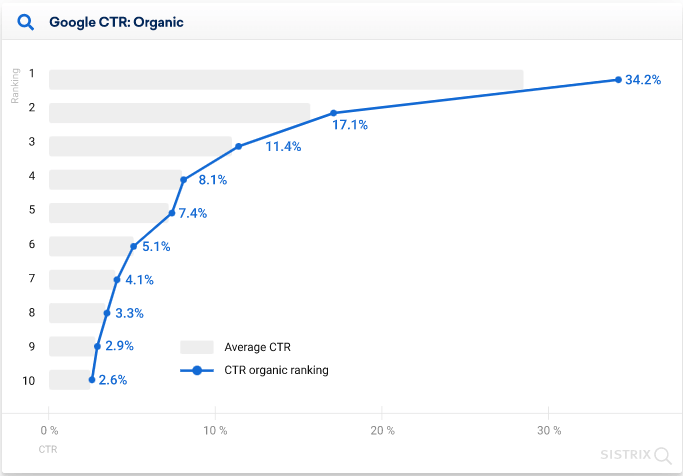
Average Position vs Keyword Ranking Position
Although these terms are often used interchangeably, average position and keyword ranking position measure different things.
Keyword ranking position refers to the specific position a website ranks for an individual keyword.
For example, a company may rank #4 for “Calgary roofing company” and #18 for “commercial roofing services.”
Average position combines all ranking positions into one overall measurement.
When businesses ask what is the average Google ranking position, they are often referring to this overall visibility metric rather than a single keyword.
Understanding the difference between these metrics helps businesses make better SEO decisions.
A website’s overall average position may improve even if some individual keywords fluctuate because the website is gaining visibility across a broader range of searches.
Likewise, a website may have strong individual rankings but a lower average position if it ranks for many competitive keywords.
Businesses should monitor both overall performance and individual keyword improvements to understand how SEO efforts are impacting visibility.
For businesses looking to improve their keyword targeting and understand which search terms provide the greatest opportunities, our Beginner's Guide to Keyword Research explains how to identify valuable keywords and build an effective SEO strategy.
Ultimately, understanding your average website ranking position on Google is not about chasing a single number.
Estimated Average Google Ranking Position by Industry
One of the most common questions businesses ask when evaluating their SEO performance is: what is the average Google ranking position for websites in their industry?
Understanding where your website stands compared to competitors can help identify whether your SEO strategy is performing well or whether there are opportunities to improve visibility.
However, it is important to understand that Google does not publish official industry-wide ranking benchmarks.
There is no universal database that shows the average ranking position for every industry because search rankings depend on hundreds of variables, including website authority, keyword competition, location, search intent, content quality, technical SEO, and the competitiveness of the market.
When businesses review SEO performance, they often look at Google average position ranking data through Google Search Console.
This metric provides insight into where a website typically appears in Google search results for the queries it ranks for.
However, Google Search Console average position is unique to each website and is influenced by the specific keywords a website appears for, the number of impressions it receives, and the locations and devices where searches occur.
Because of this, two businesses in the same industry can have completely different average positions depending on their SEO strategy and online authority.
What Is the Average Google Ranking Position?
The following Google ranking position by industry estimates represent commonly observed ranges among established businesses with ongoing SEO efforts.
These ranges are directional benchmarks designed to help businesses understand typical ranking performance across competitive industries.
Industry | Typical Position Ranking |
Automotive | 11 - 35 |
B2B Services | 15 - 45 |
Construction | 10 - 40 |
Dental Clinics | 10 - 35 |
E-Commerce | 20 - 50 |
Financial Services | 20 - 45 |
Healthcare | 10 - 25 |
HVAC | 10 - 45 |
Insurance | 20 - 50 |
Landscaping | 20 - 45 |
Legal Services | 20 - 60 |
Manufacturing | 15 - 35 |
Real Estate | 20 - 55 |
Restaurants | 10 - 25 |
SaaS & Technology | 15 - 45 |
These estimates should not be viewed as official Google benchmarks.
They represent observational ranges based on common SEO performance patterns among businesses competing in these industries.
Actual rankings can vary significantly depending on factors such as geographic competition, website age, domain authority, content depth, backlink profile, technical SEO, and the competitiveness of targeted keywords.
When researching Google average position ranking benchmarks, one of the biggest challenges is that Google does not provide official ranking averages by industry.
Unlike metrics such as search impressions, clicks, and Google Search Console average position, industry-wide ranking data is not publicly available because every website’s rankings are influenced by unique factors such as competition, location, website authority, content quality, and SEO investment.
Because of this, the numbers in this report are not intended to represent official Google benchmarks.
Instead, they are estimated ranges based on common SEO patterns, competitive search environments, and the level of optimization typically required for businesses in each industry to achieve meaningful visibility.
When determining these estimates, we considered several factors that influence what position the average website ranks on Google, including:
The competitiveness of industry keywords.
The average investment businesses make into SEO.
The complexity of customer decision-making.
The value of ranking for specific searches.
Industries where customers are actively searching for services with high purchase intent often have more competition, meaning businesses generally require stronger SEO strategies to achieve top rankings.
Industry Ranking Analysis
Automotive: Estimated Average Position 11 - 35
The automotive industry typically experiences moderate to high SEO competition because businesses compete across multiple search categories, including vehicle sales, repairs, dealerships, parts, and specialty services.
Local automotive businesses often have opportunities to rank well because searches frequently include location-based intent, such as “auto repair near me” or “Toyota dealership Calgary.”
However, competitive keywords such as vehicle models, financing, and dealership searches are often dominated by large automotive brands and national companies with significant SEO resources.
Because of this combination of local opportunity and national competition, automotive websites commonly fall within the 11–35 ranking range unless they have strong local SEO, extensive content, and established authority.
B2B Services: Estimated Average Position 15 - 45
B2B companies often face unique SEO challenges because their target keywords are typically more specific and have lower search volumes.
While there may be fewer competitors compared to consumer industries, businesses are often competing for highly valuable searches where decision-makers are looking for specialized solutions.
For example, keywords related to consulting, software, manufacturing services, or professional solutions often require detailed content, industry expertise, and strong authority signals.
Many B2B companies also have historically underinvested in SEO, creating opportunities for businesses with strong content strategies.
The estimated 15–45 range reflects the difficulty of ranking for competitive commercial keywords while recognizing the opportunity available through targeted content.
Construction: Estimated Average Position 10 - 40
Construction businesses often have strong opportunities to rank locally because customers usually search for contractors based on location and specific services.
Keywords such as “roofing company,” “home renovation contractor,” or “commercial construction company” are highly valuable because they indicate strong buying intent.
However, competition varies significantly depending on the service area.
A construction company targeting a smaller city may achieve top rankings faster than one competing in major markets such as Calgary, Toronto, or Vancouver.
The estimated 10–40 range reflects the balance between strong local SEO opportunities and competitive service-based searches.
Dental Clinics: Estimated Average Position 10 - 35
Dental SEO is generally competitive because patients frequently search online before choosing a provider.
Local relevance plays a major role, allowing dental clinics with optimized Google Business Profiles, strong reviews, and location-focused content to compete effectively.
However, larger dental groups and established clinics often invest heavily in SEO, paid advertising, and content marketing.
Clinics that actively manage their online presence can often achieve first-page visibility, while businesses without consistent SEO efforts may struggle to compete.
E-Commerce: Estimated Average Position 20 - 50
E-commerce websites typically face some of the most challenging SEO environments.
Online stores compete against large marketplaces such as Amazon, major retailers, and established brands with thousands of product pages and powerful backlink profiles.
Ranking requires more than product listings.
Successful e-commerce SEO depends on optimized category pages, detailed product descriptions, technical SEO, reviews, content marketing, and strong website performance.
Because of this increased competition, many e-commerce websites have lower average rankings unless they operate in a specific niche or have significant SEO investment.
Financial Services: Estimated Average Position 20 - 45
Financial services keywords are among the most competitive because they represent high-value customers and significant revenue opportunities.
Industries such as banking, insurance, investing, mortgages, and financial planning compete heavily for searches with strong commercial intent.
Google also applies higher expectations for financial websites because these topics can directly impact users’ financial decisions.
This means businesses need strong expertise, authority, trust signals, detailed content, and reputable online presence to compete effectively.
Healthcare: Estimated Average Position 10 - 25
Healthcare businesses often benefit from strong local search opportunities because many healthcare-related searches are location-based.
Patients frequently search for nearby providers, clinics, and specialists, making local SEO a major factor.
However, healthcare is also a trust-focused industry where Google prioritizes credible, authoritative information.
Businesses with strong reviews, accurate information, professional websites, and helpful educational content often have opportunities to achieve stronger rankings.
Legal Services: Estimated Average Position 20 - 60
Legal services are among the most competitive industries for SEO.
Law firms compete heavily for high-value searches because a single new client can represent significant revenue.
Keywords related to personal injury, family law, criminal defence, and business law often have extremely competitive search environments.
Ranking requires significant investment in content, backlinks, local SEO, reputation management, and technical optimization.
Because of this, many legal websites have lower average positions unless they have established authority and a comprehensive SEO strategy.
Real Estate: Estimated Average Position 20 - 55
Real estate SEO is highly competitive because businesses compete with agents, brokerages, listing platforms, and national real estate websites.
Searches often include location-specific intent, but major platforms frequently dominate broad keywords.
Successful real estate SEO strategies typically focus on specific neighbourhoods, market insights, buyer resources, and localized content rather than competing directly against large listing platforms.
Restaurants: Estimated Average Position 10 - 25
Restaurants often have stronger opportunities to rank because Google heavily emphasizes local relevance.
Searches such as “best restaurant near me” or “pizza in Calgary” prioritize proximity, reviews, Google Business Profile optimization, and customer engagement.
However, competition can vary significantly depending on location.
Restaurants in smaller communities may achieve strong rankings faster, while businesses in major cities face much stronger competition.
SaaS & Technology: Estimated Average Position 15 - 45
Technology companies often compete in highly specialized markets where SEO success depends on demonstrating expertise.
SaaS companies typically target competitive keywords related to software solutions, industry problems, and business outcomes.
Strong rankings usually require extensive educational content, comparison pages, technical resources, and authoritative backlinks.
Companies with strong content marketing programs often outperform competitors because they build topical authority over time.
Understanding These Benchmarks
These Google ranking position by industry estimates are designed to provide context, not a guarantee of where every business should rank.
A small local business with excellent SEO may outperform a larger competitor with a weaker digital presence.
Likewise, an established company may struggle if its website, content, or technical foundation is outdated.
The most important factor is not simply where your website ranks today.
It is whether your rankings are improving for the keywords that matter most to your customers.
A successful SEO strategy focuses on increasing qualified visibility, attracting the right audience, and turning search traffic into measurable business growth.
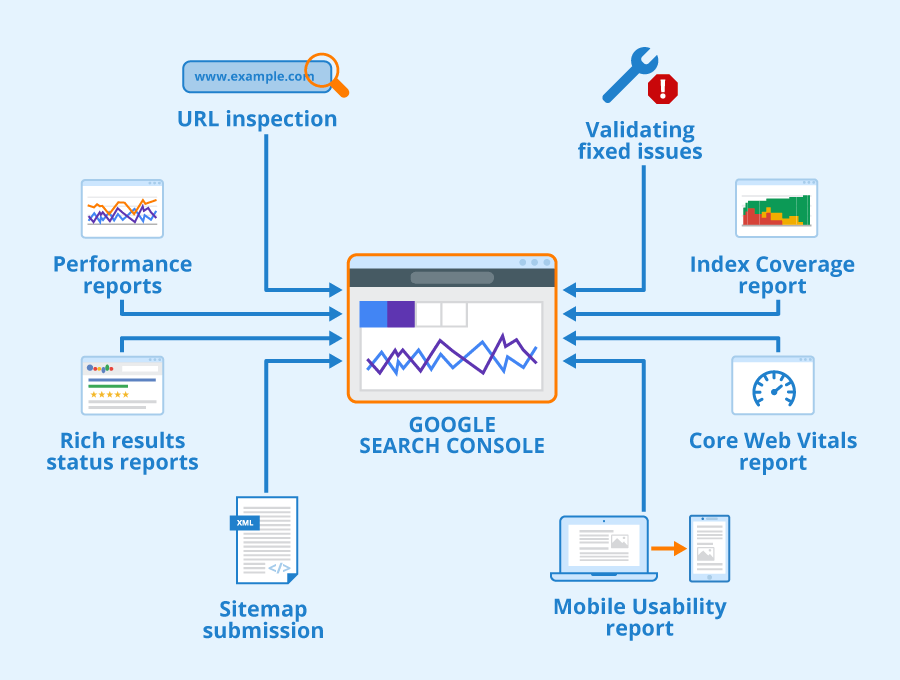
How to Interpret Your Google Search Console Average Position
Understanding what the average position in Google Search Console is requires looking beyond a single number.
A website with an average position of 25 may still be performing well if it is ranking for hundreds of valuable keywords and consistently gaining impressions.
Meanwhile, a website with an average position of 10 may not be generating significant traffic if it ranks for low-value keywords with limited search volume.
Businesses should analyze average position alongside other SEO metrics, organic traffic growth, keyword rankings, click-through rates, search impressions, and conversions from organic search.
These metrics provide a more complete picture of SEO performance.
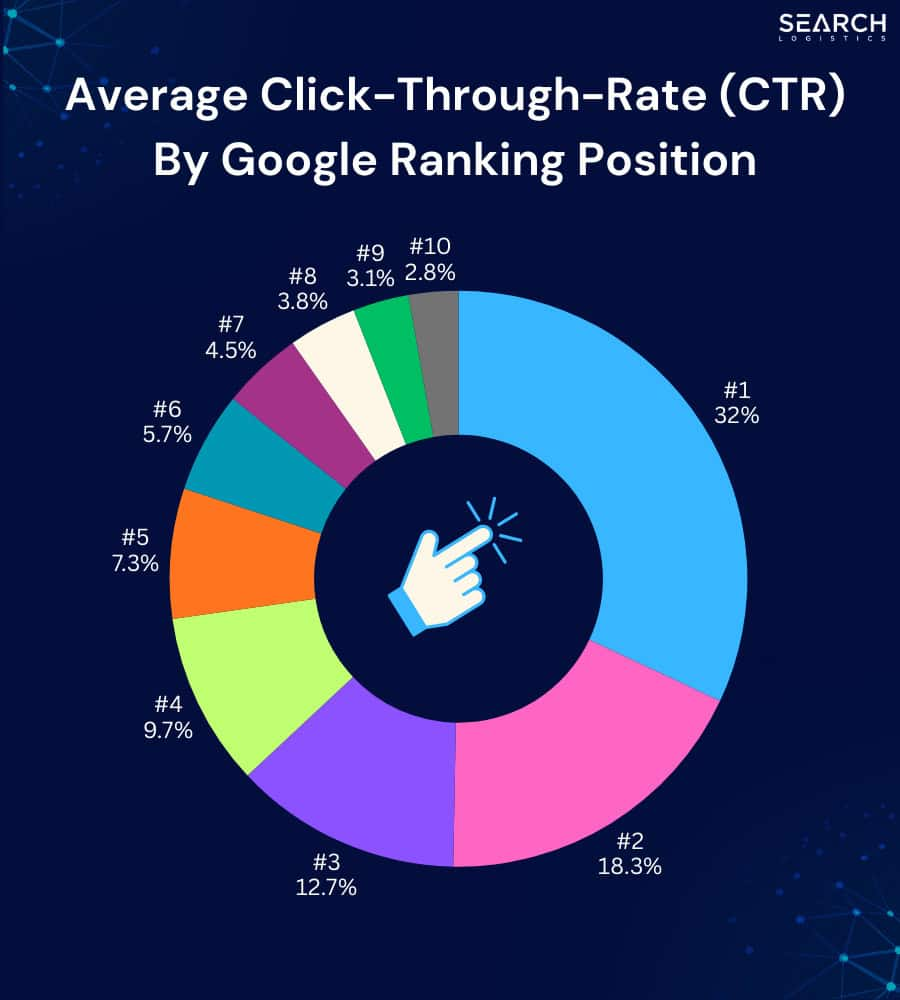
What Is a Good Google Ranking Position?
One of the most common questions businesses ask when reviewing their SEO performance is: what is a good Google ranking position?
While ranking position is an important SEO measurement, the answer depends on the competitiveness of your industry, the search intent behind the keyword, and whether the ranking is generating valuable website traffic and customers.
A website ranking #1 for an irrelevant keyword with no search demand will create less business value than a website ranking #8 for a high-intent keyword that consistently generates leads.
A strong SEO strategy typically focuses on achieving first page Google ranking positions because the majority of users click results appearing near the top of search results.
However, not every first-page ranking delivers the same impact.
Positions 1–3 generally receive the highest visibility, while positions lower on the first page may require additional optimization to capture more clicks.
Understanding your position within your industry also provides valuable context.
For example, a ranking position of 15 may indicate strong progress for a competitive legal keyword but may represent an opportunity for improvement in a less competitive local service industry.
This is why businesses should compare performance against average Google ranking position by industry benchmarks rather than relying only on a single ranking number.

Position 1–3: Excellent Ranking Performance
Ranking within positions 1–3 represents some of the strongest SEO performance a website can achieve.
These positions typically receive the highest click-through rates because they appear at the top of search results and are viewed by users as some of the most relevant answers to their search.
For businesses, achieving top-three rankings often creates a significant advantage because competitors receive less visibility and fewer opportunities to attract potential customers.
However, maintaining these positions requires ongoing SEO investment.
Search results constantly change as competitors publish new content, improve their websites, and build stronger authority.
Businesses ranking in positions 1–3 should continue improving their content, monitoring competitors, and maintaining strong technical SEO foundations to protect their visibility.
Position 4–10: First Page Success
Ranking between positions 4–10 is generally considered strong SEO performance because the website appears on the first page of Google.
Many businesses consider this range a successful milestone because it demonstrates that Google recognizes the website as relevant and trustworthy for the targeted search term.
However, there is often significant opportunity within this range.
Moving from position 8 to position 3 can create a substantial increase in visibility and website traffic because users are more likely to click higher-ranking results.
For businesses reviewing keyword ranking benchmarks, first-page rankings should be viewed as a foundation rather than the final goal.
Continued content improvements, stronger internal linking, better user experience, and additional authority signals can help move valuable keywords into higher positions.
Position 11–20: Ranking Opportunity Zone
Positions 11–20 are often referred to as the opportunity zone because the website is already showing signs of relevance but has not yet achieved strong visibility.
These rankings typically appear on the second page of Google or near the bottom of the first page.
For many businesses, keywords in this range represent some of the easiest opportunities for growth because Google has already determined that the website provides relevant information.
Instead of creating entirely new content, businesses can often improve rankings by updating existing pages, expanding content depth, improving search intent alignment, strengthening internal links, and earning additional backlinks.
When reviewing average search ranking by industry, many established businesses have opportunities hidden within positions 11–20.
These keywords can often become valuable traffic sources with targeted optimization efforts.
Position 20+: Requires SEO Improvement
Keywords ranking beyond position 20 typically indicate that a website requires additional SEO improvement before it can compete effectively.
While ranking beyond the first two pages means Google has indexed the content, the website may not yet have enough authority, relevance, or optimization signals to compete for higher positions.
Common reasons websites rank below position 20 include weak keyword targeting and limited content depth, AI-written content, technical SEO issues, lack of backlinks or authority, or poor user experience.
For businesses evaluating what is a good SEO ranking, positions beyond 20 should generally be viewed as growth opportunities rather than failures.
With the right SEO strategy, these rankings can improve over time through content optimization, technical improvements, and stronger digital authority.
Generally, an average position between 1–10 indicates strong visibility, while positions between 11–20 represent significant growth opportunities.
However, the ideal average position depends on the keywords a website ranks for.
A local business ranking between positions 5–10 for high-intent service keywords may generate excellent results, while a large website ranking highly for low-value informational keywords may generate limited business impact.
A strong average Google ranking position is ultimately one that helps your business reach the right customers.
The goal of SEO is not simply to rank higher.

Factors That Influence Google Ranking Position
Improving your website’s ranking position requires understanding the factors that influence how Google evaluates and displays search results.
While Google uses hundreds of ranking signals within its algorithm, successful SEO strategies typically focus on improving the areas that have the greatest impact on visibility, user experience, and website authority.
Businesses looking to understand how to improve average position in Google Search Console should focus on building a stronger overall digital presence rather than trying to manipulate individual ranking factors.
Higher rankings are usually the result of consistently improving content, technical performance, website experience, and trust signals over time.
For a deeper understanding of the most important ranking factors, explore our guide on Top Google SEO Ranking Factors.

Website Authority
Website authority plays an important role in determining how competitive a website can be within search results.
Google evaluates signals that indicate whether a website is trustworthy, credible, and recognized within its industry.
A website with strong authority is more likely to compete for competitive keywords because Google has more confidence that the content provides value to users.
Authority is influenced by factors such as quality backlinks, brand mentions, content expertise, website history, and overall online reputation.
For example, a new website competing against an established industry leader may struggle to achieve top rankings immediately because the established website has built years of trust and authority.
Businesses can measure changes in authority by monitoring improvements in their average keyword ranking position and overall website ranking performance.
As a website gains stronger authority, it often begins ranking for more keywords, earning higher positions, and receiving increased organic visibility.
However, authority is not built overnight.
It requires consistent content creation, strong customer experiences, digital PR, partnerships, and ongoing SEO efforts.

Content Quality
Content quality is one of the most important elements influencing Google search rankings.
Google’s goal is to provide users with the most helpful, accurate, and relevant information for their search.
Websites that create valuable content aligned with user intent are more likely to perform well compared to websites focused only on targeting keywords.
High-quality content should answer customer questions, provide useful insights, demonstrate expertise, and help users take the next step.
For example, a construction company creating detailed guides about renovation costs, project timelines, and building requirements can establish more authority than a website with only basic service descriptions.
Successful SEO content focuses on relevance, depth, and usefulness.
Businesses should avoid creating content solely for search engines and instead focus on creating resources that genuinely help their audience.
This approach aligns with modern Google ranking factors,

Technical SEO
Technical SEO ensures that search engines can properly crawl, understand, and evaluate a website.
Even high-quality content can struggle to rank if technical issues prevent Google from accessing or understanding important pages.
Technical factors such as website speed, mobile optimization, indexing, site structure, security, and structured data all contribute to overall SEO performance.
For example, a slow website may create a poor user experience, while unclear website architecture can make it difficult for Google to understand which pages are most important.
When reviewing average website ranking position, technical SEO is often one of the key areas businesses need to improve because foundational issues can limit ranking potential.
Understanding technical performance is especially important when comparing Google search ranking statistics by industry, as competitive industries often require stronger technical foundations to compete effectively.

User Experience
User experience has become an increasingly important part of SEO because Google’s goal is to provide users with results that are not only relevant but also easy and enjoyable to use.
A website that loads quickly, works well on mobile devices, provides clear navigation, and helps visitors find information easily is more likely to perform well in search results.
Poor user experience can negatively impact engagement because visitors may leave quickly if a website is difficult to navigate or does not meet their expectations.
Factors such as page layout, readability, navigation structure, calls-to-action, and website design all influence how users interact with a business online.
For businesses comparing average Google position against competitors, improving user experience can create meaningful ranking improvements while also increasing conversions.
Our guide on How Website Design Affects User Experience explains how design decisions influence user behaviour, SEO performance, and business results.

Local SEO Factors
For businesses serving specific geographic areas, local SEO plays a major role in determining search visibility.
Google considers factors such as location relevance, Google Business Profile optimization, customer reviews, local citations, and consistent business information when ranking local businesses.
A business targeting Calgary, for example, will compete differently than a company targeting a smaller local market.
This is why businesses should not compare rankings only against national competitors.
Local competition, customer search behaviour, and geographic targeting all influence performance.
For businesses analyzing Google ranking benchmarks by industry, local SEO factors can significantly impact results because industries such as construction, healthcare, restaurants, legal services, and home services often rely heavily on location-based searches.
Businesses looking to improve their local visibility should focus on strengthening their local SEO foundation.
Our guide on How to Improve Your Local SEO Rankings provides actionable strategies for improving local search performance.
Ultimately, improving rankings requires a complete SEO approach.
There is no single factor that determines where a website appears in Google.
Businesses that achieve strong average SEO ranking position by industry results are typically those that consistently invest in authority, content, technical improvements, user experience, and local visibility.
Conclusion
Understanding your website’s google average position ranking is an important part of measuring SEO progress, but it should never be viewed as the only indicator of success.
Search rankings are influenced by many factors, including your industry, competition, website authority, content quality, technical performance, and the keywords you are targeting.
A website ranking position that may be considered strong in one industry could represent a significant opportunity for improvement in another.
The purpose of this SEO benchmark report is not to create a universal ranking standard that every business must achieve.
Instead, these benchmarks provide directional insights that help businesses understand where their website may stand compared to competitors and identify opportunities for growth.
SEO performance should always be evaluated based on business goals, customer intent, and whether improved visibility leads to more traffic, leads, and revenue.
For small businesses, understanding the average Google ranking for small businesses can provide valuable context when evaluating SEO performance.
Many smaller companies compete against businesses with larger marketing budgets, stronger domain authority, and years of online presence.
However, businesses that consistently invest in SEO fundamentals, high-quality content, local optimization, and user experience can compete effectively and improve their search visibility over time.
The most successful SEO strategies focus on continuous improvement rather than achieving a specific ranking number.
Improving your position in Google requires building a strong foundation, understanding your audience, creating valuable content, and optimizing every part of your digital presence.
For a deeper understanding of how SEO works and how businesses can improve their rankings, explore our Ultimate Guide to SEO.
Ranking position is also only one part of understanding website performance.
A website can rank well but still struggle to generate results if it does not attract the right audience or provide a strong user experience.
Comparing your rankings alongside other performance indicators, such as website traffic and conversions, provides a more complete picture of digital growth.
Our guide on Average Website Traffic by Industry explores industry traffic benchmarks and helps businesses understand how their website visibility compares across different markets.
Frequently Asked Questions (FAQ)
What is the average Google ranking?
There is no single average Google ranking position for all websites because rankings vary significantly based on industry, competition, location, website authority, and SEO investment.
A website’s average ranking depends on the keywords it targets and how competitive those searches are. Many established websites may rank across a wide range of positions, including first-page rankings for some keywords and lower rankings for others.
Instead of focusing on a universal average, businesses should compare their performance against relevant Google rankings by industry, competitors, and their own SEO progress over time.
What is the average position on Google?
The average position on Google refers to the typical ranking placement of a website’s highest-ranking result across the searches where it appears.
For example, if a website has an average position of 12 in Google Search Console, it means the website generally appears around the 12th result across its ranking keywords.
However, average position does not mean every keyword ranks in that position. A website may rank #3 for one keyword, #25 for another, and not rank at all for others.
Businesses should analyze average position alongside other SEO metrics, including clicks, impressions, traffic, and conversions.
What is a good average position in Google Search Console?
A good average position in Google Search Console depends on the competitiveness of the keywords and the goals of the business.
Generally, an average position between 1–10 is considered strong because the website appears on the first page of Google search results.
Positions 11–20 often represent significant opportunities because these keywords are close to reaching the first page.
However, ranking position should always be evaluated based on keyword value. A business ranking #5 for a high-intent service keyword may achieve better results than a website ranking #1 for a low-value search term.
How to rank #1 on Google?
Ranking #1 on Google requires a comprehensive SEO strategy focused on improving website quality, relevance, and authority.
Businesses can improve their chances of achieving top rankings by creating valuable content, targeting the right keywords, optimizing technical SEO, improving website experience, earning quality backlinks, and strengthening local SEO signals.
There is no guaranteed shortcut to reaching position #1 because Google evaluates hundreds of ranking factors.
The businesses that consistently achieve top rankings are typically those that invest in long-term SEO improvements and provide the best possible answer or experience for search users.
What does position 0 mean in Google Search Console?
Position 0 refers to search results that appear above the traditional organic listings, commonly known as featured snippets.
These results typically provide a direct answer to a user’s question and may appear in formats such as definitions, lists, tables, or step-by-step instructions.
Position 0 is not a traditional ranking position but represents an enhanced search result placement that can significantly increase visibility and website traffic.
Businesses can improve their chances of appearing in position 0 by creating clear, well-structured content that directly answers common search questions.
How does my company rank on Google?
Businesses can check their Google rankings by using tools such as Google Search Console, Google Analytics, or SEO platforms that track keyword positions.
Google Search Console provides insights into which keywords your website appears for, average positions, impressions, clicks, and click-through rates.
To understand how your company compares against competitors, businesses should evaluate rankings based on industry, location, target keywords, and search intent.
A complete SEO analysis can help identify opportunities to improve rankings and increase organic visibility.
What is the average search ranking?
The average search ranking varies depending on the website, industry, keywords, and level of SEO optimization.
There is no official average search ranking across all websites because Google rankings are unique to each website’s keyword portfolio and competitive environment.
For businesses, a more useful benchmark is understanding their average Google ranking position by industry and comparing their performance against competitors in their specific market.
Improving search rankings requires consistent SEO efforts, including content optimization, technical improvements, authority building, and improving the overall user experience.




%20-%20Text%20%26%20Icon%20-%20White%20(PNG)_edited.png)
Comments