
12 Essential Pages for a Website Every Business Needs

Your website is often the first place potential customers go to learn about your business, which makes choosing the right essential pages for a website a critical part of building a strong online presence.
A professional website needs more than attractive design. It needs the right information, structure, and pathways to help visitors understand what you offer, build trust in your business, and take the next step.
Whether you're launching your first website or redesigning an existing one, knowing what pages a website should have can help you create a more purposeful and effective digital foundation.
Not every business needs the same website.
A local service business may need a focused collection of service and location pages, while an e-commerce company may require product categories, individual product pages, shipping information, and customer account functionality.
The right essential website pages should answer the questions your customers have throughout their buying journey.
Who are you? What do you offer? Who do you serve? Why should someone choose you? What does your service cost? Can they trust you? And, most importantly, how can they get started?

Even the best content can be difficult to use if visitors cannot find it.
A logical navigation system helps people move between your homepage, services, products, resources, and conversion pages without getting lost.
For more guidance on creating a user-friendly structure, explore our Website Navigation Best Practices guide.
The essential pages and features for a business website should ultimately reflect your business goals and customer journey.
Some pages establish your foundation, while others support SEO, build trust, answer customer questions, or create opportunities for conversion.
In this guide, we'll break down the 12 essential pages most businesses should consider and explain what each page should accomplish, what information it should contain, and when additional pages may be worth adding.
If you're still planning your website, our Beginner's Guide to Creating a Business Website can also help you understand the broader process of building a website that supports your business from the ground up.

What Pages Should a Website Have?
Before building a website, one of the most important questions to answer is: what pages should a website have?
The answer depends on your business model, audience, services, and goals, but every professional website needs a clear structure that helps visitors understand who you are, what you offer, why they should trust you, and how they can take the next step.
The essential pages for a website should work together as part of one connected customer journey rather than existing as a random collection of pages.
A well-planned website makes it easy for visitors to find information, discover your offerings, and move toward becoming a customer.

Your Website Needs More Than a Homepage
Your homepage may be the most recognizable page on your website, but it should not be responsible for doing everything.
Trying to fit your company's entire story, every service, all customer questions, testimonials, pricing, and contact information onto one page can quickly create an overwhelming experience.
This is why understanding what pages should a business website have is an important part of website planning.
Each page should have a specific purpose and provide visitors with the information they need at that stage of their decision-making process.
For example, a visitor who wants to learn about your company may need an About page, while someone comparing your services may need a dedicated service page.
A potential customer who is ready to take action may be looking for your Contact, Booking, or Pricing page.
When these pages are connected through a logical website structure, visitors can move naturally from learning about your business to taking action.
This is particularly important when developing a website structure for a small business, where every page should contribute to a specific business or customer goal.
The most important things for a website are not necessarily the number of pages it contains.
A small business with five highly focused pages can have a much more effective website than a business with 50 poorly organized pages.
The priority should always be relevance, usability, clarity, and purpose.

What Are the Essential Pages for a Website?
So, what pages should you have on a website?
Most business websites should start with a core group of pages that establish the company's identity, explain its offerings, build credibility, and make it easy for visitors to take action.
For many businesses, these include the Homepage, About page, Services or Products page, Contact page, and supporting trust or conversion pages.
The exact structure will vary depending on the business.
A local contractor may need service and location pages, while an ecommerce business may need product categories, product pages, shipping information, and return policies.
A professional services company may benefit from case studies, team pages, industry pages, and detailed service pages.
When considering what the main pages of a website are, think about the questions a potential customer needs answered before they are comfortable taking action.
They typically want to know:
Who are you?
What do you offer?
Who do you serve?
Why should I choose you?
What does your process look like?
How much does it cost?
Can I trust you?
How do I get started?
Your website architecture should make answering these questions easy.
For a broader look at the functionality and components that make a business website effective, explore our guide to the Top Essential Features of a Business Website.
The Difference Between Essential and Supporting Pages
Not every page on a company site website serves the same purpose.
Some pages are fundamental to the customer journey, while others provide additional information, support SEO, strengthen credibility, or address specific customer needs.
Understanding the difference helps businesses avoid two common problems: creating too few pages and creating unnecessary pages.
Essential pages are the core pages your website needs to effectively communicate your business and support its primary goals.
For many businesses, this includes pages such as the Homepage, About, Services, and Contact.
These pages provide the foundation of the website and should be easy to access through your main navigation.
Supporting pages provide additional depth and help visitors make more informed decisions.
Examples may include blog posts, case studies, FAQs, testimonials, location pages, pricing pages, resource pages, and industry-specific landing pages.
These pages may not be necessary for every business at launch, but they can become extremely valuable as the company grows.
This distinction is especially important when creating a web page for business purposes.
A business should not create a page simply because another company has one.
Instead, ask whether the page provides genuine value to customers or supports a specific business objective.
A dedicated service page, for example, makes sense when that service is important enough to deserve detailed information.
A standalone page for a minor topic that could be covered adequately elsewhere may simply add unnecessary complexity.
There are also many types of web pages, and each one serves a different purpose.
A homepage introduces the business. A service page explains an offering. A case study demonstrates results. A blog post answers a question. A location page targets a specific geographic market.
The strongest websites bring these different page types together into a cohesive structure.
If visitors consistently leave certain pages without exploring the rest of your website, that could indicate problems with the content, user experience, navigation, or conversion path.
Understanding metrics such as bounce rate can help identify these opportunities. Our guide on Average Website Bounce Rate by Industry provides additional context for evaluating website engagement.
Finally, your choice of website platform can influence how easily you create, organize, and manage these pages as your business grows.
Different platforms offer different levels of flexibility, usability, SEO functionality, and content management capabilities.
If you're still deciding which platform to use, our guide to the Best Platform to Build a Business Website can help you compare your options.
The right platform combined with the right page structure gives your business a strong foundation for building an online presence that can grow alongside your company.
The 12 Essential Pages for any Website
When starting a web page for a business, it is important to think beyond individual pages and consider how the entire website works together.
The following list of pages on a website represents a strong starting point for most businesses. Some companies may need additional pages based on their industry, services, locations, or business model, but these core pages provide the foundation for a professional and growth-oriented website.

Homepage
Your homepage is often the first page visitors see, making it one of the most important company website pages you can create.
It should immediately communicate who your business is, what you offer, who you serve, and what visitors should do next.
When deciding what should the home page of a website have, focus on clarity rather than trying to include every piece of information about your company.
A strong homepage typically introduces your value proposition, highlights your primary products or services, establishes credibility, and provides clear pathways to explore the rest of the website.
A well-designed homepage should answer the visitor's most important questions within the first few sections.
They should be able to understand what your business does and why it may be relevant to them without having to search through multiple pages.
This is especially important for visitors who discover your business through Google, social media, advertising, or referrals and may know very little about your company before arriving.
So, what should a homepage have?
It should generally include a clear headline, supporting message, primary call-to-action, overview of key services or products, trust signals, social proof, and links to the most important areas of the website.
The exact layout will vary by industry, but the underlying goal remains the same: create a clear starting point for the customer journey.
Your homepage should also function as a navigation hub.
Rather than forcing visitors to scroll through every detail, it should direct them toward relevant pages where they can learn more about your services, company, results, resources, or contact options.
This makes the homepage an important part of your overall business website structure.

About Us Page
The About Us page gives visitors an opportunity to learn more about the people and story behind your business.
While your homepage explains what you do, your About page can explain why you do it, how you operate, and what makes your company different.
This is particularly important for businesses where trust and relationships influence purchasing decisions.
When considering what pages does a website need, an About page should be near the top of the list for most businesses.
Potential customers often want to know who they are dealing with before submitting an inquiry, booking a consultation, or making a purchase.
Your About page can provide that additional layer of credibility.
A strong About page can introduce your company's history, mission, values, team, experience, achievements, and approach.
However, the page should not become a company biography that only talks about the business.
The strongest business web pages connect the company's story back to the customer by explaining how its experience, expertise, and values translate into better outcomes.
For example, instead of simply saying that your company has operated for 10 years, explain what that experience allows you to do better for customers.
Instead of simply listing company values, show how those values influence your process and customer experience.
This transforms the About page from an informational page into a trust-building asset.

Contact Page
Your Contact page provides one of the most important pathways between your website and your business.
If a visitor has decided they want to learn more, request a quote, book an appointment, or speak with your team, contacting you should be simple.
For that reason, the Contact page is one of the most important essential pages for a website.
A strong Contact page should clearly communicate the different ways someone can reach your business.
Depending on your business model, this may include a contact form, phone number, email address, physical address, hours of operation, service area, booking system, or map.
The page should make the next step obvious rather than forcing visitors to search through the website.
Your website layout also plays an important role in how effectively the Contact page converts visitors.
Keep the form straightforward and only request information you genuinely need.
For example, a simple consultation request may only require a name, email address, phone number, and short description of the project.
Asking visitors to complete a long form with unnecessary questions can create friction and reduce the likelihood that they will submit it.
For small business web pages, the Contact page can also provide an opportunity to reinforce trust.
Include relevant service areas, response-time expectations, customer testimonials, professional credentials, or other information that reassures visitors they are contacting a legitimate and established business.
Most importantly, your Contact page should not be the only place visitors can contact you.
Important calls-to-action should also appear throughout your website so that someone who becomes ready to take action does not have to return to the navigation menu to find the Contact page.

Services Pages
For service-based businesses, dedicated Services pages are among the most valuable pages you can build.
When asking what pages should a website have, service pages should be one of the first considerations because they connect what your business offers with what potential customers are actively looking for.
A general Services page can provide an overview of your offerings, but individual services may deserve their own dedicated pages when they represent important revenue streams, target different audiences, or address distinct customer needs.
A strong Services page should explain more than simply what a service is.
It should communicate the problem the service solves, the benefits customers can expect, what the process looks like, and why your business is qualified to provide it.
This gives visitors the information they need to move from simply researching an option to seriously considering your business.
For SEO, dedicated service pages can also help businesses target more specific search queries.
For example, a construction company might have a general "Construction Services" page alongside dedicated pages for kitchen renovations, bathroom renovations, basement renovations, and commercial renovations.
This creates a clearer website structure while allowing each page to focus on a specific customer need and search intent.
The best website pages are connected to one another.
Your main Services page should link to individual service pages, while those pages should guide visitors toward relevant case studies, testimonials, FAQs, and contact or booking opportunities.
This creates a natural pathway from discovery to conversion.

Product Pages
For ecommerce and businesses that sell products online, Product pages are essential.
When considering what pages should every business website have, the answer changes depending on what the business sells. A product-based company needs detailed pages that allow customers to understand, evaluate, and ultimately purchase individual products.
A Product page essentially acts as the digital equivalent of a salesperson explaining what the product is, why it matters, and why the customer should choose it.
A strong product page should provide enough information for a visitor to make an informed purchasing decision.
This can include product images, descriptions, features, benefits, specifications, pricing, availability, shipping information, reviews, FAQs, and a clear purchase action.
The amount of information required depends heavily on the product and how complex the buying decision is.
Product pages should also be designed around customer questions.
If customers frequently want to know about dimensions, materials, compatibility, warranties, shipping times, or returns, that information should be easy to find directly on the product page.
Removing these uncertainties can reduce friction and improve the likelihood of conversion.
From an SEO perspective, individual product pages can also create opportunities to rank for highly specific searches.
Rather than relying solely on a general Shop page, businesses can create optimized pages that target specific products, product categories, and relevant search intent.
This makes product pages an important part of an ecommerce site's broader collection of essential website pages.

Testimonials / Reviews Page
Trust can be the deciding factor between a visitor choosing your business or leaving your website.
A Testimonials or Reviews page gives potential customers evidence that other people have had positive experiences with your company.
For that reason, testimonials can be some of the most persuasive business website pages you create.
A strong testimonials page should go beyond simply displaying a collection of short statements.
Whenever possible, include the customer's name, company, location, photo, project details, or other relevant context that makes the testimonial feel authentic and credible.
Specific testimonials are generally more persuasive than vague statements.
For example, a customer explaining how your service solved a particular problem or delivered a measurable result provides much more useful information than simply saying that your company was "great."
Businesses can also incorporate different forms of social proof throughout their website.
Customer reviews can appear on service pages, product pages, the homepage, landing pages, and even within the Contact or booking experience.
This means a dedicated testimonials page can be valuable, but it should not be the only location where customers encounter social proof.
When evaluating pages every website should have, consider whether testimonials are particularly important to your customer's decision-making process.
For industries where customers carefully compare providers, trust signals can have a significant impact on conversions.
A potential customer may understand what you offer after reading your Services page, but testimonials can help answer the more important question: "Can I trust this business to deliver?"
Testimonials can also support your broader conversion strategy.
Strategically placing reviews near calls-to-action can reduce hesitation at the exact moment a visitor is considering taking action.
For more strategies on turning website visitors into leads and customers, explore How to Improve Website Conversion Rate.

Portfolio / Case Studies Page
A Portfolio or Case Studies page gives potential customers an opportunity to see what your business can actually accomplish.
Instead of relying entirely on claims about your expertise, this page provides evidence through previous projects, customer outcomes, and examples of your work.
For businesses selling professional services, a strong portfolio can be one of the most important pages for a website because prospects often want to evaluate your capabilities before reaching out.
A Portfolio page is particularly effective for businesses where the quality of the work is highly visual or project-based.
Web designers, contractors, photographers, landscapers, architects, marketing agencies, and creative professionals can use project examples to demonstrate their capabilities and give prospective customers a better understanding of what they can expect.
However, simply displaying a collection of images is not always enough.
A strong portfolio should provide context around the work.
Explain what the customer needed, what your business did, and what the finished result looked like.
This transforms a gallery into a resource that helps prospects understand your expertise.
Case studies can take this concept even further.
Rather than simply showing the finished product, a case study can explain the customer's original challenge, the strategy or process used to solve it, and the results achieved.
For example, a digital agency could explain how a website redesign improved lead generation, while a contractor could showcase how a renovation transformed a customer's space.
This type of content gives visitors a much clearer reason to trust your business.
For businesses building out their must have website pages, the decision between a Portfolio page and Case Studies page should depend on how customers evaluate your services.
If visual examples are the primary selling point, a portfolio may be enough.
If your customers need to understand your expertise, strategy, or results before making a decision, detailed case studies can provide significantly more value.
Ideally, businesses can use both.
A Portfolio page can provide a quick visual overview, while individual project or case study pages provide deeper information for visitors who want to learn more.

Service Area Pages (Local Landing Pages)
Businesses that serve specific cities, communities, or geographic regions can benefit significantly from dedicated Service Area pages.
These pages help communicate where your business operates while creating opportunities to reach customers searching for your services in specific locations.
For local businesses, these can become some of the most valuable small business website pages because they connect your services with the geographic areas you serve.
For example, a landscaping company serving Calgary, Airdrie, and Cochrane could create dedicated pages explaining its landscaping services in each market.
However, simply replacing the city name on an otherwise identical page is not a strong strategy.
Each location page should provide genuinely useful, locally relevant information.
This could include the services available in that area, common customer needs, local project examples, testimonials from customers in the region, service availability, and relevant location-specific information.
Service Area pages should also fit naturally into your overall website architecture.
They should be connected to relevant Services pages and accessible through appropriate navigation or internal links.
This creates a clear relationship between what you offer and where you offer it.
For example:
Services → Landscaping Services → Calgary Landscaping
Services → Landscaping Services → Airdrie Landscaping
This structure makes the relationship between your offerings and service locations easier for both users and search engines to understand.
These pages can also play an important role in a broader local SEO strategy.
When properly researched and developed, location pages can target searches such as "landscaping company in Calgary" or "Calgary landscaping services" while providing useful information to people actually located in those markets.
However, businesses should avoid creating dozens of low-quality location pages simply to target keywords.
Quality, relevance, and genuine local value should always come first.
For a deeper look at building a stronger local search presence, explore How to Improve Local SEO Rankings.

Blog
A Blog is one of the most flexible pages a business can add to its website.
Unlike static pages that primarily explain who you are and what you offer, blog content allows your website to continuously answer customer questions, address problems, demonstrate expertise, and target new search opportunities.
For businesses focused on long-term growth, a blog can become an important part of their overall website architecture.
A well-planned blog creates additional pathways into your website.
Someone may discover a business by searching for an informational question rather than searching directly for a product or service.
For example, someone looking for information about improving local SEO may discover an educational blog post before they ever know about the company that published it.
That blog post can then guide the visitor toward related services, resources, case studies, or contact opportunities.
This makes website navigation particularly important when building a business blog.
Blog posts should not exist as isolated pieces of content.
They should link to related articles, relevant service pages, supporting resources, and conversion opportunities.
For example, an article about local SEO could link to a Local SEO service page, another article about Google Business Profile optimization, and a consultation CTA.
This creates a connected content ecosystem rather than a collection of disconnected articles.
A blog can also strengthen your website's topical authority.
Publishing genuinely useful content around the problems your customers care about allows your business to demonstrate knowledge while creating opportunities to appear for relevant searches.
However, successful business blogging is not about publishing as many articles as possible.
The focus should be on creating useful, well-researched content that matches search intent and provides a clear reason for the reader to continue exploring your website.
The best business web pages work together, and your blog should support the rest of your website rather than compete with it.
Your blog can attract visitors through search, your service pages can explain your solutions, your case studies can build trust, and your Contact page can turn qualified visitors into leads.
That interconnected structure is what turns content marketing into a long-term growth asset.
For a deeper understanding of how search engine optimization can support your website's visibility, explore our Beginner's Guide to SEO.
Ultimately, your blog should not simply exist because "every business needs a blog." It should have a strategic purpose within your website, helping attract the right audience, answer their questions, build authority, and guide them toward becoming customers.

Privacy Policy Page
A Privacy Policy page explains how your business collects, uses, stores, and manages information from people who interact with your website.
For businesses that collect information through contact forms, newsletter signups, analytics tools, advertising platforms, cookies, or online purchases, a clear privacy policy is an important part of building a trustworthy website.
When asking what legal pages should a website have, a Privacy Policy is one of the first pages businesses should consider.
A Privacy Policy should clearly explain what information your business collects and why it is collected.
Depending on your website and business model, this may include names, email addresses, phone numbers, payment information, IP addresses, cookies, analytics data, or information submitted through forms.
It should also explain how that information may be used and whether it is shared with third-party services.
This page is particularly important for small business website pages because small businesses often use a wide range of third-party tools without realizing how much customer data those tools may process.
For example, your website might use Google Analytics, advertising pixels, email marketing software, payment processors, scheduling platforms, or CRM systems.
Your privacy documentation should account for the technologies and data practices that actually apply to your business.
A Privacy Policy should be accurate and specific to your website rather than copied from another company.
Legal requirements can vary depending on factors such as your location, customers, industry, and the type of information you collect.
For that reason, businesses should consider obtaining appropriate legal advice when creating or reviewing their privacy documentation.
If you're looking for a starting point, our Free Privacy Policy Template can help you understand the types of information commonly addressed in a website privacy policy.

Terms & Conditions Page
A Terms & Conditions page establishes the rules and conditions governing how visitors can use your website, products, services, or online platform.
While not every website will require the same terms, this page can be particularly valuable for businesses that sell products, provide services online, accept payments, operate memberships, or provide digital products.
When considering what legal pages should a website have, Terms & Conditions should be evaluated alongside your Privacy Policy and other applicable legal documentation.
Terms can address areas such as website usage, purchasing conditions, payment terms, intellectual property, warranties, limitations of liability, cancellations, refunds, and user responsibilities.
The appropriate content depends heavily on how your business operates.
An ecommerce store, for example, may need terms addressing purchases, shipping, returns, and product use, while a professional services business may need provisions relating to service agreements, payments, cancellations, and intellectual property.
Your Terms & Conditions should also be consistent with how your business actually operates.
If your website says one thing while your sales agreements, refund policies, or customer processes say something different, you can create unnecessary confusion.
Legal documentation should therefore be treated as part of your broader business system rather than simply another page added during a website launch.
If you need a starting point for understanding what Terms & Conditions may cover, our Free Terms & Conditions Template can provide a useful reference.
As with privacy documentation, templates should not automatically be treated as legal advice. Businesses should review their requirements and consult a qualified legal professional when necessary.
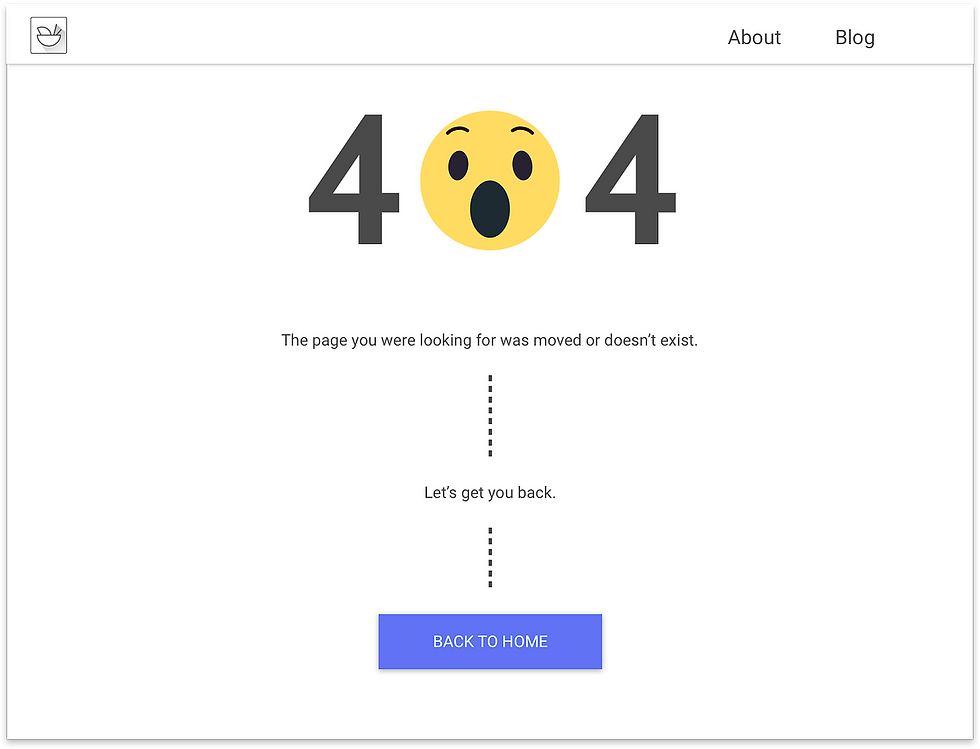
404 Error Page
A 404 Error page is displayed when someone tries to access a URL that does not exist or can no longer be found.
Although it may seem like a technical detail, a well-designed 404 page can improve the experience of visitors who accidentally land on a broken or outdated URL.
This makes it one of the most important website pages to consider from a user experience and technical perspective, even though visitors ideally should not encounter it often.
A default browser or hosting error message can leave visitors with nowhere to go.
A custom 404 page can instead give them clear options for continuing through your website.
For example, you can provide a link back to the homepage, popular services, important resources, a search function, or your Contact page.
The goal is to turn a dead end into another pathway through your website.
A good 404 page should also maintain your normal branding and website navigation.
Visitors should immediately understand that they are still on your website rather than being presented with a generic technical error.
Using the same logo, typography, visual style, navigation, and calls-to-action creates a more consistent experience.
So, what should every website include when it comes to a 404 page?
At minimum, it should clearly explain that the requested page could not be found and provide useful options for continuing.
For larger websites, adding a search function or links to popular content can make the page even more useful.
A 404 page can also support your broader website strategy by helping preserve the customer journey.
Someone may arrive at a broken URL through an old search result, an outdated social media post, or an external link.
Additional Website Pages Your Business May Need
The 12 pages covered so far provide a strong foundation for most business websites, but they are not a universal limit.
As a business becomes more complex, its website may need additional pages to support different products, audiences, locations, customer journeys, and marketing objectives.
When asking what pages does a business website need, the better question is: What information does your audience need to make a decision, and what pages can deliver that information most effectively?
A small local business may only need a handful of carefully planned pages, while an e-commerce store, B2B company, or professional services firm may require a much larger website.

Ecommerce Pages
Ecommerce websites typically require more pages because customers need to browse products, evaluate purchases, complete transactions, and access important information about shipping, returns, and their accounts.
This means the answer to how many pages should a business website have can be significantly different for an ecommerce business than it is for a local service company.
Shop and Category Pages
A Shop page provides an overview of your products, while category pages organize products into logical groups.
For example, an apparel company might organize its store into Men's Clothing, Women's Clothing, Footwear, and Accessories.
This structure makes it easier for customers to browse and can also create opportunities to target category-specific searches.
Product Pages
Individual Product pages provide the detailed information customers need before purchasing.
These pages should communicate the product's features, benefits, specifications, pricing, availability, images, reviews, shipping information, and purchase options.
A well-designed product page should answer common customer questions before they become barriers to conversion.
Cart and Checkout Pages
The shopping cart and checkout experience should make completing a purchase as straightforward as possible.
Unnecessary steps, confusing forms, unexpected costs, or complicated checkout processes can cause customers to abandon their purchases.
The goal is to reduce friction between the moment someone decides to buy and the moment the transaction is completed.
Shipping, Returns, and Policies
Ecommerce customers often want to know what happens after they place an order.
Dedicated Shipping, Returns, Refunds, and related policy pages can provide clarity and reduce uncertainty before someone purchases.
These pages can also help reduce repetitive customer service questions by making important information easily accessible.
Customer Account Pages
Businesses offering customer accounts may also need pages for account registration, login, order history, saved information, subscriptions, and account management.
Together, these pages create the infrastructure needed to support a complete online shopping experience.

Business to Business (B2B) Pages
B2B websites often require additional pages because business customers typically have longer and more complex purchasing journeys.
A potential client may need to understand your expertise, evaluate your solutions, review previous results, and determine whether your business is capable of handling their specific requirements before contacting your sales team.
This means what information should a business website have can be substantially different for B2B organizations.
Industry Pages
Industry-specific pages can explain how your products or services address the unique challenges of different customer segments.
For example, a technology company might have dedicated pages for Construction, Healthcare, Manufacturing, and Financial Services.
These pages allow businesses to demonstrate that they understand the specific needs of each market.
Solutions Pages
Rather than organizing everything around individual services, B2B businesses can sometimes organize their website around customer problems or business solutions.
A software company, for example, might create pages for Lead Management, Customer Communication, Reporting, and Automation.
This allows the website to align more closely with how potential customers think about their problems.
Case Studies
B2B buyers often want evidence before starting a conversation.
Detailed case studies can demonstrate how your company solved a real customer's problem and what results were achieved.
This is particularly valuable when the product or service is complex, expensive, or requires a significant commitment.
Resources
B2B companies can also benefit from resource libraries containing guides, reports, ebooks, webinars, research, and educational content.
These resources can support SEO while helping potential customers move through the research and evaluation stages of the buying journey.

Professional Services Pages
Professional services businesses often depend heavily on expertise, credibility, and trust.
Law firms, accounting firms, consulting companies, financial professionals, marketing agencies, architects, engineers, and other professional organizations may therefore require additional pages beyond the basic website structure.
A strategic website structure for a small business should reflect the way customers actually evaluate and purchase professional services.
Team or Staff Pages
Customers often want to know who will actually be responsible for delivering a service.
Team pages can introduce employees, partners, professionals, certifications, experience, and areas of expertise.
For relationship-driven industries, this can be a powerful trust-building tool.
Expertise or Practice Area Pages
Professional businesses may need dedicated pages for specific areas of expertise.
A law firm, for example, could have separate pages for Family Law, Real Estate Law, Business Law, and Estate Planning.
These pages allow each area to be explained in detail while giving visitors a clearer path toward the service they need.
Credentials and Certifications
Businesses in highly regulated or specialized industries may benefit from dedicated pages explaining professional qualifications, certifications, memberships, awards, and industry affiliations.
This information can help demonstrate expertise and differentiate the company from competitors.
Appointment or Consultation Pages
If your business operates primarily through consultations or appointments, a dedicated booking page can make the conversion process significantly easier.
Visitors should be able to understand what the consultation involves, who it is for, what they should prepare, and how to schedule it.
Ultimately, there is no universal list of essential website pages that applies identically to every company.
The pages a local contractor needs will differ from those required by an e- commerce store, SaaS company, law firm, or B2B manufacturer.
The goal is to build a website structure that reflects your business model and gives customers the information they need at each stage of their decision-making process.
Instead of asking what pages every website needs, ask what pages your customers need.
Conclusion
Building an effective website starts with understanding that essential pages for a website are not simply a checklist of pages to create. Each page should have a clear purpose and contribute to the overall customer journey.
When deciding what pages should you have on your website, start by considering what your customers need to know before they are ready to contact, book, or buy from your business.
For most businesses, the foundation includes pages such as the Homepage, About page, Services or Products pages, Contact page, and pages that establish trust through testimonials, reviews, or case studies.
From there, your website can expand with location pages, blog content, FAQs, resources, pricing information, and other pages that support your specific audience and business model.
The right business website pages should work together rather than operate as isolated pieces of content. Your navigation should connect them logically, your internal links should help visitors discover relevant information, and your calls-to-action should guide visitors toward the next appropriate step.
There is also no universal answer to what pages should a website have.
A small local business may only need a focused set of pages, while an ecommerce company, B2B organization, or professional services firm may require a much larger website structure.
As your business grows, your website should grow with it.
New services can become dedicated service pages. New markets can support location pages. Customer questions can become helpful resources or FAQ content. Successful projects can become case studies.
Your website should not simply attract visitors. It should help guide them from discovering your business to understanding your offer, building trust, and ultimately taking action.
For more information on connecting your website and marketing efforts, explore our How to Build a Digital Marketing Funnel guide.
Once your website is generating visitors, analytics can help you understand how those visitors interact with your pages, where they come from, and where opportunities for improvement exist. Our Beginner's Guide to Google Analytics can help you get started with measuring website performance.
Ultimately, the best pages every website should have are the pages that provide genuine value to your customers and support your business goals.
Frequently Asked Questions (FAQ)
What pages should I have on a website?
Most business websites should have a Homepage, About page, Services or Products pages, and Contact page as a foundation. Depending on the business, additional pages such as Testimonials, Case Studies, Service Area pages, Blog, Privacy Policy, Terms & Conditions, and a custom 404 page can provide additional value.
The right pages depend on your business model, audience, services, locations, and goals. A strong website prioritizes useful, purposeful pages rather than creating pages simply to increase the page count.
How many pages should a good website have?
There is no universal number of pages that every good website needs. A small local business may have 5–15 strategically planned pages, while an ecommerce store, B2B company, or larger organization may require dozens or hundreds.
The more important consideration is whether each page serves a clear purpose, answers a customer question, supports SEO, or helps move visitors toward a conversion.
What pages are required for a website?
There are few pages that are universally required for every website. Most businesses should consider a Homepage, About page, Services or Products pages, and Contact page as their core foundation.
Depending on applicable laws and the website's functionality, legal pages such as a Privacy Policy and Terms & Conditions may also be necessary. Requirements can vary by jurisdiction and business, so businesses should obtain legal advice for their specific situation.
What are common website red flags?
Common website red flags include outdated information, broken links, confusing navigation, slow page speeds, poor mobile responsiveness, unclear calls-to-action, missing contact information, low-quality content, excessive pop-ups, and a lack of trust signals.
Another major red flag is a website that looks attractive but does not clearly explain what the business does or how visitors can become customers.
Is it better to have more or fewer pages on a website?
Neither is automatically better. A website should have as many pages as necessary to provide useful information without creating unnecessary complexity.
A smaller website with highly focused pages can outperform a larger website filled with thin or repetitive content. Each page should have a clear purpose and contribute to the customer journey, SEO strategy, or overall business objective.
What three pages does your website need?
If you had to start with only three core pages, the most practical foundation for many businesses would be the Homepage, Services or Products page, and Contact page.
The Homepage introduces the business, the Services or Products page explains what you offer, and the Contact page gives visitors a clear way to take action. Most businesses should expand beyond these three pages as their needs and content strategy develop.
Is it better to have a one-page website or multiple pages?
A one-page website can work well for very small businesses, simple offerings, portfolios, event websites, or businesses with a highly focused customer journey.
However, multiple pages are generally more flexible for businesses with several services, locations, products, or customer segments. Separate pages provide more space to explain individual offerings, target specific search queries, build internal links, and create clearer conversion paths.
How many pages is a normal website?
There is no standard page count for a "normal" website. A simple small business website might contain around 5–15 core pages, while a more established business may have 20, 50, or significantly more pages.
The appropriate size depends on the complexity of the business. A website should grow based on customer needs, services, locations, content opportunities, and business objectives rather than an arbitrary page count.
What is the most important page on a website?
The Homepage is often the most important page because it serves as the primary entry point and introduces the business to visitors.
However, its importance does not mean every visitor should stay there. Service pages, product pages, landing pages, and other pages may be more important for specific visitors depending on their search intent and stage in the buying journey.
What are the essential pages of a website?
The core essential pages of a website for many businesses include the Homepage, About page, Services or Products pages, Contact page, Testimonials or Reviews page, and Portfolio or Case Studies page.
Businesses may also benefit from Service Area pages, a Blog, Privacy Policy, Terms & Conditions, and a custom 404 page. Ecommerce, B2B, and professional service websites may require additional pages based on their business model.
What pages should every website have?
At a minimum, most professional business websites should provide a clear Homepage, information about the business, an explanation of its products or services, and a way to contact or take action.
Beyond these fundamentals, the best website structure depends on the business. The goal is to create pages that answer customer questions, establish credibility, support search visibility, and provide a clear path toward conversion.


%20-%20Text%20%26%20Icon%20-%20White%20(PNG)_edited.png)
Comments